French Heritage at Risk, Gioni on Museum Survival: The Week's Art News
Three studies warn 60 percent of listed French heritage sites face climate danger by 2050, while New Museum director Massimiliano Gioni defends risk-taking under Trump-era pressure.

Programme
- A Climate Institute study at Edhec Business School estimates 60 percent of listed French heritage sites will be in danger by 2050.
- The New Museum's budget is rising by about $8 million, director Massimiliano Gioni told Le Journal des Arts.
- Jackson Pollock and Lee Krasner's former Greenwich Village studio is listed for $7.995 million.
- The World Monuments Fund raised $62 million for its endowment 18 months ahead of schedule.
- Artissima opens in Turin with 183 galleries from 35 countries.
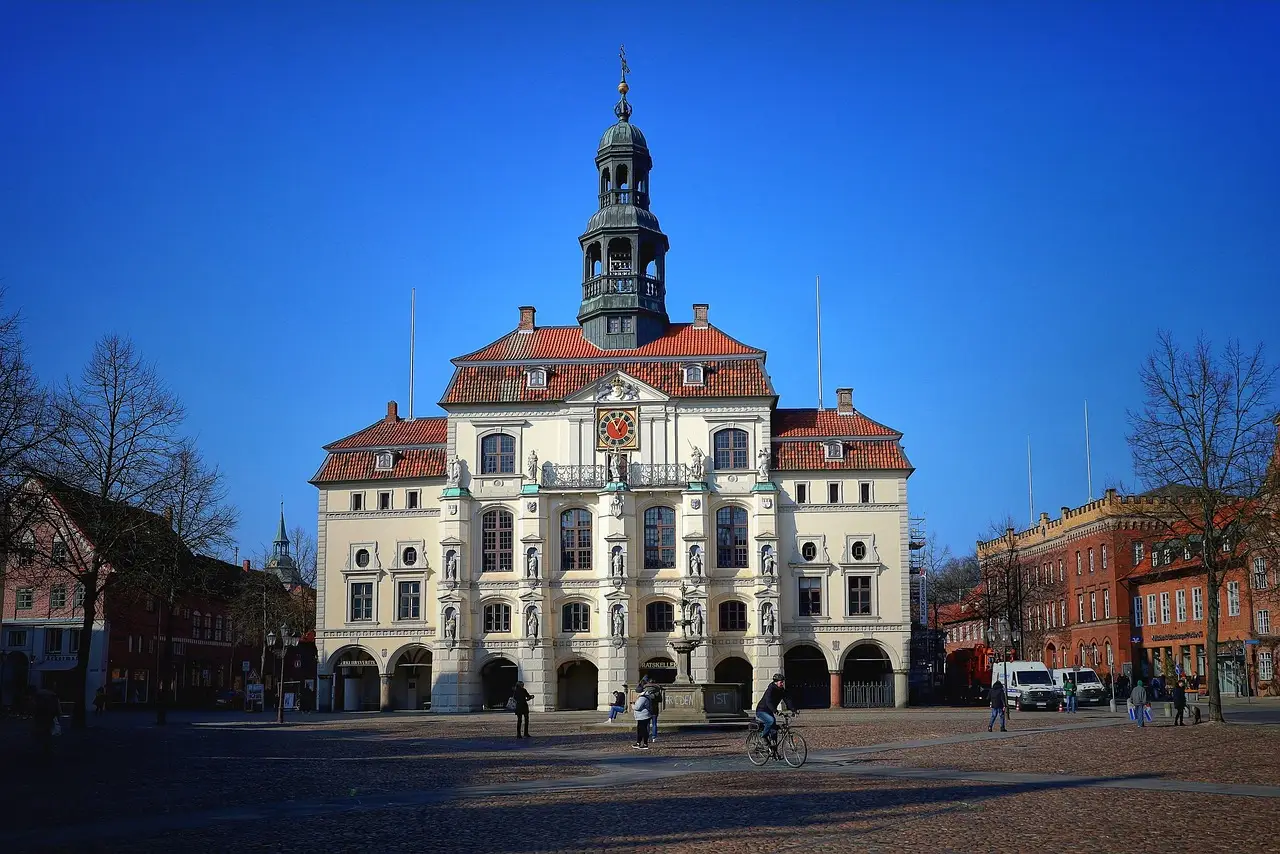
Sixty percent of France's listed heritage sites will be in danger by 2050. That is the estimate from the Climate Institute at Edhec Business School, one of three studies published since September that map global warming's threat to the country's historic buildings, as reported by Le Monde on October 29, 2026.
The timing is blunt. France has just recorded its hottest summer on record, and the studies landed amid civil unrest over widening gaps in living standards. The Château d'Azay-le-Rideau, seated on an island in the Loire Valley, shows the paradox in miniature: flooding plagues it, yet receding water levels expose its wooden foundational beams to air and decomposition.
What exactly is under threat?
The three studies come from the Edhec Climate Institute, the publicly run Monuments Nationaux organization, and Réseau Action Climat. Grégory Quenet, the professor who led the latter study, put it plainly:
"Are we ready to accept that floods will damage the Château de Chambord, that paintings will disappear at Lascaux [the cave], that the Strasbourg Cathedral will crumble…?"
Chambord, Lascaux's prehistoric paintings, Strasbourg Cathedral. The inventory reads like a national identity checklist.
What did Massimiliano Gioni say about American museums?
Across the Atlantic, Massimiliano Gioni — newly promoted from artistic director to director of New York's New Museum — spoke to Le Journal des Arts about the pressures on American institutions. Money, he said, has become "a much greater preoccupation" in his new job. He isn't letting that cramp the programming, noting the museum's budget is growing by about $8 million.
"What matters is impact," Gioni said. "Our budget is increasing by about $8 million, but we remain at a scale that allows for risk-taking." He added that "a certain radicalism" is in the museum's DNA.
He also read Donald Trump's attacks on the Smithsonian and the Kennedy Center as backhanded tribute. "Why does he spend so much time on the Smithsonian or the Kennedy Center?" Gioni asked. "Because he knows they embody values that many of us believe should be universal rather than determined by parties."
The Digest
- At 96, Surrealist painter Cossette Zeno is having her moment, most recently through a small survey of her 1950s work at Richard Saltoun's New York gallery, reports ARTnews.
- Jackson Pollock and Lee Krasner's former Greenwich Village studio is listed on Sotheby's International Realty for $7.995 million, according to Artnet News.
- The World Monuments Fund has raised $62 million for its endowment, beating its fundraising target 18 months ahead of schedule.
- Artissima, Turin's contemporary art fair and a curators' favorite, opens to the public tomorrow with 183 galleries from 35 countries.
- Defense manufacturer Roshel has donated a Senator mine-resistant armored vehicle, used by Ukrainian forces in the war with Russia, to the Canadian War Museum in Ottawa.
The Kicker: Tacita Dean on Marisa Merz
Tacita Dean discussed her new film about Arte Povera artist Marisa Merz with the Financial Times's Caroline Roux, on the occasion of three institutional exhibitions celebrating the Italian artist 100 years after her birth. Dean met Merz in 2005 and got a swift tour of her home and studio, now preserved as a museum. "She was incredibly … secretive," Dean remembers. "She barely let me see anything. It wasn't exactly welcoming."
Dean argued the late artist's contribution has been undervalued next to that of her husband, Mario Merz, who enjoyed most of the critical acclaim until recently. "The onus is on us, the artists, to get out there, to do the marketing. We have to co-operate. They didn't," she said. Even Mario's famous igloos and installations were, in Dean's view, mostly collaborations: Marisa "worked on so many of his projects with him that they were mostly collaborations."
With three centenary exhibitions now running, the reassessment Dean describes is already underway — and the climate studies suggest France's monuments may not get a second chance of their own.
Original: cloud.email.artnews.com
More from Daniel Okafor
Show full bio
News editor covering companies, deals and strategy in arts in the broadest sense at Arts & Voices.
802 articles