Nahmad Family Revealed as Consignors of $80M Kandinsky at Christie's
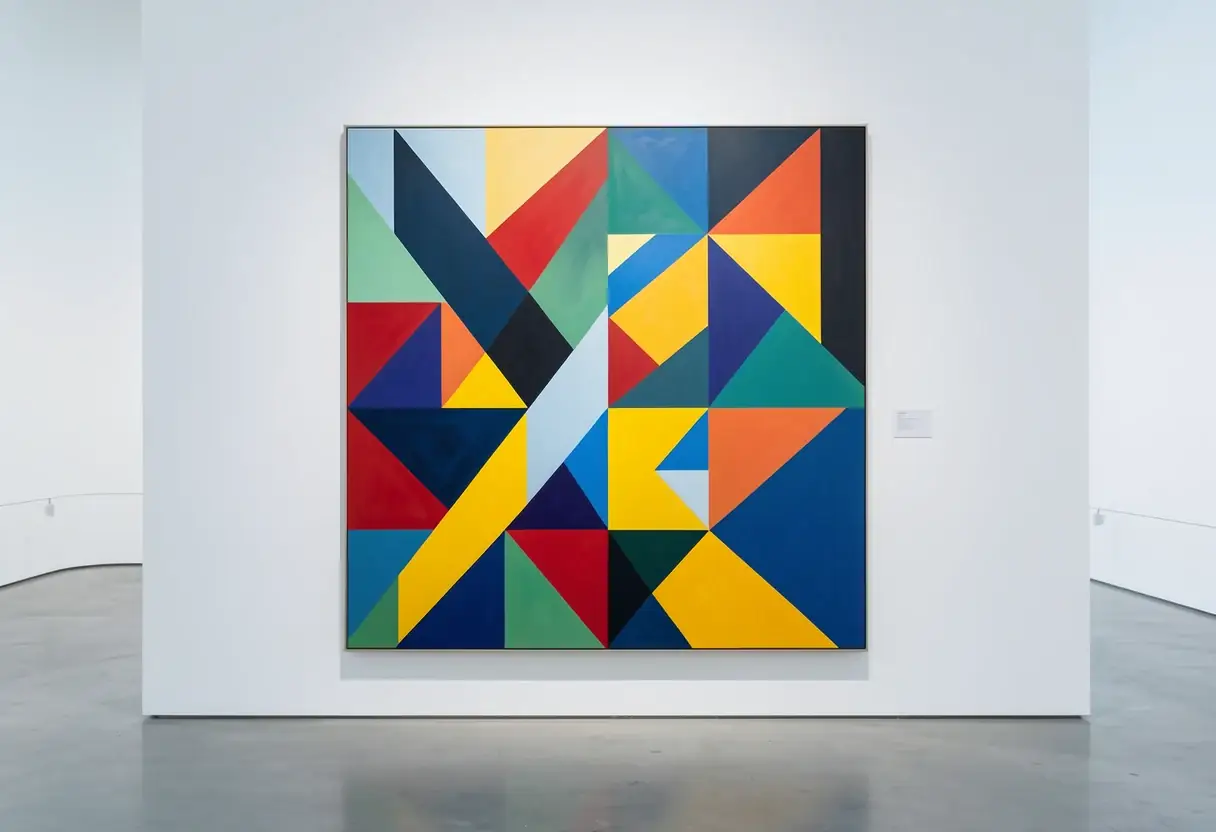
ARTnews can reveal the Nahmad family consigned Kandinsky's Betonte Ecken to Christie's November 17 sale, where a guarantee ensures the artist's $44.8M record will fall.
Programme
- Betonte Ecken (1922–23) is estimated at $60M–$80M and sells at Christie's New York on November 17.
- A third-party guarantee ensures the painting will break Kandinsky's $44.8M record set at Sotheby's London in 2023.
- The Nahmad family's holdings are reputed at up to 5,000 artworks worth over $4 billion.
- Exhibition catalogs from 2005 and 2025 list the Nahmad Collection as the painting's owner.
The Nahmad family, the dealer dynasty whose holdings are reputed to include some 5,000 artworks worth upwards of $4 billion, is the consignor of Betonte Ecken (1922–23), the Wassily Kandinsky painting set to achieve upwards of $60 million at Christie's New York on November 17, ARTnews can reveal.
The work carries an estimate of $60 million to $80 million, making it the highest-priced lot in Christie's November sales. A third-party guarantee attached to the lot means, according to the auction house, that the painting will break Kandinsky's auction record of $44.8 million, set by Murnau mit Kirche II (Murnau with Church II, 1910) at Sotheby's London in 2023.
The guarantee removes the suspense of a possible failure. It does not fix the price — only the floor.
Who are the Nahmads?
The Nahmads are a prominent family of dealers and collectors. Their holdings are reputed to run to as many as 5,000 artworks worth more than $4 billion. The family is also known to be the largest private collector of works by Pablo Picasso outside the Picasso family itself.
Several exhibition catalogs from the past 25 years have listed the Nahmad Collection as the owner of Betonte Ecken. Among them:
- Art of Tomorrow: Hilla Rebay and Solomon R. Guggenheim (2005)
- Geometric Abstraction in the Twentieth Century: Kandinsky's Universe (2025), produced by the Museum Barberini in Potsdam, Germany
Neither Christie's nor the family confirmed the attribution directly. Christie's declined a request to comment. The Nahmads did not respond by press time.
What does the painting's history tell us?
The colorful abstraction measures just over four feet square. Kandinsky painted it in Weimar, Germany, while teaching at the Bauhaus.
As ARTnews's Brian Boucher reported last week, the painting has changed hands a number of times. Christie's provenance shows it first coming to auction at the Jacob Hecht Auction House in Berlin in 1926, from the Schwarz collection, going to that city's Galerie Nierendorf, which then sold it, probably in 1929, to Hilla Rebay — adviser to museum founder Solomon R. Guggenheim, an early supporter of abstract art in the US. Guggenheim later acquired it from Rebay, and it remained in the museum's collection until 1964, when the museum sold it at Sotheby's London to New York art dealer Stephen Hahn. At some point, Hahn sold it to Boston collectors Sandra and David Bakalar, who put it up for auction at Sotheby's in 1986, when it went to the present owner.
That present owner, it now appears, is the Nahmad family.
What does this change for the market?
For buyers and observers, the answer is straightforward: a guaranteed record. Barring a withdrawal, Kandinsky's 2023 benchmark of $44.8 million falls on November 17, and the only question is by how much. A result near the $80 million top estimate would also signal continued depth of demand for Bauhaus-period abstraction at the top of the market — though a single guaranteed sale, by design, proves less than it appears to.
The sale also marks a milestone in the painting's own long passage — from Schwarz's Berlin collection, through Rebay and Guggenheim's museum, to Hahn, the Bakalars and, since 1986, the Nahmads. On November 17, it changes hands once more.
Original: artmajeur.com
More from Tom Whitfield
Show full bio
Market editor covering people, launches and day-to-day practice in arts in the broadest sense at Arts & Voices.
848 articles