Gaudí's estate inventory revealed: one house and 2,991 pesetas
One hundred years after its signing, Gaudí's estate inventory is public: one Park Güell house, two bank accounts, and a final wish to fund the Sagrada Família.

Programme
- The estate inventory was signed in November 1926 and became public consultation material 100 years later.
- Gaudí's only property, his Park Güell residence, was valued at 45,000 pesetas.
- Two bank accounts held 1,870 pesetas (Banco de España) and 1,121 pesetas (Caixa de Pensions).
- The original 1911 testament, signed in Puigcerdà before notary Ramon Cantó, was burned in 1936 during the Civil War.
- The executors sold the house to Italian buyers in 1926; it opened as Casa Museu Gaudí in 1963.
Antoni Gaudí died in June 1926 leaving a single property and two bank accounts holding 1,870 pesetas at the Banco de España and 1,121 at the Caixa de Pensions per a la Vellesa i d'Estalvis. The Col·legi Notarial de Catalunya presented the inventory of his estate this month, one hundred years after the document was signed in November 1926. It now enters public consultation.
What does the inventory contain?
One asset dominates the list: Gaudí's residence in Park Güell, valued at 45,000 pesetas. Beside it sit the two bank balances, roughly 3,000 pesetas in total. That is the entire estate of the architect of the Sagrada Família.
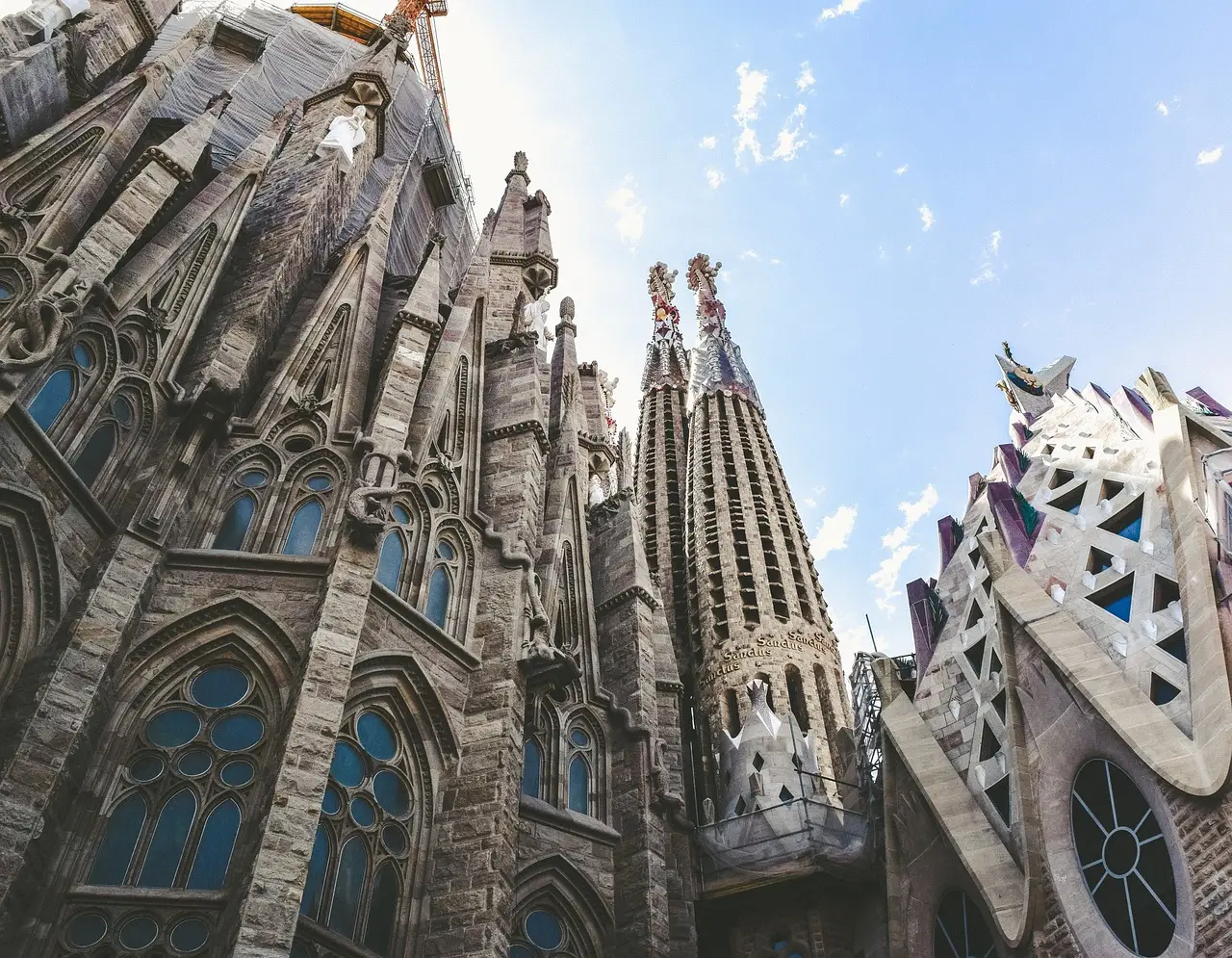
Gaudí named three trusted executors to carry out his final wish: that all his goods be sold and the proceeds devoted to financing the construction of the Sagrada Família. They were the reverend Gil Parés i Vilasau, chaplain custodian of the temple then under construction; the doctor Pere Santaló i Castellví; and an architect. The architect Francesc Berenguer i Mestres had been named but died in 1914, before Gaudí, so Domènec Sugrañes i Gras took his place as substitute executor.
The architect had no direct ancestors or descendants. His will therefore rested entirely with the executors and the basilica.
The will, the fire and the copy
Gaudí granted his testament on 9 June 1911 in Puigcerdà before the notary Ramon Cantó. In 1936, during the Civil War, the archive and the document were burned. The notary Lluís Rufasta signed the estate deed in 1926 from a copy whose whereabouts are now unknown.
José Alberto Marín, dean of the Col·legi Notarial de Catalunya, described the inventory as "el negativo del testamento" — the negative of the testament. His phrase captures the document's status: a record of what remained, made from an original that no longer exists.
What happens to the house?
Gaudí had inherited the Park Güell house in halves, one from his father Francesc Gaudí and one from his niece, who died in 1912. Acting on his instruction to sell everything, the executors transferred the property to private Italian buyers in 1926. In 1960 the buyers' heirs sold it to the association Amics de Gaudí, and in 1963 it opened as the Casa Museu Gaudí. The house was later ceded to the Fundació de la Junta Constructora del Temple Expiatori de la Sagrada Família, and since 2024 Barcelona Serveis Municipals has managed it.
The sale documents themselves remain sealed. Marín said they cannot be made public until one hundred years have passed since their signature.
The inventory also records a standing obligation. Gaudí owed the Güell family an annual census payment, an enfiteusis, of 564.20 pesetas for the value of the plot beneath the house.
Why the release matters
Standard notarial practice kept the inventory in the notary's office for its first 25 years. The document then moved to the Arxiu Històric de Protocols de Barcelona, housed at the seat of the Col·legi Notarial de Catalunya. The hundred-year mark now opens it to readers.
For scholars, the file fixes the material scale of a man whose buildings draw millions. What it changes for them is simple: the figure of 45,000 pesetas for the house and roughly 3,000 in the bank becomes a documented fact rather than an anecdote. The architect's final instruction — sell all, build the temple — now stands on paper that anyone can consult.
Source: diaridetarragona.com
More from Marcus Bennett
Show full bio
Staff writer covering people, launches and day-to-day practice in arts in the broadest sense at Arts & Voices.
1,728 articles