Norman-Style Palace on Brocoió Island Awaits Rescue in Guanabara Bay
Agenersa authorised emergency roof replacement for the 1930s Norman-style palace on Brocoió Island, a heritage-listed site once valued at R$49.485 million and vacant of buyers.
Programme
- Agenersa authorised emergency roof replacement for the Brocoió palace on 28 October.
- Joseph Gire designed the Norman-style palace, built in the 1930s by Octávio Guinle.
- Rio state tried to sell the island for R$45 million between 2016 and 2018, with no offers.
- A 2018 Rioprevidência document valued the property at R$49.485 million with annual costs of R$715,039.
- Uerj and partners propose a socio-environmental monitoring centre, pending state concession.
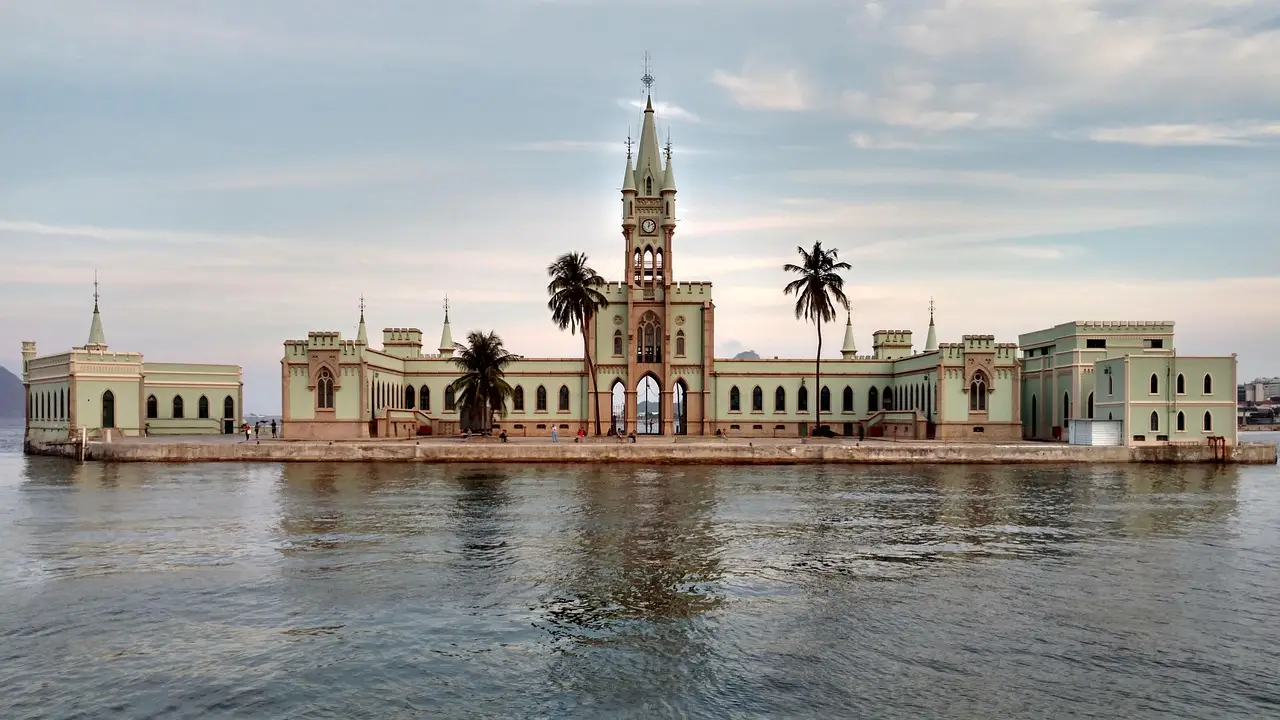
A 200,000-square-metre island in Guanabara Bay holds a decaying Norman-style palace that Rio de Janeiro's state regulators have finally moved to repair. On 28 October, the Agência Reguladora de Energia e Saneamento Básico do Estado do Rio de Janeiro (Agenersa) authorised the emergency hiring of a company to fully replace the roof of the palacete on Ilha de Brocoió.
The building shows roof damage, a ruined swimming pool, broken panes and destroyed tiles, according to the source report. Agenersa took over administration of the property in March 2024, through a use-concession term signed by the State Civil House Secretariat.
Who built the palace, and who slept there?
French architect Joseph Gire designed the palace in Norman style. Businessman Octávio Guinle erected it in the 1930s as a luxury residence. It later served as the summer house of governors. Getúlio Vargas rested there in 1936.
The Prefecture of the then Federal District bought the island in 1944, turning it into public property. The Instituto Estadual do Patrimônio Cultural (Inepac) listed the building as protected heritage in 1965.
The island carries an older and darker history. In the colonial period, authorities used it to confine Indigenous people considered rebels. It also served as a site for lime production for civil construction before the palace rose.
What does the decay cost the state?
Between 2016 and 2018, the Rio state government tried to sell the property for R$45 million and received no offers. A December 2018 document from the Rioprevidência Board of Directors recorded a valuation of R$49.485 million. The same document put annual costs for maintenance, gardening and security at R$715,039.
Those figures explain the pressure to find a productive use for the site rather than leave it as a drain on public funds.
A university plan waits on the state
A Uerj extension project, run with the Baía Viva movement and the Paquetá residents' association Morena, proposes a socio-environmental vulnerability monitoring centre on the island. The plan includes a laboratory for research, environmental education and artisanal fishing projects. It still awaits a use concession from the state government.
Access to the island remains restricted, which complicates both restoration work and public oversight of the building's condition.
The roof contract marks the first concrete repair step since Agenersa took charge. Whether the Uerj proposal wins a concession will decide if the palace becomes a working research site or remains a closed monument awaiting its next rescue.
Source: brasilemfolhas.com
More from Marcus Bennett
Show full bio
Staff writer covering people, launches and day-to-day practice in arts in the broadest sense at Arts & Voices.
1,493 articles