'God of War' Borrowed an 'Avatar' Camera, Director Reveals in Turin
Sony Santa Monica shot 'God of War' mo-cap with a camera from Cameron's 'Avatar,' Bruno Velazquez revealed at Turin's View Conference on Monday.
Programme
- Bruno Velazquez revealed on Monday at View Conference in Turin that Sony Santa Monica used an 'Avatar' camera on its 'God of War' motion-capture stage.
- Paramount's 'Tomorrow, and Tomorrow, and Tomorrow,' directed by Siân Heder and starring Daisy Edgar-Jones, hires gaming historians to recreate 1990s and early-2000s games.
- Jan-Bart van Beek cited 'The Last of Us' and 'Fallout' as evidence of game IP flowing into film and TV.
- 'God of War' development uses eye tracking, facial recordings and surveys to test player attention and narrative comprehension.
By Elena Vasquez
Sony Santa Monica Studio obtained one of the cameras James Cameron used on "Avatar" and brought it onto the motion-capture stage for its "God of War" games, game director Bruno Velazquez revealed at View Conference in Turin on Monday.
"We take inspiration from films," Velazquez said during an "Ask Me Anything about Games, VFX and Animation" session. He explained that the two most recent mainline "God of War" titles present themselves as uninterrupted single takes, using cinema techniques to give the virtual camera a handheld feel. Developers shot scenes alongside performers on the mo-cap set with Cameron's camera.
Who sat on the panel?
Wieke Schrakamp moderated the session. The panelists:
- Bruno Velazquez, game director, Sony Santa Monica Studio
- Hal Hickel, animation director, Industrial Light & Magic
- Jan-Bart van Beek, studio director, Guerrilla Games
- Tara DeMarco, VFX supervisor, Paramount
- Trent Claus, supervisor, Lola Visual Effects
- Noelle Triaureau, production designer, Skydance Animation
"Arguably, it's almost the same job these days," said van Beek, whose studio makes the "Horizon" franchise. He pointed to shared rendering and motion-capture technology, talent migration between industries, and the LED volumes of virtual production as game technology feeding filmmaking. Games still differ fundamentally, he noted, because of player choice and agency.
How does the flow run both ways?
DeMarco said her Paramount project "Tomorrow, and Tomorrow, and Tomorrow" employs gaming historians and consultants to recreate the look and play of 1990s and early-2000s games rather than applying modern technology to period material. The team is preparing a guide covering pixel art, resolution and gameplay. The film, directed by Siân Heder and starring Daisy Edgar-Jones, adapts Gabrielle Zevin's best-selling novel about game developers.
Van Beek cited "The Last of Us" and "Fallout" as evidence of game IP moving into film and television. "The other way around, it almost doesn't really happen anymore," he said of the movie-based games that proliferated in the 1990s. He cautioned that adaptations remain hard, because much of the original interactive experience can be lost.
Velazquez detailed how "God of War" development uses scheduled play-tests, facial recordings, eye tracking and surveys on narrative comprehension and difficulty. "We actually have eye tracking software where we actually see where their eyes are going," he said. "Are they looking at where we want them to look at certain moments?"
When is a puppet better than pixels?
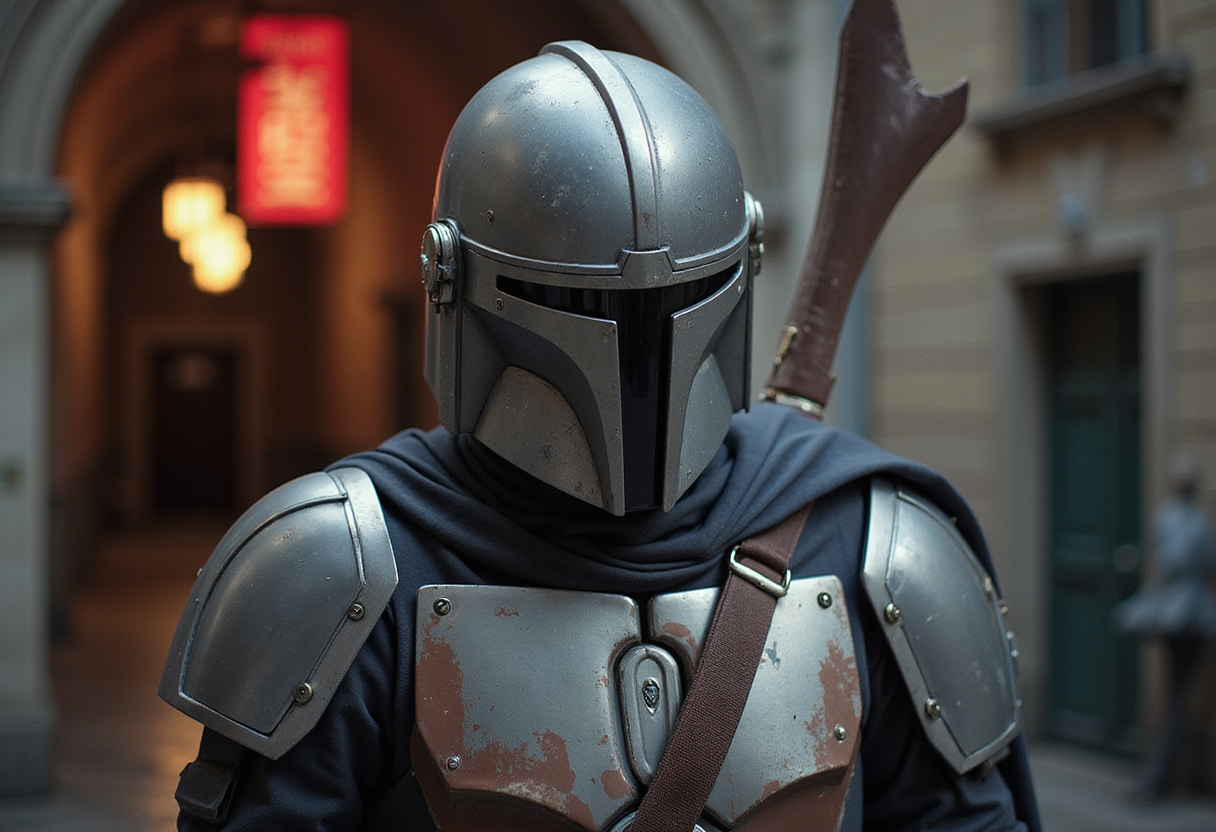
Hickel described how ILM decides when to keep Grogu a physical puppet on "The Mandalorian and Grogu" and when to intervene digitally. "Sometimes the puppetiness is exactly the effect you want on the audience's brain," he said, noting viewers appreciate the character's "muppety quality" even when certain movements require digital fixes.
The production also used virtual reality to scout digital environments and simulate seating positions inside an IMAX auditorium. Apple Vision Pro proved useful for judging set scale before construction. "We could really understand the space and know how big it was, and which parts were going to be built practically," Hickel recalled.
What did the panel say about AI?
Velazquez compared current AI anxieties to earlier fears that computer animation and motion capture would eliminate traditional animation jobs. Both technologies instead expanded artists' capabilities, he argued. "You still need that creative mind. You still need a team of creatives to come together and use these tools," he said. "But if you don't have the soul behind it, it's not going to matter."
Van Beek took a harder line, warning of AI misuse and appropriation of other artists' work: "People are going to use it for really great things and really terrible things." Hickel separated employment uncertainty from art itself. "There's no technical innovation that's going to stop people from making art and finding ways to make art," he said, suggesting new types of animation and VFX companies may emerge.
The panelists closed on hiring. Velazquez said he prefers a strong collaborator over a technically stronger candidate with a poor attitude, and DeMarco stressed communication, constructive feedback and adaptability across disciplines — a signal that, as tools converge, people skills may decide who gets the job.
Source: Variety Film
More from Elena Vasquez
Show full bio
Senior reporter covering technology and product news in arts in the broadest sense at Arts & Voices.
481 articles