Guildhall School Serves Bernstein and Menotti With Panache
Guildhall School's double bill pairs Bernstein's Trouble in Tahiti with the UK premiere of Menotti's Amelia al ballo at Silk Street Theatre until 9 November 2026.

Programme
- Double bill of Bernstein's Trouble in Tahiti (1952) and Menotti's Amelia al ballo opened at Silk Street Theatre, London, on 2 November 2026.
- Amelia al ballo, staged in Italian with English surtitles, received its UK premiere; performances run until 9 November.
- Dominic Wheeler conducted; Ashley Dean directed both operas.
- Cast included Twm Tegid, Cecily Shaw, Zoë Jackson and Sebastian Hill.
- Menotti wrote twenty-five operas; Amelia was first staged at the Curtis Institute in 1937 under Fritz Reiner.
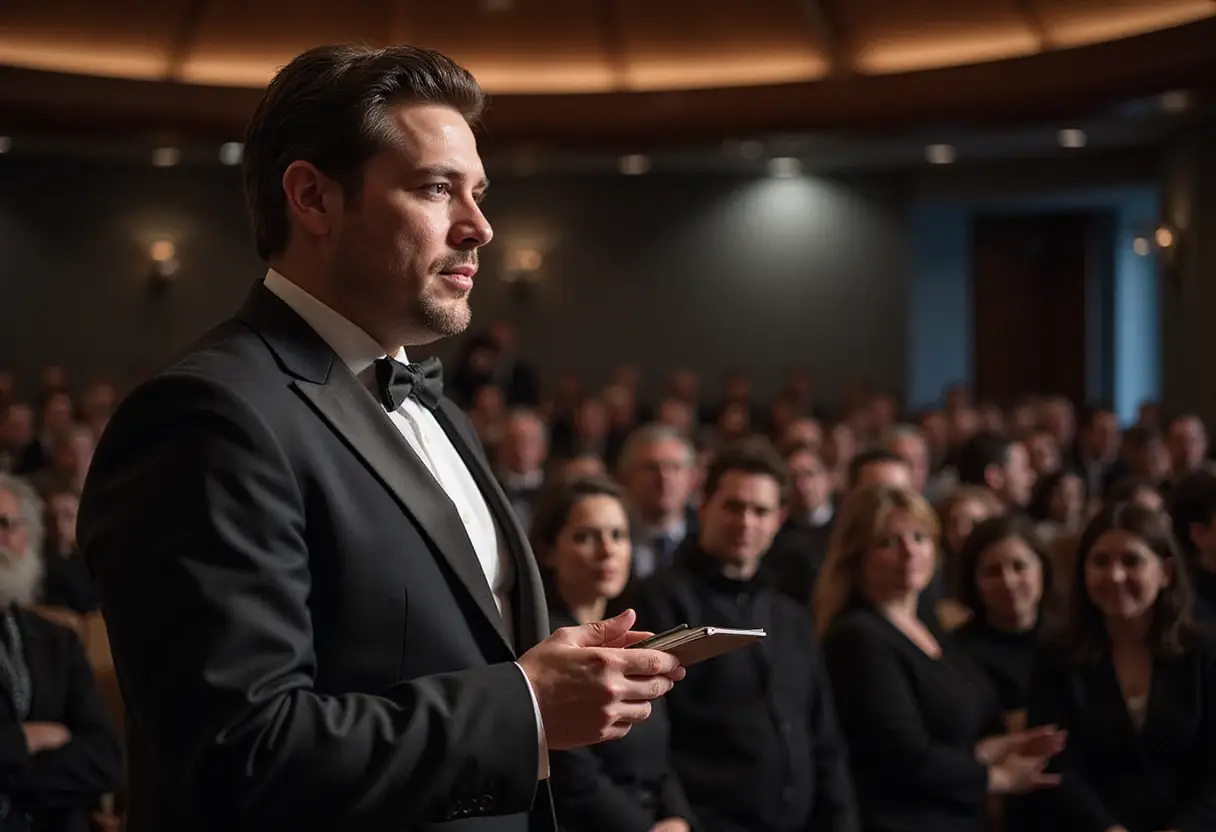
The Guildhall School of Music and Drama opened a double bill of Bernstein and Menotti at London's Silk Street Theatre on 2 November 2026. Alexander Hall reviewed both operas for Opera Today. His verdict: the school "has again maintained its reputation for high standards as well as for satisfying entertainment." Further performances run until 9 November.
The programme pairs Leonard Bernstein's 1952 one-acter Trouble in Tahiti with Gian Carlo Menotti's Amelia al ballo, an opera buffa in one act receiving its UK premiere, sung in Italian with English surtitles. Dominic Wheeler conducted the Chorus and Orchestra of GSMD; Ashley Dean directed both works.
How does Bernstein satirise the American Dream?
Bernstein wrote Trouble in Tahiti in 1952, satirising the domestic bliss manufactured by advertising. His parody of the Andrews Sisters' close harmonies forms what the composer called a "Greek chorus born of the radio commercial". Dean's staging, described by Hall as "very effective and visually attractive", has the jazz trio — soprano, tenor and baritone — hold up boards announcing "Home Sweet Home", "Your Dream Home" and "Happiness" from the start, with a squeaky Benny Goodman-style clarinet sowing the first doubts.
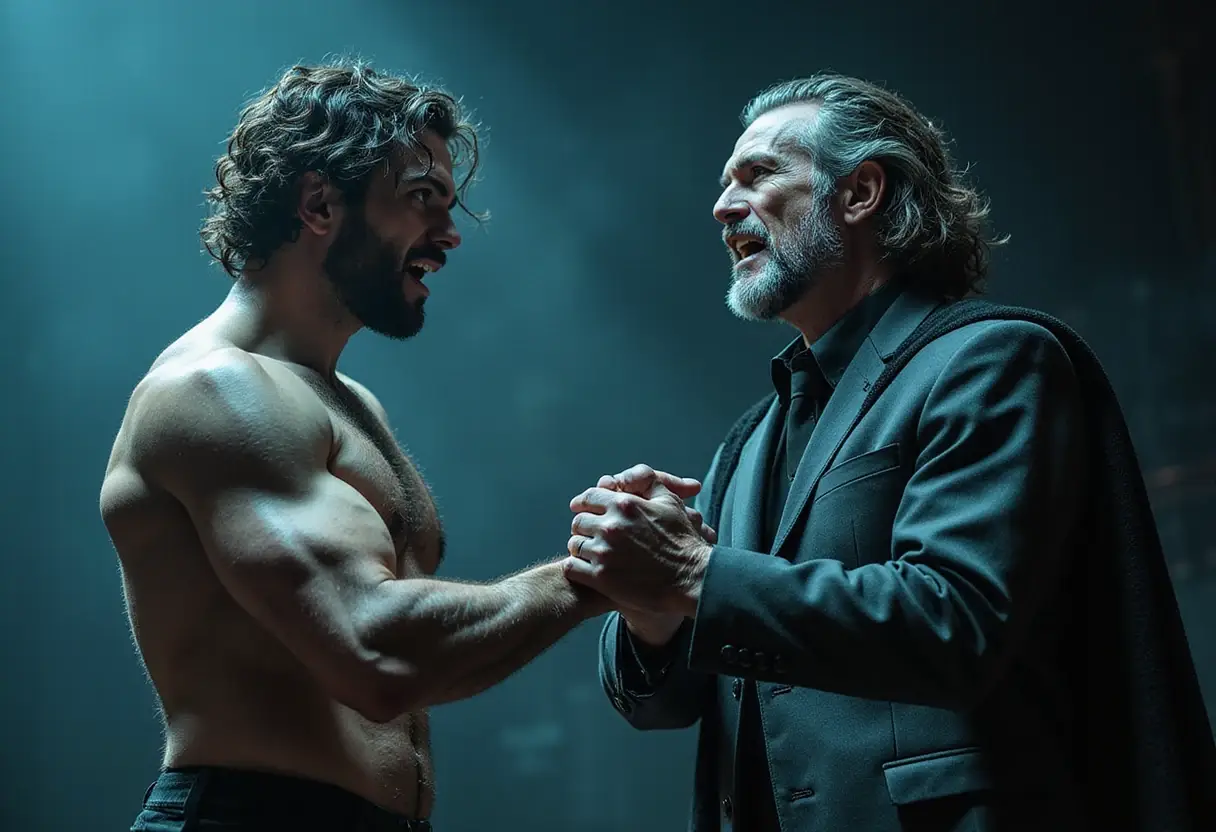
The opera's bickering couple, Sam and Dinah, draw on Bernstein's unhappy childhood with fractious parents. Ten years into marriage, they have drifted apart. Twm Tegid brought "a very powerful baritone" to Sam, a little grainy at the bottom, but Hall found he projected too forcefully against Cecily Shaw's Dinah — most apparent in the duet "Why did I have to lie?", where both invent excuses to skip their son's school play. Shaw's small-scale mezzo revealed Dinah's desolation in "I was standing in a garden", amplified by strings in the minor mode and a plangent oboe. Dean shows Dinah knitting before a TV screen, a pointed image of emotional absence.
Wheeler drew brash, marching-band brass for Sam's aria on "the law about men", in which "men are created unequal", though Hall wanted the jazz inflections handled more purposefully. The jazz trio — Laura LeVoir, Thomas Aminfar-Antoniw and Gennady Grebenchuk — also appears in flower-power costume for Dinah's retreat to the South Sea fantasy "Island Magic".
What makes Amelia the evening's winner?
Menotti, born in northern Italy and trained at Philadelphia's Curtis Institute, where he met his life partner Samuel Barber, wrote Amelia al ballo on an Austrian holiday in 1937. Fritz Reiner conducted the English version, Amelia Goes to the Ball, at the Curtis Institute that year; the Italian original followed in San Remo in 1938. Menotti wrote twenty-five operas in all, Puccini's verismo tradition and tunefulness his chief inheritance.
Hall found Wheeler "more at home" here, highlighting rich textures flecked with tambourine, harp and brass fanfares. Zoë Jackson's Amelia, an unfaithful wife who declares "Fidelity is too painful when a woman wants to go to the ball", is very much in charge. Her big voice was "a little rough around the edges", with hints of tremulousness and occasionally unclear Italian vowels. Tegid's cuckolded Marito sang with restraint; Sebastian Hill's lover Amante hid in a wardrobe but, Hall noted, "didn't really fight back". The reviewer also doubted the vase Amelia wields was big enough to knock her husband out. Small cavils. Amelia ends triumphant — husband stretchered off, lover in shackles, and she dances away on the arm of Yonwaba Mbo's warm-voiced Commissario di Polizia.
With Adam Wiltshire's design, Nic Farman's lighting and a committed cast that also included Marianne Ruel, Beth Stirling, Ellie Stamp and James Emerson, the evening confirms Guildhall's standing. Anyone wanting a rare UK sighting of Menotti's first mature opera has until 9 November.
Source: operatoday.com
More from Daniel Okafor
Show full bio
News editor covering companies, deals and strategy in arts in the broadest sense at Arts & Voices.
1,098 articles