Hannah Kendall’s Barbican world premiere turns history into sound
Hannah Kendall’s world premiere at the Barbican turns slavery’s history, ambiguous poetry and theatrical sound into a forceful new song cycle led by Sir Anthony Pappano.
Programme
- Hannah Kendall’s I have discovered the secret of death premiered at the Barbican Centre on 29 October 2026.
- The London Symphony Orchestra and Sir Anthony Pappano performed with mezzo-soprano Fleur Barron.
- The text was an untitled poem by Guyanese poet and activist Martin Carter.
- The programme included Tchaikovsky’s Symphony No.5 and Anatoly Liadov’s The Enchanted Lake.
- Diego Incertis Sánchez played the horn theme in the slow movement of Tchaikovsky’s Fifth.
By Grace Kim
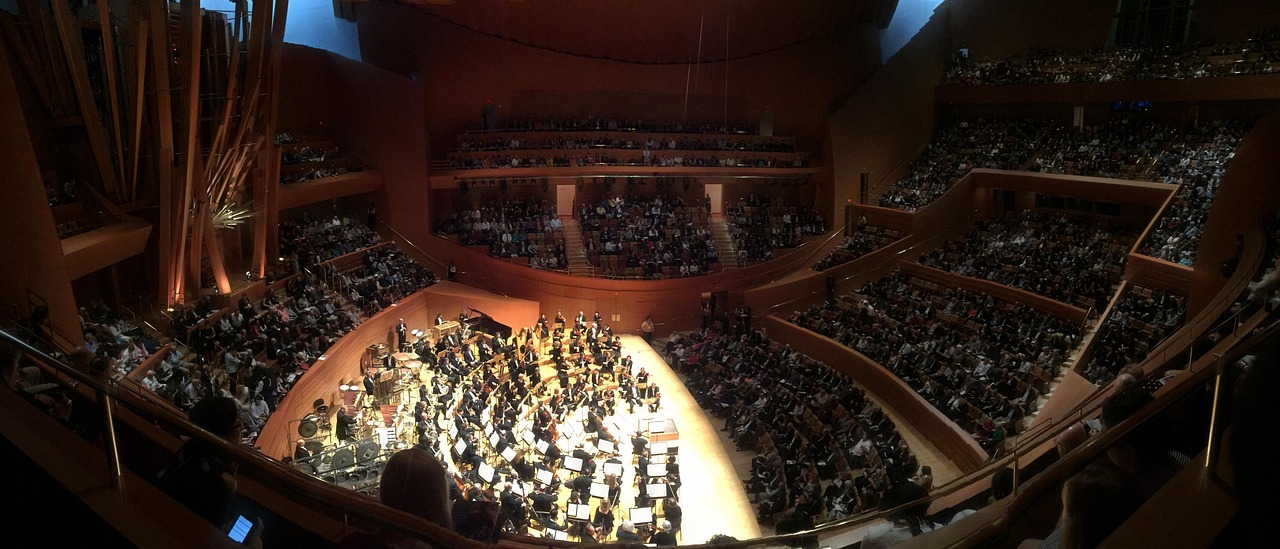
Hannah Kendall’s I have discovered the secret of death received its world premiere (first public performance) at the Barbican Centre, London, on 29 October 2026. The London Symphony Orchestra performed it under Sir Anthony Pappano, with mezzo-soprano Fleur Barron (a low female singing voice); reviewer Marc Bridle called the result “something of a triumph.” He placed it against his mixed assessment of recent world premieres.
The British composer’s new song cycle—a linked sequence of songs—explores what the review calls the “Plantation Machine.” Bridle defined it as the complex, repetitive and interconnected workings of slavery, including colonialism, capitalism and the climate crisis.
An untitled poem by Guyanese poet and activist Martin Carter supplies the text, bringing power, disillusionment, corruption and historical memory to the foreground. Kendall’s score turns that difficult history into sound rather than straightforward narrative.
Words move in and out of the orchestra, sometimes losing clarity, and Bridle found that ambiguity central rather than incidental. He described the music as immersive, able to cross cultural and geographical boundaries while remaining accessible.
Bridle also saw an element of theatre in the work, produced as much by props as by a Beckettian (absurdist) quality in the action. He did not read the staging as theatre of the absurd; in his account, Kendall’s historical context made the drama emotionally powerful.
The performance made props part of the composition. The singer spoke “I have discovered the secret of death” directly into a harmonica, while text also entered a whistling tea kettle. On plantations, enslaved people sang and prayed into tea kettles, giving the object its historical charge.
Bridle said much of the language remained hidden from the ear, making the stage resemble a secret prayer. The ambiguity could make the work difficult to follow, but it also produced a specific dramatic form rather than simple confusion.
Music boxes inside the orchestra played Bach’s Minuet No.3 and Greensleeves. They nearly disappeared within the larger texture, allowing familiar tunes to work their way into the listener’s consciousness.
Kendall composed the cycle for Fleur Barron, whose voice had to convey the text in both public and private ways. When Barron’s voice became audible, Bridle called her singing superb and praised her attention to detail.
He also said she never underplayed the performance’s theatricality. Bridle described the balance of voice and rhythm, clarity and opacity as “a glorious weaving of sound one rarely hears in a song cycle.”
Bridle found few surprises in Pappano and the LSO’s Tchaikovsky, because they had played a tremendous Fourth Symphony the previous year. Their Fifth was highly dramatic, colourful and full-blooded Romantic (emotionally expansive), and it never lingered. Low clarinet and brooding strings opened the first movement, which he said resonated wonderfully.
The Fifth lacked the Fourth’s overwhelming element of Fate, but it retained a different, implacable grimness. Bridle singled out the cellos and basses for their gritty, dark and powerful playing.
Diego Incertis Sánchez’s horn theme in the slow movement was gorgeously shaped. Pappano steered the love music without excessive sentiment, seeking maximum colour from the orchestra.
The third-movement waltz was balletic and light-footed. The finale became cataclysmic, high on drama and rich in string tone and magnificent brass playing. Bridle closed his Tchaikovsky assessment by calling the performance superb.
The concert opened with Anatoly Liadov’s The Enchanted Lake. Bridle praised its shimmering beauty and luscious woodwind tremolos (rapidly repeated notes), which evoked a world of Debussy and Wagner. With this orchestra and conductor, he said, its sensuality was never in doubt.
What does this change for the song cycle?
The premiere turns the song cycle into a unified dramatic object, not simply a sequence of songs. It shows that Kendall can carry historical argument through ambiguity, theatrical objects and virtuoso vocal writing rather than explanatory narration.
For performers, the practical lesson is that voice, orchestra and props must work as one dramaturgy (a unified dramatic action), not as accompaniment plus illustration. Mark Allan supplied the concert photographs. The premiere’s next test is whether future stagings can preserve that balance without making the text easier to hear.
Source: operatoday.com
More from Grace Kim
Show full bio
Correspondent covering technology and product news in arts in the broadest sense at Arts & Voices.
1,185 articles