Harry Houdini's Book Collection Rivalled Harvard's — Now It's on Show
Houdini's library rivalled Harvard's and the British Museum's. A new book by Eric Colleary and a UT Austin exhibition reveal witchcraft tracts, forged Luther letters and seance feuds.
Programme
- Exhibition 'Houdini's Library' runs through January at the Harry Ransom Center, UT Austin, marking 100 years since Houdini's death on Halloween 1926.
- Houdini's collections of magic, spiritualism and theater material rivalled those at Harvard and the British Museum.
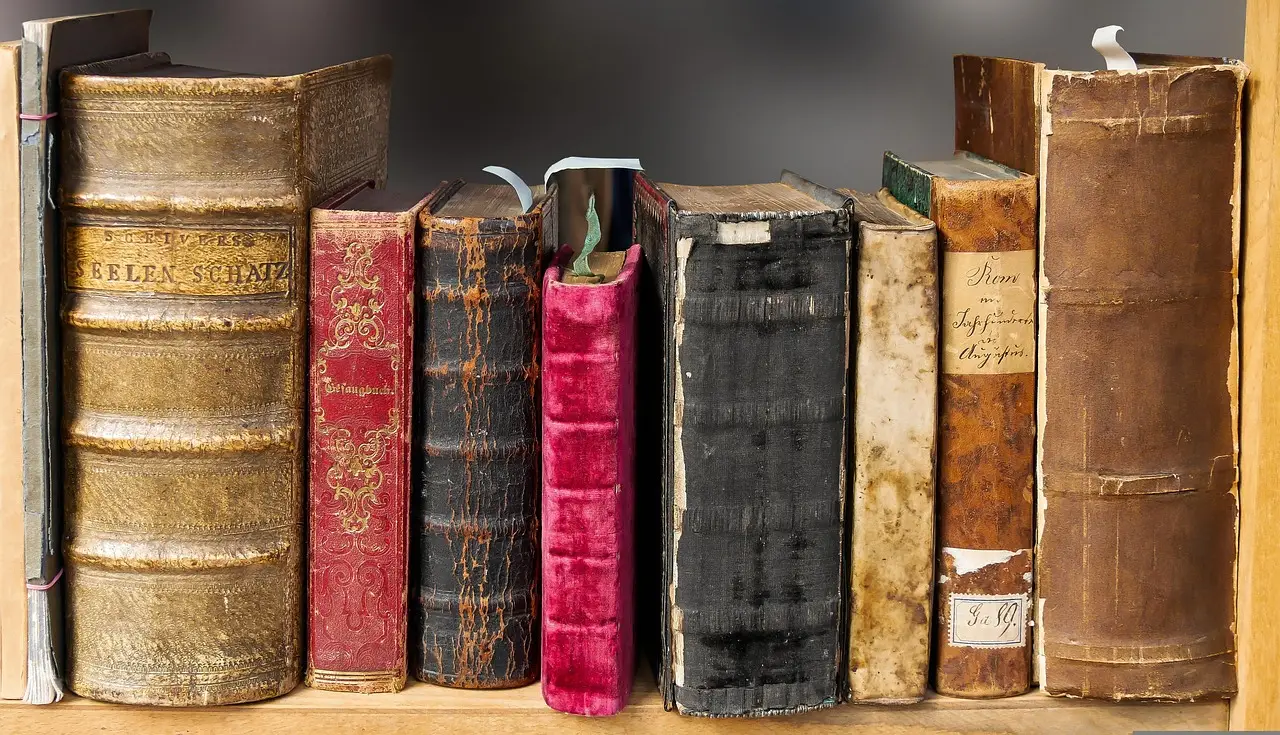
- Eric Colleary's book 'Houdini's Library' documents a collection spanning a 1584 first edition of Scot's Discoverie of Witchcraft to 1924's A Magician Among the Spirits.
- Houdini typed a 53-page catalog annotating his own library.
- Rival collector Dr. Saram R. Ellison amassed over 2,000 magic books; his wand collection went to the Society of American Magicians.
By the end of his life, Harry Houdini had amassed collections of magic, spiritualism and theater ephemera that rivalled those at Harvard and the British Museum. That is the central claim of Eric Colleary, whose new book Houdini's Library and accompanying exhibition of the same name open the magician's archive to public view.
The exhibition "Houdini's Library" runs through January at the Harry Ransom Center at UT Austin. It arrives just in time for the 100th anniversary of Houdini's death on Halloween, October 31, 1926.
How obsessive a collector was Houdini?
Houdini filled warehouses and his Harlem home with books, posters and newspaper clippings. He bought books everywhere he traveled, maintained standing relationships with rare book dealers, and placed magazine ads asking for leads on new material. Some of the library served his act: books on safes and prison architecture, plus catalogs from lock manufacturers. The rest reflected an archivist's mission to document the history of magic, spiritualism and theater.
According to the introduction to Colleary's book, the fixation reached comic extremes. In a moment of frightening airplane turbulence, Houdini later recalled: "Honestly I thought of my wife and theatrical collection." Takeaway: the man who escaped everything could not let go of his books.
What did Houdini actually own?
Colleary's book and exhibition catalogue a collection spanning six centuries. Highlights include:
- A 53-page typed library catalog in which Houdini annotated each volume. On a 1901 book, Entschleirter Magnetismus by Joseph Gregerowitsch, he wrote: "This Doctor is the best that ever tried this game and he actually believes in it himself. This hypnotism is a wonderful thing for those who believe in the power of the hips."
- A first edition of Reginald Scot's 1584 Discoverie of Witchcraft, one of the earliest English books to challenge witch persecution skeptically. Houdini had it shipped from England during World War I and paid fourteen extra shillings for "insurance & war risk" — roughly the cost of a good meal at the time.
- The Sermons of Bernard de Clairvaux, a real 11th-century abbot's text, accompanied by a forged letter claiming ownership by Martin Luther. Forger Hermann Kyrieleis produced fake Luther documents between 1893 and 1896 before being unmasked, arrested, declared insane and committed to an asylum. Whether Houdini believed the letter or recognized a famous literary hoax remains unclear.
- Ephemera on Count Cagliostro and the Affair of the Diamond Necklace, the 18th-century scandal that tarred Louis XVI, Marie Antoinette and other royals. Houdini scoured Cagliostro's Paris house and bought troves of papers from London.
- Playbills from an 1826 show titled "Odd Sayings and Queer Doings", alongside material on the 13th-century Albertus Magnus, the "calculating boy" George Parker Bidder, Henry Box Brown — born enslaved in Virginia, mailed himself to freedom, and performed magic in England — and Edwin Booth, eclipsed in history by his brother John Wilkes Booth.
- A "grangerized" copy of Frederick William Hawkins's Life of Edmund Kean, a single volume expanded through rebindings into an eight-volume set stuffed with pictures, autographs and letters — a history of theater told through one actor.
- Playbills for 19th-century automata, including "Euphonia," an 1846 talking machine by Joseph Faber that used a bellows and intricate internal mechanisms to mimic the vocal tract, and resembled a large loom with a woman's curly-haired head attached.
- Files on imitators, including one performer billed as "Cunning the Jail Breaker," who wrapped himself in chains and wriggled free like Houdini himself.
Why did Houdini turn on his own idol?
Houdini took his stage name from Jean-Eugène Robert-Houdin, one of the performers who inspired a young Erik Weisz. As Houdini interviewed Robert-Houdin's contemporaries and collected documentation, he concluded his idol exaggerated and plagiarized from other performers. His disillusionment became The Unmasking of Robert-Houdin, which Houdini paid to have translated into French — Robert-Houdin's mother tongue, making the rebuttal land at home.
What broke the friendship with Arthur Conan Doyle?
A copy of Cotton Mather's The Wonders of the Invisible World — an 1862 printing from the library of Arthur Conan Doyle — sits in the collection. Houdini sent Doyle this defense of the Salem witch trials shortly before the two couples met in Atlantic City, where Lady Doyle performed a seance claiming to contact Houdini's mother; she had turned to spiritualism after their son died from a wound suffered at the Somme and influenza.
The trick deeply upset Houdini. The two men staged rival lecture tours: Doyle defended seances as proof of immortality, while Houdini toured the world denouncing the practice. In 1924 he published A Magician Among the Spirits, a history of spiritualism and its "dangerous deceptions" drawn from his collections and personal experience with mediums, whose trade had grown especially predatory after the slaughter of World War I. The crusade was public duty and personal history combined: Houdini's father died when he was young, and his grieving mother once took him to a medium hoping to locate missing insurance papers.
Who was Houdini's rival in the collecting game?
Dr. Saram R. Ellison collected more than 2,000 books on magic and built scale models of illusions in his spare time. He and Houdini were friends who jockeyed for the same items. Ellison's collections went to the New York Public Library or were sold, and his wand collection landed at the Society of American Magicians.
Colleary's book and the Ransom Center show suggest the collection Houdini built in 52 years of life will outlast any of his escapes — it remains fully documented and open to researchers in Austin.
Original: bookshop.org
More from Elena Vasquez
Show full bio
Senior reporter covering technology and product news in arts in the broadest sense at Arts & Voices.
842 articles