Hoorae's Microdramas Hit 580 Million Views. But Who Pays?
Hoorae Media's first TikTok microdrama 'Screen Time' has drawn nearly 580 million views, but executives Jax Clark and Dzifa Yador admit revenue is still a work in progress.
Programme
- Hoorae's first microdrama 'Screen Time' reached nearly 580 million views across TikTok and PineDrama.
- Omdia forecasts $1.5 billion in U.S. microdrama revenue in 2026, with over 60 percent from subscriptions or transactional payments.
- Hoorae spent two years studying vertical storytelling before launching, and has 10 more microdramas in the works for next year.
- The TikTok distribution partnership was announced in April; shows are free with ad support.
- 'Screen Time' is a SAG production covered by a Verticals Agreement setting minimum pay, overtime, and pension and health contributions.
Issa Rae's Hoorae Media has accumulated nearly 580 million views for its first microdrama, "Screen Time," across TikTok and the dedicated microdrama app PineDrama. The company's executives, Jax Clark and Dzifa Yador, disclosed the figure at IndieWire's Future of Filmmaking Summit on Saturday, October 17.
"Screen Time," released on TikTok earlier this year, tells the story of a double date that turns into a waking nightmare when a sinister figure hijacks a couple's living room TV screen and demands the lovers confess — or risk exposure. It runs in minute-long vertical segments.
The question behind the format, for Hoorae, is not lurid but economic: can a thriller told in bite-sized segments sustain a business that keeps indie filmmakers, cast and crew on set?
What do 580 million views actually change?
Not revenue, at least not yet. Asked what the view count had done for Hoorae financially, Yador described developing relationships with brands rather than income.
"My favorite comment is, 'Who put Netflix on my TikTok?'" Yador said. "It just really validated the fact that we did not abandon what it takes to build a premium product."
Clark framed the internal mission as a talent pipeline. "How are we creating a sustainable pipeline that can bring new talent, new voices, new points of view into the industry?" she said. "As barriers to entry continue to get higher and the industry constricts and budgets are constrained, that's continued to be an internal mission and engine for the company."
A return to digital roots
Before bringing "Insecure" to HBO, Rae built her audience on YouTube with "The Mis-Adventures of Awkward Black Girl." Hoorae's microdrama push returns to those roots through TikTok distribution, openly embraced brand partnerships and a rethinking of what a day's work looks like.
"To be back in digital, which is where Issa really got her start and started building her audience has felt like a very beautiful full circle moment," Clark said.
Fellow summit speaker and inaugural Future of Filmmaking Award honoree Curry Barker followed a similar online runway: his reported $800 YouTube feature "Milk & Serial" preceded his theatrical breakout with "Obsession."
Yador said the challenge was packaging, not reinvention. "It wasn't about trying to reimagine what storytelling is because we do that so well already," she said. "It was about how do we repackage it for the now, understanding where people are spending the most of their time on phones and how to continue to elevate the space so that it feels very much like a Hoorae product."
Not a shortcut for unproduced screenplays
Clark targeted creatives stuck in assistant jobs or "whatever writer purgatory they're in," with productions offering experience on set and in post. But she was blunt about the format's limits.
"This isn't a format where it's like, 'Hey, I have a feature script that no one invested in and now I'm just going to chop it up into minutes and we can make this a microdrama,'" Clark said. "It's not an apples to apples conversion that happens. Part of it is talking to creatives who are willing to try something new and build something that maintains the integrity of the medium."
Yador said Hoorae spent two years studying vertical storytelling before entering the space, and does not regret the preparation. The team blends traditional filmmakers with specialists in verticals. "We have a blend of just talented filmmakers, but then we also have the top of the class in terms of people who have done verticals before," Yador said. "We feel really confident working with actors who maybe haven't done this before because we know we have the team to help educate them."
For actors already accustomed to verticals, a Hoorae assignment can mean dialing things down: "It's actors who are maybe used to coming out on a hundred for every scene and we can tell them, actually we can ground this and we want you to try something new here and maybe play this more seriously and maybe riff a little bit," Clark said.
Built for the scroll
Legibility is key. A viewer might land on the finale and watch in reverse, so every entry point must hold. "Wherever you get dropped in has to feel just as propulsive and just as noteworthy as your pilot episode and sticky enough to keep you in there," Yador explained. "And there's kind of a machine in terms of the mechanics of how you develop a microdrama. And those are the engines that we're talking about and they exist even in the finale."
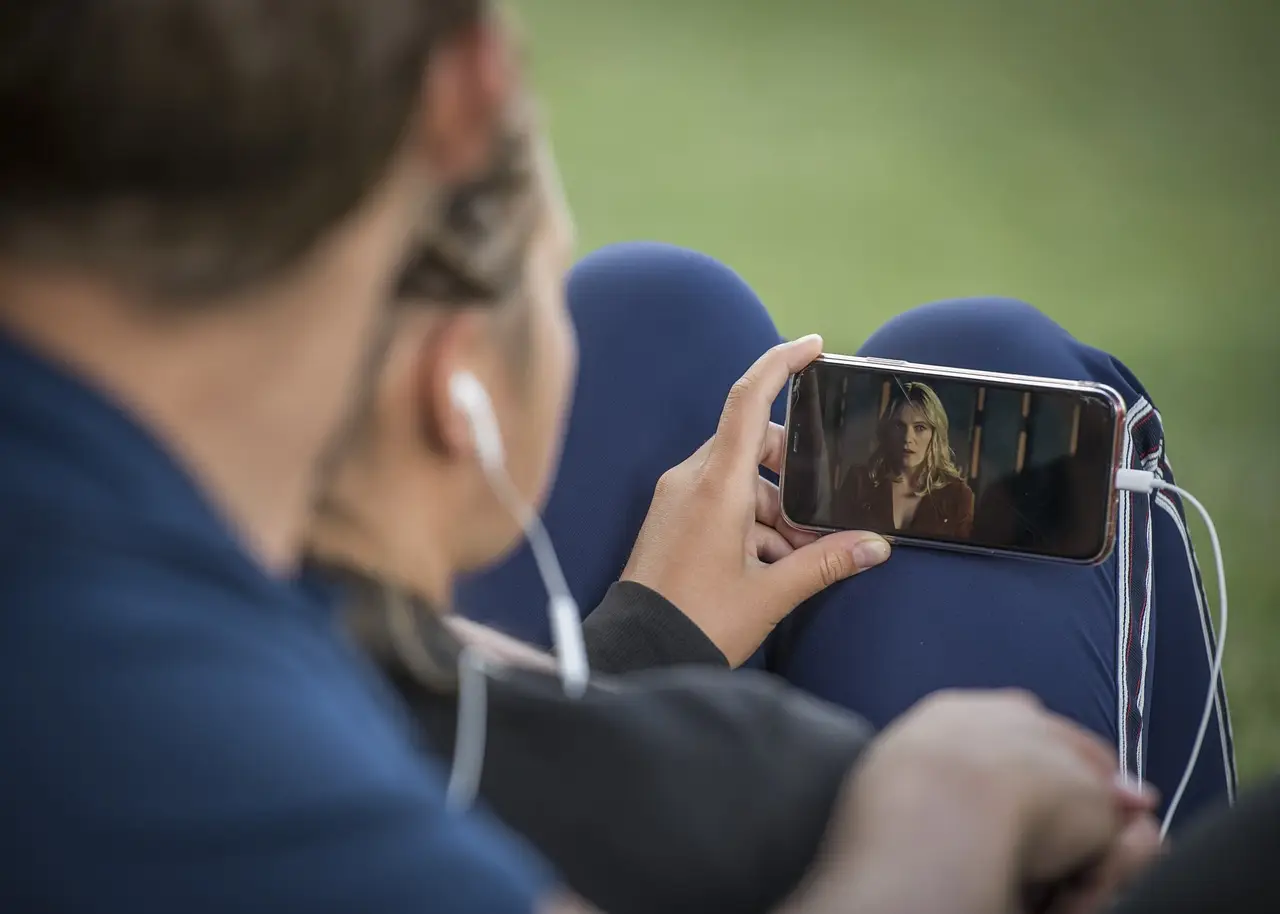
TikTok joined as a distribution partner as "Screen Time" production was wrapping, Yador said, and provides insights into what attracts viewers. The partnership, announced in April, gives exclusive distribution on TikTok and PineDrama, with Hoorae's shows free and ad-supported.
That backing matters. Hoorae has Rae's reputation, a talent network and a platform partner — uploading a thriller and waiting for the algorithm is a different proposition.
The slate is expanding. Following "Screen Time" came "The Compatibility Experiment," about a couple testing their relationship on a reality dating show, and "Parental Advisory," which brings affairs, rivalries and potential murder to the PTA. Ten more microdramas are in the works for next year.
"We didn't want to just try to do exactly what everyone else was doing or what other people were projecting would work," Clark said.
Where the money comes from
There is serious money in microdramas, though it often comes from viewers paying for the next revelation. Omdia forecasts $1.5 billion in U.S. microdrama revenue in 2026; earlier global research by the firm found more than 60 percent of revenue came from subscriptions or transactional payments. Hoorae's free, ad-supported model requires a different calculation.
"It's important to us that the brands feel integrated into the content rather than it just being slapped on and then you just call it branded content," Yador said. Hoorae's in-house sales team seeks brands willing to protect the creative, specifying who should hold a product and why.
Clark said digital production allows closer collaboration with advertisers than film and television projects with more partners. "It's actually been pretty fun building story and these relationships at the same time in a way that also is constantly feeding the financial model in a way that can make sense," she said. How consistent that model remains is unclear, but Hoorae is enthusiastic.
"This is a volume game," Yador said. "'How much can you make in X amount of time with X budget?' — is always a math equation that we're trying to solve for that feels very one-to-one with just kind of vertical universally."
Labor standards, and a kiss
For an industry contending with declining production in Los Angeles, the prospect of work is welcome — and what that work pays matters just as much. "Screen Time" is a SAG production, with The Wrap reporting on a Verticals Agreement that establishes minimum pay, overtime, and pension and health contributions for Hoorae workers. Covered productions remain a fraction of the market.
Experimentation continues on set. "We've scripted things that this needs to hit, this will drive engagement and it's not popping," Clark said, laughing. "So, we're like, okay, well maybe they need to kiss! Maybe we need a slap! Maybe we need something else here. We're able to try things in the moment."
Clark's closing vision for the brand: "More TV, more film, more verticals, more people being able to get back to work and sustain themselves on this art."
Whether brand-integrated verticals can deliver lasting employment at scale will be tested by the ten productions now in development.
Original: pmc.com
More from Tom Whitfield
Show full bio
Market editor covering people, launches and day-to-day practice in arts in the broadest sense at Arts & Voices.
929 articles