‘I Needed to Prove Myself Three Times More’: Directors on Hiding Motherhood
Directors Teodora Ana Mihai and Sode Yukiko told the Tokyo International Film Festival how they hid motherhood from colleagues, and what childcare could change.

Programme
- Teodora Ana Mihai hid her pregnancy until six months; her "Heysel 85" plays in Tokyo competition.
- Sode Yukiko concealed her second child's 2021 birth even from trusted producers, fearing offers would stop.
- Mihai won the festival's special jury prize in 2021 for "La Civil"; "Traffic" won best actress in 2024.
- Sode shot her first feature in five years, "All the Lovers in the Night", after a daycare setback halted her career.
- Mihai shot "Heysel 85" in 25 days; her debut "La Civil" took seven years to make.
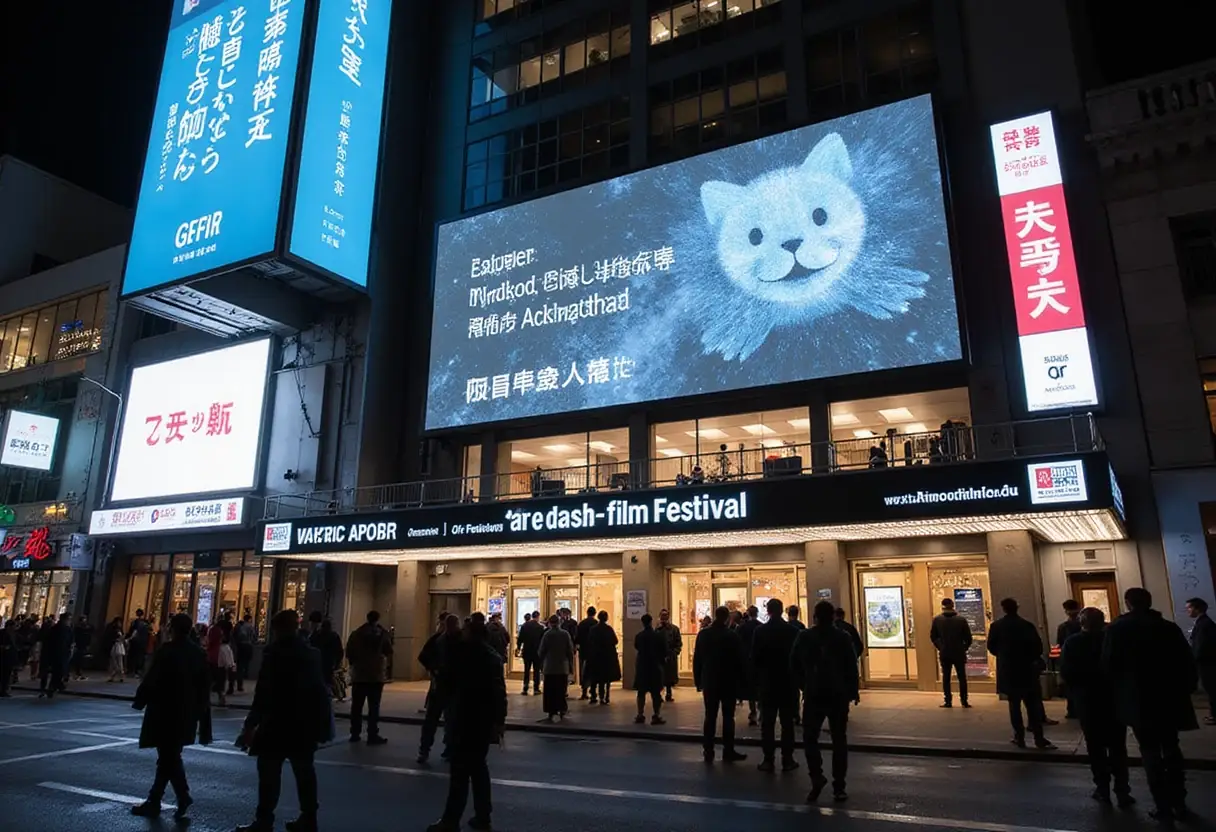
Two directors with films at this year's Tokyo International Film Festival revealed they once kept impending or new motherhood hidden from the people they worked with. Belgium-based Teodora Ana Mihai, whose "Heysel 85" plays in competition, and Japanese director Sode Yukiko, whose "All the Lovers in the Night" screens in the Gala Selection, spoke at a Tokyo Talks session in the festival's TIFF Lounge on raising children while making films.
The talk, moderated by Kondo Kanako of the festival's programming team, came with childcare for attendees — babysitters minded a roomful of infants at the back of the venue, and the children periodically made their presence felt, vocally.
What did concealment look like?
Sode first spoke publicly about hiding the birth of her second child at a 2021 festival talk with Indonesian director Kamila Andini. She had kept the news even from producers she trusted, convinced the offers would stop once people knew she had a newborn. That daughter starts elementary school in April, and "All the Lovers in the Night", Sode's first theatrical feature in five years, debuted at Cannes before screening in Tokyo.
Mihai was 37 when her daughter was born. She decided early that she would not choose between motherhood and a profession she considers her passion, but fear of social rules pushed her to start a family late. Once pregnant, she told few people in the business. Since it was winter and she was thin, she was still hiding the pregnancy under her clothes at six months.
"I was really conflicted with myself, because I was already feeling like a bad mother, because I was hiding something so beautiful and actually so natural," Mihai said. "The censorship came also from me and my mentality, because that's how we grew up thinking."
What does this change for women in film?
Mihai, who won the festival's special jury prize in 2021 for "La Civil" and returned in 2024 with best actress winner "Traffic", said that because her firstborn was a daughter, she wanted to become an example that the two roles can be combined, so that female colleagues and later generations would find a different environment. Sode noted the contrast with men, who on announcing a partner's pregnancy simply receive congratulations and a nudge to work harder.
"To get here, I needed to prove myself three times more than many of my male colleagues," Mihai said. "I killed myself with work. I really did nothing else but work and be a mom, work and be a mom."
Her own mother traveled with her to shoots and looked after the children. "Unfortunately, sometimes life throws very heavy things at you, and my mother passed away in a tragic car accident, so that help fell," Mihai said.
How do working conditions differ?
Sode lives in Kanazawa with her husband, who travels to Tokyo often for work, while she moves to the capital alone for around six months at a time when shooting, away from her children. She compared the arrangement to a married couple running the course on "Sasuke", the Japanese obstacle-course TV competition. She was unable to get her first child into daycare, a setback that brought her career to a complete stop and one reason the family left Tokyo.
"When I could put my child in daycare and throw myself into film work, it truly felt like I'd been let out of prison," Sode said. "There's probably something very self-centered in me, but meeting all kinds of people through this work is what makes me feel alive."
Sode's children have never come to her sets. "Japanese film sets are really grueling, including in terms of hours. You have to keep shooting fast in a short amount of time, and the budget is a big part of that," she said. She pointed to the units of Nishikawa Miwa and Kore-eda Hirokazu, which have held "family days" inviting crew members' partners and children to visit.
Mihai's daughter, now almost 9, visits the set on hand-picked days and has appointed herself an unofficial assistant. Mihai said the pressures are much the same in Europe: she shot "Heysel 85", with its large crowd scenes, in 25 days. "It was crushing," she said. Her debut "La Civil" took seven years to make; she kept postponing motherhood until it was finished, then the pandemic brought delays, and she became a mother during the project.
What about festivals and funding?
Mihai praised the Tokyo festival for working with a nanny service during promotion: "You can go to your job, come back, and be a mom again." Kondo said she makes childcare a condition of any job she takes on, and that guests have skipped film festivals for lack of it.
Asked why budgets stay tight as ticket prices climb, Mihai said arthouse theaters in Europe struggle to survive and her community lives in constant fear of funding cuts. "Without state funding, we would not be making these films. It's that simple," she said. Sode warned that if mini-theater films get weeded out by market logic, "I'm sure that 10 years from now the quality of the films playing there will have dropped too."
Kondo closed by urging audiences to complain if tickets are too expensive, arguing that it is the job of a film festival to set that cycle in motion.
Source: Variety Film
More from Marcus Bennett
Show full bio
Staff writer covering people, launches and day-to-day practice in arts in the broadest sense at Arts & Voices.
949 articles