Ian Rankin Leaves Rebus Behind for a London Tower of Suspects
Ian Rankin's 'The Heights' moves from Edinburgh to a Hyde Park luxury tower, where an 18-storey building of oligarchs and celebrities becomes a murder mystery of haves and have-nots.

Programme
- Ian Rankin's new novel 'The Heights' is set in an 18-story luxury tower facing Hyde Park in London.
- The book introduces detective Gillian Gish, replacing Rankin's long-running character Inspector Rebus, who is nearly 80 in the real world.
- Rankin said he has written 'maybe 40 books' and does not know the exact count.
- The novel appeared the same year as Patrick Radden Keefe's 'London Falling', which shares surface similarities.
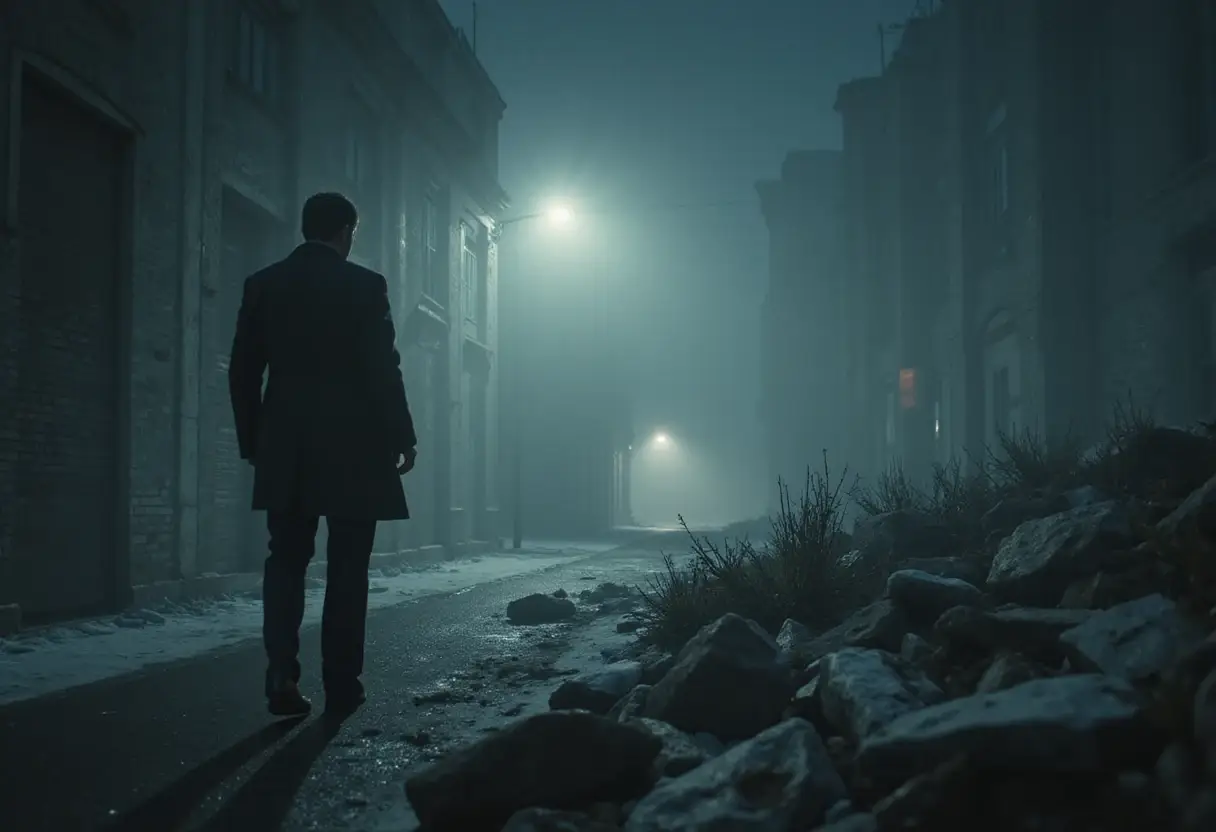
Ian Rankin's new novel, 'The Heights', is set in an 18-story luxury tower facing Hyde Park, on some of the most expensive real estate on the planet, where a murder — possibly several — has taken place. The book marks a departure for the author best known for his Edinburgh-set mysteries, and it introduces a new detective, Gillian Gish, to replace his long-running Inspector Rebus.
In an interview with NPR's Mary Louise Kelly, broadcast from Edinburgh, Rankin explained the origin of the story. He was riding in a cab past a London building very similar to the Heights one night. The only visible light came from the ground-floor reception, where a bored security guard sat. "I realized nobody lived in that building," Rankin said. "It was bought by overseas buyers as, you know, a way of keeping their money safe, not in bricks and mortar, but in steel and glass."
Who lives in the Heights?
The tenant roster reads like an Agatha Christie guest list. Rankin's cast includes:
- a pop star
- a glamorous actress
- a Russian oligarch, or an oligarch-adjacent figure
- a British mobster's wife
- the developer, who occupies the penthouse
- the architect who designed the building
- a man who made his fortune during COVID selling useless health equipment to the government
- the daughter of an African preacher who made his fortune in his native country
All of them become suspects at some point in the killing of a character named Dwayne.
The night security guard, inspired by the bored figure Rankin glimpsed from his cab, embodies the novel's social critique. Rankin said the wealthy owners "won't necessarily know the names of the people who do the security" and that cleaners, trash collectors and drivers are all "invisible" to them. "They're paying for exclusivity, they're paying for luxury, and they're paying not to need to know who the hell their neighbors are," he said.
What does the novel say about wealth and the law?
Rankin invoked the television series 'Columbo' as a model. Its privileged suspects underestimated the shabby detective because they assumed wealth meant intelligence. "We know that so many of these elites around the world do get away with terrible things," he said. "They can be out of the country in a few minutes by private jet. So they feel untouchable."
His answer is Gillian Gish, a working-class, mixed-race detective from a less affluent part of town. She is surrounded by community, Rankin said, and possesses strengths the wealthy residents will never recognize because they see her as far below them in the social pecking order.
Rankin resists a strict crime-fiction label. "It has detectives in it. Therefore, it's detective fiction," he said, while noting that Charles Dickens's 'Bleak House' also contains a detective. He described the book as social commentary on "the haves and have-nots and the yawning gap between them." A protester in the novel stands outside the tower, accusing residents of having razed his neighborhood and forced out local families who can no longer afford to live there.
Why London instead of Edinburgh?
Rankin said the theme demanded it. "There is wealth, but it's quiet, secret wealth" in Scotland, he explained, and people there do not show off. Writing about new characters in a new setting felt refreshing, he added, especially a detective roughly half Rebus's age. Rebus, Rankin noted, is "getting on for 80 years old now in the real world."
The novel also arrives alongside Patrick Radden Keefe's 'London Falling', published the same year, which shares surface similarities. A New York publisher warned Rankin about the overlap, and he deliberately avoided reading Keefe's book until finishing his own — "just so I wouldn't steal from him."
Rankin, asked how many books he has written, said he had no idea: "Maybe 40 books. I need to count up one day."
With 'The Heights', he suggests the tower's story is not unique to London — similar stories, he said, are playing out in plenty of places around the world.
Source: NPR Arts
More from Marcus Bennett
Show full bio
Staff writer covering people, launches and day-to-day practice in arts in the broadest sense at Arts & Voices.
1,023 articles