In a Miniature Pittsburgh, It's Always Sunny After Capitalism
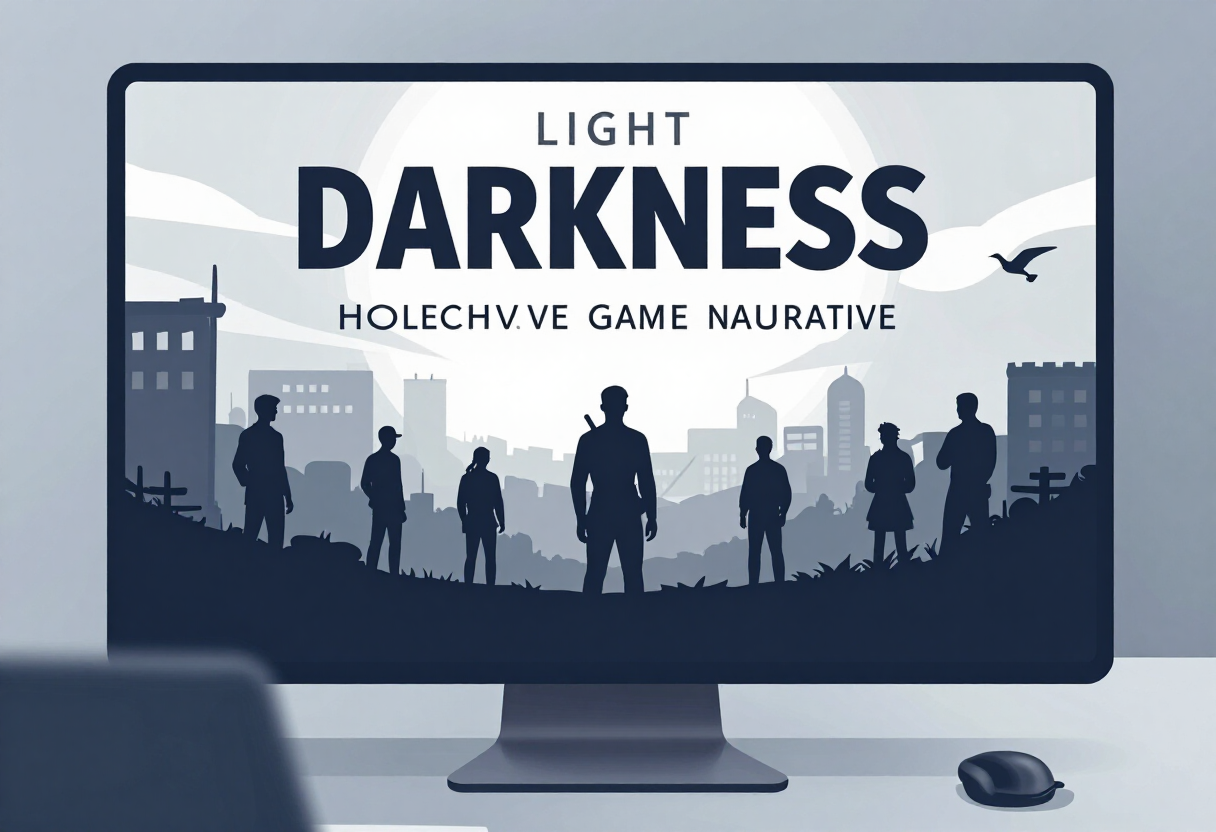
An academic's miniature Grand Theft Auto, set in a perpetually sunlit Pittsburgh, reframes satirical open-world gameplay as a model of life after capitalism rather than a critique of the present.
Programme
- The project is described in published coverage as a 'miniature Grand Theft Auto' set in Pittsburgh.
- The in-game city runs on permanent sun, with the diurnal cycle collapsed into a single light.
- The maker is an academic working outside the commercial game industry.
- The work explicitly reframes capitalism critique as a depiction of 'what might come after.'
- Pittsburgh is used as the symbolic site, leveraging its post-industrial American legibility.
A utopian video game set in a perpetually sunlit Pittsburgh uses the visual grammar of Grand Theft Auto to imagine life after capitalism, its academic creator argues in published coverage of the project.
The source describes the work as "a miniature Grand Theft Auto," and it relocates the open-world genre's satirical template to a shrunken Pennsylvania cityscape. The framing is direct: the project "goes beyond critiquing capitalism to show what might come after."
What the miniature scale changes
By shrinking the established GTA idiom — the city blocks, the highways, the rooftop vantage points — the academic-maker signals the project's distance from a commercial blockbuster. A diorama is not a playable parody. It is, on the available evidence, a thought experiment that uses the recognizable vocabulary of a major franchise to make a different proposition legible.
The phrase "It's Always Sunny in Pittsburgh" doubles as weather and thesis. The city never clouds over; the diurnal cycle resolves into a single, indefinite light. The maker removes the noir atmospherics long associated with open-world crime games, and with them the moral palette the genre has trained its players to expect.
From critique to construction
The source's language carefully distinguishes the project from games that primarily satirize economic arrangements. The maker is not, on this evidence, interested in mocking scarcity, debt, or surveillance from within. The interest is in showing the world that might be built once those structures are removed — rendered, navigable, and explorable at miniature scale.
That shift from critique to construction is the project's central argument. The published description frames the work as an attempt to depict the "after" rather than to keep circling the "now." That ambition places the game in conversation with two decades of politically legible independent games, and the source's own claim is that the Pittsburgh project advances past satire into proposition.
Why Pittsburgh, why GTA
Pittsburgh itself supplies the symbolic load. A post-industrial American city long associated with rust, fog, and weather-coded melancholy becomes, under permanent sun, a clean test case for civic reconstruction. The project does not propose Pittsburgh as utopia. It uses Pittsburgh as a site legible to an American audience that already knows what decline looks like, and asks that audience to imagine that geography running on different rules.
The decision to work inside the Grand Theft Auto idiom — rather than to invent a new visual language — is itself the argument. A post-capitalist imaginary cannot be proposed in the abstract, the work implies. It has to instantiate itself in a system players already know how to read. The miniature is a teaching tool, and the familiar franchise is its curriculum.
What comes next for the project
For the arts audience, the work sits inside a wider conversation about utopia as a built, walkable, playable form. Its next moves — distribution, public exhibition, peer-reviewed publication — will determine whether the game reaches players beyond the academic conference circuit. The closed, small-scale nature of the work is at once its political discipline and its distribution ceiling.
If the maker releases the project outside the academy, the GTA-coded vocabulary will do most of the public-relations work. American players already know how to read a city block, a highway, and a rooftop. The maker is betting that the same literacy, pointed at a Pittsburgh under permanent sun, can carry a different message than the one the original genre carried.
Source: NYT Arts
More from Marcus Bennett
Show full bio
Staff writer covering industry trends and analytics at Arts & Voices.
358 articles