Iphigénie en Tauride review: sacrifice, stylisation and French at ENO
ENO’s first staging of Gluck and Guillard’s 1779 Iphigénie en Tauride pairs clinical ritual with strong singing, but its French-language policy tests ENO’s English identity.
Programme
- Gluck and his librettist Guillard adapted Iphigénie en Tauride from Euripides in 1779.
- ENO staged Iphigénie en Tauride at the Coliseum for the first time.
- The production is sung entirely in French and uses surtitles.
- Turner’s Noyes Fludde won the company an Olivier award in 2020.
- Blackheath Halls staged Iphigénie in English as a community opera last year.
By Grace Kim
English National Opera (ENO) has staged Iphigénie en Tauride at the Coliseum for the first time. Gluck and his librettist (text writer) Guillard adapted Euripides’ story of Iphigénie among the Taurians in 1779. The review frames its thesis with economy: “Human sacrifice first; ask questions later.”
Lyndsey Turner directs the production. Her sparky Noyes Fludde won the company an Olivier award in 2020. Soutra Gilmour’s set forms a narrow rectangle, while Tim Mitchell bathes the scene in evening tones.
Within that frame, Iphigénie stands among many identical priestesses in rippling wine-red folds. Her office requires her to sacrifice any stranger who reaches the shore to Diana; her next victim may be her unrecognised brother Orestes. Only an intervention by Diana ends the threat.
Opening night brought a lighting glitch. The scheme suddenly grew even dimmer during King Thoas’s aria, briefly halting the performance.
The review finds that Gilmour’s autumnal simplicity accommodates the story’s potential horror and clinical nature. Small bloodstains mark the priestesses’ aprons, while rubber gauntlets cover their hands as they scrub the temple floor. The temple resembles an autopsy room, making sacrifice look like procedure rather than spectacle.
Morgan Pearse’s King Thoas appears as a grey-suited thug. He removes his leather gloves only to singe his palm on the hot coals of Diana’s shrine. His similarly tailored male subjects contrast with the messier band of Greeks in sailors’ oilskins (waterproof jackets), including Orestes and Pylades.
The final battle feels unconvincing, according to the review, but the concluding tableau is touching. That split judgment preserves the production’s central tension: its images of ritual remain stronger than its staging of combat.
The music and voices
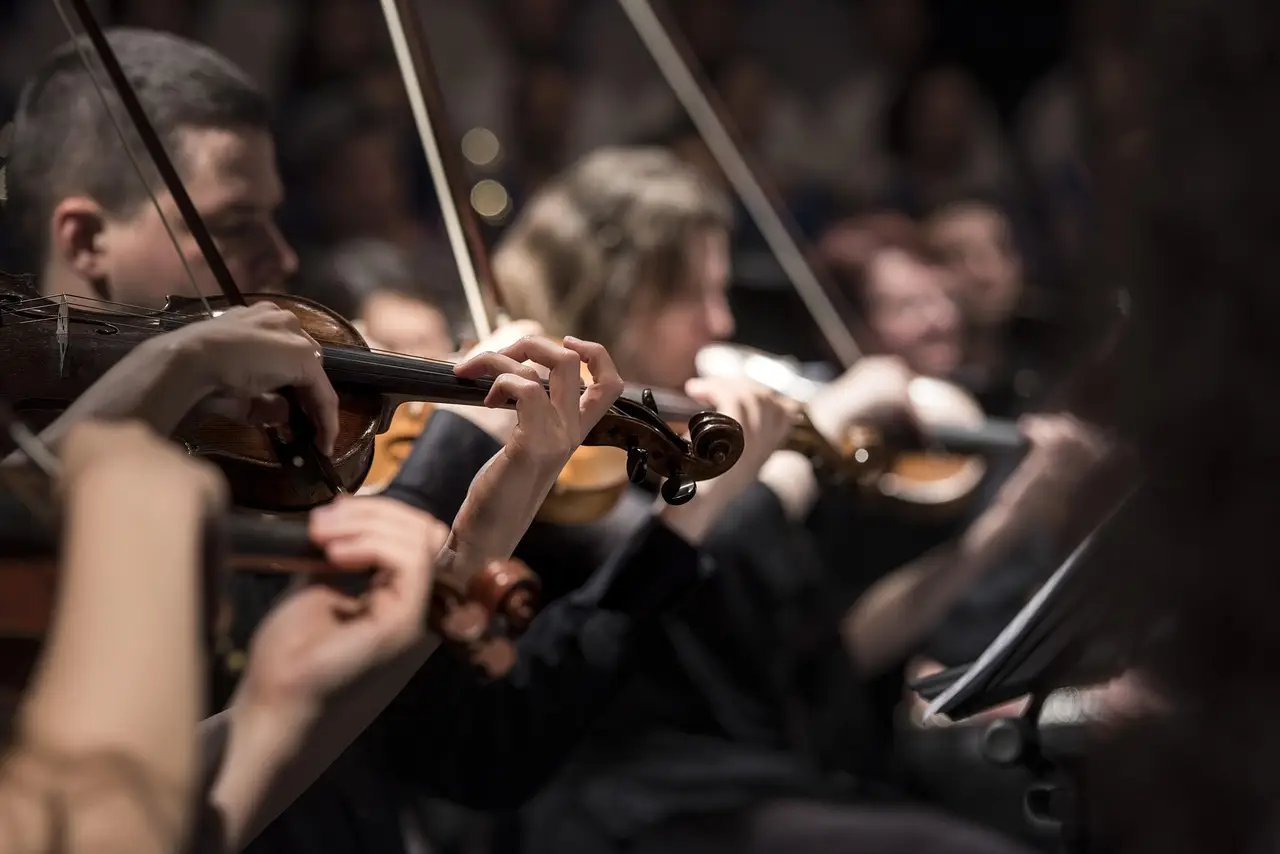
Conductor David Bates drives the ENO ensemble through the choruses the review describes as “bloodthirsty yet jolly,” with vigour. The orchestra supplies sonorous warmth, giving the opera’s violence a vivid theatrical pulse.
The three leads give the production its clearest human focus:
- Christine Rice sings Iphigénie with intensity and deep feeling.
- Nick Pritchard’s bright, honeyed tenor gives the loyal Pylades an emotional pull.
- Jacques Imbrailo’s passionate Oreste stands out most, with a huge, warm baritone (a low male voice). The bond between Oreste and Pylades moves without being overdone.
The supporting roles are well cast. Pearse brings authority to Thoas, while child soprano Zoe Houghton sings Diana’s lines beautifully.
What does singing in French change for ENO?
The choice remains unexplained: every character sings in French, although English National Opera’s long-standing remit is opera in English. Blackheath Halls staged Iphigénie as a community opera in English last year, so the review notes that a singable translation already exists.
At the Coliseum, surtitles (on-screen translations of the sung text) allow audiences to follow the text in French, and some viewers will say the language therefore does not matter. Others find the whole production more stylised and less directly communicative than a usual ENO show.
The review’s final objection is institutional rather than musical: ENO risks weakening its USP (unique selling point) at a critical time for the company’s future. That challenge leaves Turner’s stylistic freedom and the company’s traditional remit in direct tension.
Turner’s strongest achievement is to make ritual itself the subject. Repeated gestures, stains and uniforms turn human sacrifice into a sequence of controlled tasks, while the strong leads and warm orchestra keep the music emotionally legible. For ENO, the practical test is whether it can preserve that distinctiveness without making its English-language identity less coherent.
Source: theguardian.com
More from Grace Kim
Show full bio
Correspondent covering technology and product news in arts in the broadest sense at Arts & Voices.
1,162 articles