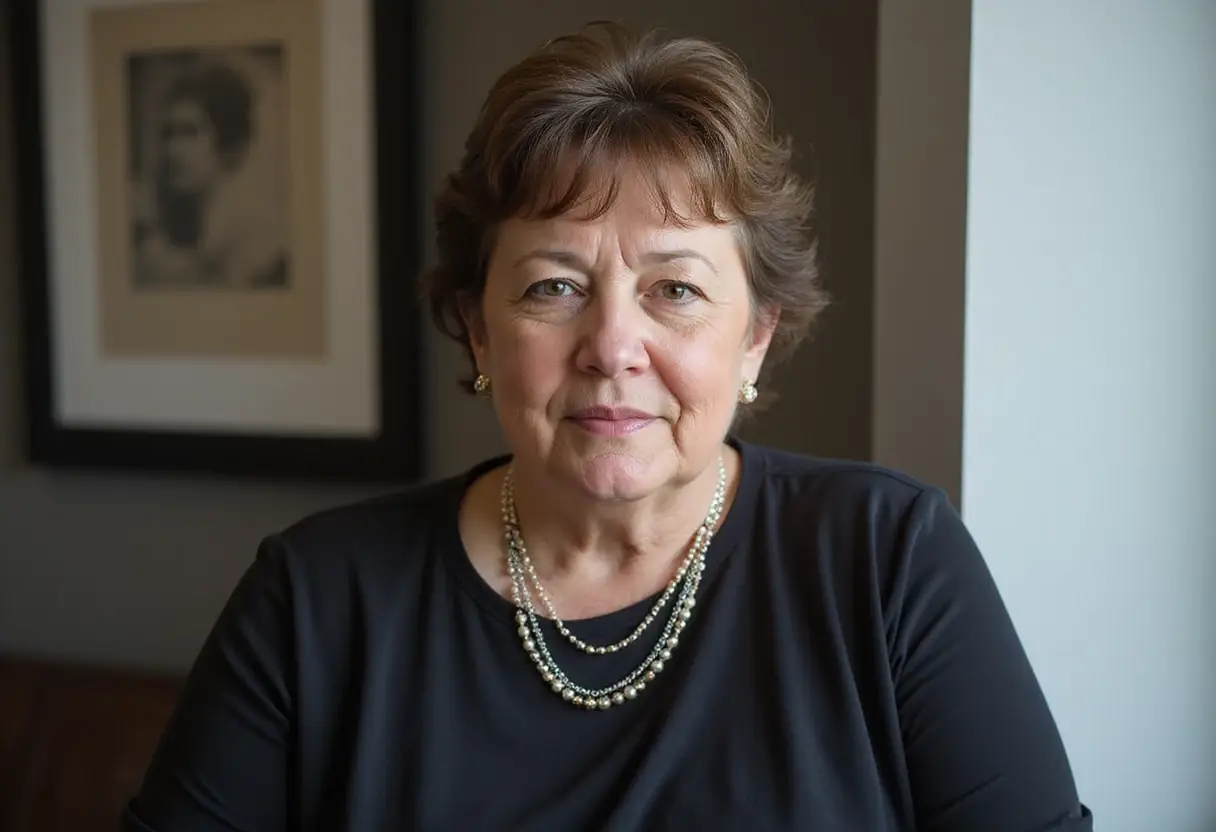
Jacqueline Van Quaille, 'La diva delle Fiandre', Dies at 90
The Ghent soprano Jacqueline Van Quaille, 'La diva delle Fiandre', has died at 90 after 56 years on stage, from Tosca in Ghent to Salzburg in 2000.
Programme
- Jacqueline Van Quaille died aged 90; her death was announced in an obituary dated 16 October 2026.
- She spent 56 years on stage, from her 1957 Conservatory graduation in Ghent to the short film Passé.
- In 1963 she sang in the French premiere of Busoni's Doktor Faust at the Théâtre des Champs-Élysées.
- She appeared at the Salzburg Festival in 2000 in Offenbach's La Belle Hélène.
- In 2014, aged 78, she performed in LOD's theatre production Ghost Road with Viviane De Muynck.
Jacqueline Van Quaille, the Ghent soprano known as "La diva delle Fiandre" (the Diva of Flanders), has died at 90, according to an obituary by Freddy Verschaffel published in Ghent on 16 October 2026. Her career on stage spanned 56 years.
Born in Gentbrugge on 6 October 1936, Van Quaille studied singing with Madame Teugels and lyric theatre with Karel Locufier at the Royal Conservatory of Music in Ghent. She finished her studies in 1957 and went straight into work: the West Flemish Operetta Company in Kortrijk and Roeselare, and the Royal Opera in Ghent, where she sang Pamina in Die Zauberflöte.
Ghent became her artistic base. She built her reputation there in French and Italian repertoire — Guillaume Tell opposite Tony Poncet, Otello, La Traviata (which she studied with the Ghent soprano Vina Bovy), La Forza del Destino, La Fanciulla del West and, above all, her signature Tosca. Operetta ran alongside: Das Land des Lächelns, Die Lustige Witwe and Der Zigeunerbaron with Cesare Curzi and Rudolf Schock.
How did the international career unfold?
The mechanism was prizes, then contracts. She won the King Baudouin Prize in Verviers, took a permanent contract in Wuppertal, and in 1963 appeared in Paris at the Théâtre des Champs-Élysées in the French premiere of Ferruccio Busoni's Doktor Faust, sharing the programme with Mario Del Monaco. More work followed in Nice and Besançon. In Frankfurt she sang Chrysothemis opposite Astrid Varnay's Elektra. Graz engaged her for several years, and the Vienna Volksoper called her back for Der Zigeunerbaron.
She then moved to Italy for lessons with Ettore Campogalliani, the teacher of Renata Tebaldi and Carlo Bergonzi. An audition at La Scala led to acceptance and an offer to study at the Accademia della Scala — but Graz held her contract and would not release her. After fulfilling those commitments, and now the mother of three children, she chose to perform closer to home.
The Centre Lyrique de Wallonie in Liège engaged her for spinto roles (heavier, dramatic soprano parts). There she sang Un Ballo in Maschera and La Forza del Destino alongside two Metropolitan Opera stars, Nicola Herlea and Barry Morell, plus Andrea Chénier in French with Alain Vanzo, Strauss's Arabella with Julien Haas, and Macbeth with Gilbert Dubuc.
What were the high points?
Ghent and Antwerp saw her widest range: the Marschallin in Der Rosenkavalier, Fidelio, Il Tabarro, Cavalleria, Mathis der Mahler, Tiefland, Tannhäuser, La Damnation de Faust. In Ghent she sang Adriana Lecouvreur with her world-famous fellow Ghent native Rita Gorr, Francesca da Rimini, Manon Lescaut, Die Walküre, Korngold's Die Tote Stadt and Magda Sorel in Menotti's The Consul — a role she travelled to New York to study.
That New York trip produced what she considered the finest compliment of her career. After an audition at Carnegie Hall for impresario Thea Dispeker, she was told: "You did make some mistakes, just like Montserrat Caballé, but of course she is La Caballé."
Her most extraordinary day came at the Royal Opera in Ghent: a morning concert at the Vooruit festival hall, the premiere of La Forza del Destino in the afternoon, and the final performance of Tosca in the evening — three major appearances in a single Sunday.
Later work included the Festival of Flanders, La Monnaie in Brussels in Les Troyens with Guy Chauvet and Der Fliegende Holländer, and Aix-en-Provence in Onegin with Peter Mattei, Guryakova and Semenchuk. She took Offenbach's La Belle Hélène to the Salzburg Festival in 2000, sang Isolde opposite Claude Heater's Tristan for RTBF in a production filmed on the Belgian coast and at Ghent's Gravensteen Castle, and played Bianca Castafiore in the musical Tintin and the Temple of the Sun.
What does her legacy leave behind?
She kept working late. In 2014, aged 78, she appeared in Ghost Road, a theatre production by LOD with Viviane De Muynck, staged in Belgium and abroad. Her final work was the short film Passé, with Luc De Bruycker and Koen Crucke, performed in the Ghent dialect. During the turbulent founding period of the Flemish Opera, she started her own operetta company, Aruna, and taught at the Ghent Music Academy and privately — one pupil, William Van Der Heyden, became a Bayreuth soloist.
The obituary makes one claim that will be hard to match: she was perhaps the only soprano to have performed in every opera house in Belgium. The Diva of Flanders, indeed.
By Grace Kim
Original: operanostalgia.com
More from Grace Kim
Show full bio
Correspondent covering technology and product news in arts in the broadest sense at Arts & Voices.
597 articles