James Watkins on Clayface's 19 iterations and DC's grim new Gotham
James Watkins reveals 19 Clayface iterations, 65 prosthetic stages, Aaron Paul's cameo and Gotham's grim new look before James Gunn decides what comes next in the DC universe.

Programme
- James Watkins tested 19 iterations of the Clayface monster.
- Tom Rhys Harries wore about 65 prosthetic stages at one point.
- The airplane scene used five pairs of scissors.
- The film marks the first Gotham City appearance in the rebooted DC Universe.
- “Clayface” is now playing in theaters.
By Daniel Okafor
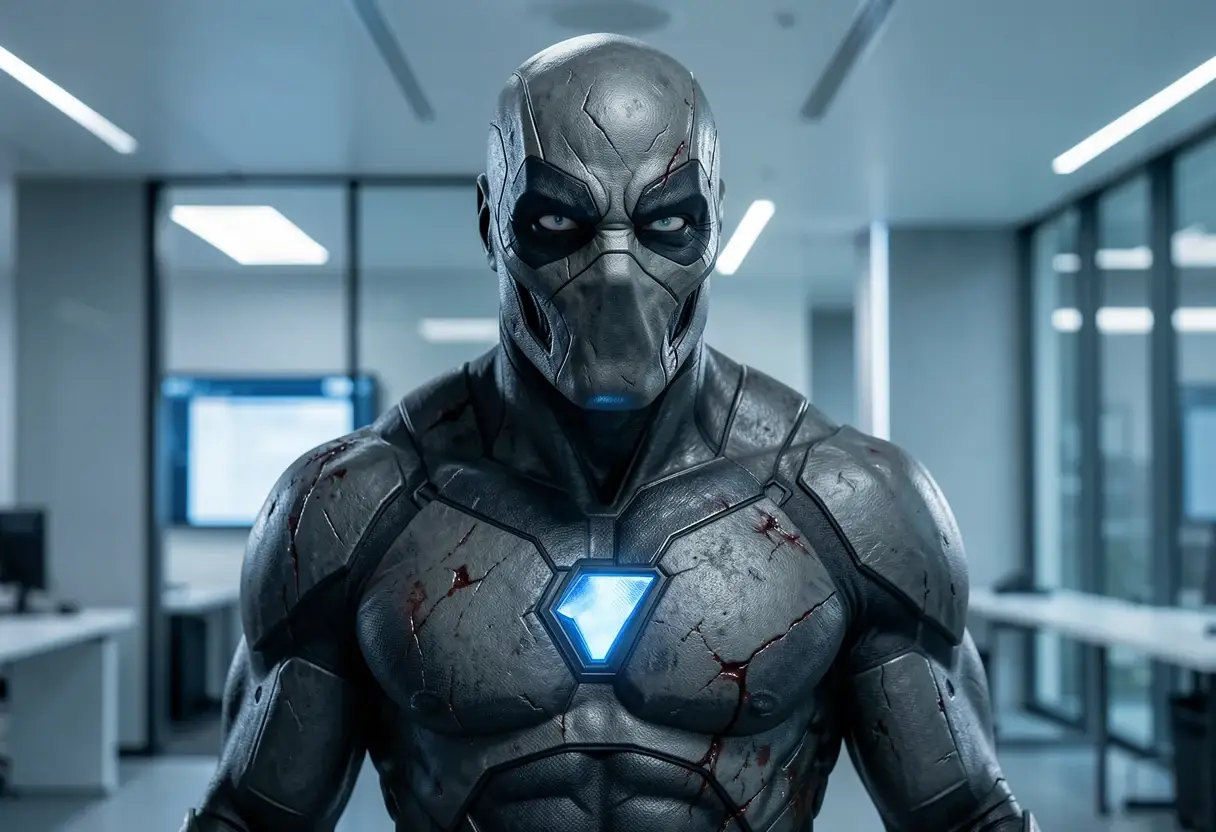
“Clayface” director James Watkins tested 19 monster iterations and reached about 65 prosthetic stages at one point. The R-rated body-horror film, now playing in theaters, gives the rebooted DC Universe its first look at Gotham City.
Spoilers follow for Clayface’s origin and ending.
Watkins directs from a story by Mike Flanagan. Tom Rhys Harries plays Matt Hagen, an A-list actor whom a gangster brutally disfigures. The attack ends his career. An experimental procedure from Dr. Caitlyn Corr, played by Naomi Ackie, heals Matt slowly while turning him into a clay-covered monster.
Matt’s blood cells let him transform and instantly reshape his body into another person. He can become Corr, the gangster or his own father, played in a brief cameo by Aaron Paul. He loses control of his body and sanity, then uses his powers for bloody revenge against the mob.
Watkins’s film ends with Matt killing everyone who wronged him and several innocent people. He is forced to live as a reclusive mud monster in the sewers. For a rebooted DC universe, this is an unusually unforgiving origin story.
The classic villain has appeared in many Batman comics through the years and crossed into animated shows and video games. In James Gunn’s animated series “Creature Commandos,” this version technically already appeared. “Clayface” now supplies its origin story and live-action debut.
James Gunn’s “Superman” kicked off the rebooted universe in Metropolis last year. “Clayface” unveils another major city while audiences await the next installment in Matt Reeves and Robert Pattinson’s Caped Crusader saga.
What changes with Matt Hagen?
Watkins said Mike Flanagan’s script drew on bits from several Clayface iterations before choosing the central journey. He connected the character’s lineage to Basil Karlo and Boris Karloff, and to the Golden Age of Hollywood. He wanted the world slightly timeless while still able to play as contemporary.
Watkins said: “But the key journey, and that’s what Mike had chosen, was the Matt Hagen version. If you’d have gone with Basil Karlo, it’s a little bit too gothic or too hard to do in such a modern idiom. The Matt Hagen is a more relatable version.”
How did Gotham become so grim?
Watkins and production designer James Price deliberately wanted Gotham to feel muddy and oppressive. The buildings dominate. Their references included 1930s German expressionist cinema, with massive structures, odd angles and noir shadows, plus New York street photography from the ’70s, ’80s and ’90s.
He said they studied New York before its cleanup. Neon and practical lighting (lamps visible in frame) fill the streets; so do dirt and eccentricity. The city barely shows the sky and carries a heavy atmosphere.
Watkins framed Gotham as the opposite of Coast City: bright sunshine, sky, sea, verdant greens and texture give way to oppressive buildings and shadow.
How practical are the scares?
Much of the nightclub face-swapping relies on in-camera wipes (transitions hidden by an object crossing the lens). Watkins wanted viewers to enjoy Matt’s payback before it turns excessive. A pillar concealed one wipe; another actor or Harries emerged for the repeated shot. He described the old-school work as fun.
The stair fall used two stunt performers. For bodies bent out of shape afterward, the team used a contortionist. Watkins said his rule was to try a practical effect (physical action captured on camera) whenever possible, keeping such work on camera when he could.
How was Clayface built?
Watkins assembled references from many comic versions and tested 19 iterations. He wanted to honor the comics but make the creature work in live action. His priority was the emotion of the man inside the monster.
He focused on the left eye, seeking pain, heartbreak, a scream and the quality of Matt’s voice. He first responded to the script’s tragedy and Matt’s route to that outcome. He called the finishing work arduous but fun. Both readings can be true.
At one point, Harries wore about 65 prosthetic stages (successive sets of physical facial appliances). The stages included bandages and subtle changes in melts and droops. Some had a pulley that a crew member could tug.
Watkins said digital visual effects could augment movements Harries could not make, while the base prosthetic layer supplied heft. He also said the placement of one flesh fold could change whether a design felt real, though the judgment remained unquantifiable.
Who handled the most physical transformations?
Watkins said he admired Aaron Paul and asked who could play Matt’s father, then contacted the actor, whom he believed was living in Paris. He called Paul a nice man, a good sport and a fine actor. He treated the appearance as an Easter egg (a hidden reference): Matt resembles his father without being him.
Paul said: “Yeah, cool DC movie. I’ll show my face for a moment.”
In Corey’s death, Matt pulls his friend into his chest. Watkins said the central action was practical, with digital augmentation (additional digital imagery). Harries wore a rig with a large cavity; Josh James, who played Corey, entered it. Prosthetic makeup, not visual effects (VFX), created the tactile image. Watkins said that physical texture was difficult to replicate.
In the airplane sequence, Matt cuts strips of clay between his eyes with scissors. Harries wore contact lenses and prosthetic makeup. The set used five pairs of scissors:
- sharp
- blunt
- rubber
- one with a green-screen tip
- one without a tip
A gimbal (stabilized camera rig) let the bathroom move in real time and create jolts. Watkins spoke through a microphone, directing jolts and Harries’s reactions. Harries found a way to position a blade just above his eye, which did not show on camera. He remained in control and safe. For close-ups, the crew used an enormous eyeball and massive scissors.
What comes after Clayface?
The film contains no overt Batman reference. Watkins said the graphics department continually inserted posters and other material, so he likely missed some Easter eggs. He saw no need to force more references into the narrative. His approach was to tell a standalone story without gimmick.
He said there was zero pressure to add material. He had signed up for a story he believed in and tried to tell it as well as he could.
Watkins left any Clayface move against Robert Pattinson’s Batman or another hero to James Gunn. He valued the standalone nature and was not trying to introduce the character with an immediate sequel hook. His goal was to present Clayface as a complete experience rather than setup.
For now, Clayface remains in the sewers. His next move belongs to Gunn.
Source: Variety Film
More from Daniel Okafor
Show full bio
News editor covering companies, deals and strategy in arts in the broadest sense at Arts & Voices.
732 articles