Jeissy Trompiz's 'Three Houses' Heads to Vancouver Forum
Vancouver Film Festival has selected Jeissy Trompiz's documentary "Three Houses" (Tres casas) for its newly launched Business Hub Works-In-Progress Forum. Trompiz, an Afro-Indigenous filmmaker, has spent four years producing the film.
Why a video letter from Maracaibo?
Trompiz left Maracaibo in 2014 to study at the International School of Film and TV in Cuba, just before Venezuela's economic and political crisis deepened. He completed a residency in Italy, made short films in Cuba and Indonesia, and settled in the Dominican Republic in 2019. The pandemic and passport-renewal problems kept him away from Venezuela for about six years.
"I don't know what to tell you."
That was his answer when his Brazilian filmmaker friend asked about Venezuela. When Trompiz finally returned home, he told Variety, he found a country he could no longer explain — even to himself.
"The situation was really sad and shocking," Trompiz said. The comparison to Cuba stayed with him. "When I went back to Venezuela, I started to think: Now I can tell you."
What does the film show?
Trompiz initially shot on the streets with a mobile phone. His mother worried about his safety. She had promoted the opposition movement, seen friends jailed, faced accusations, and lost a public job. Local mafias and extortion posed further threats.
"I couldn't shoot with my camera in the street anymore, because my mom was afraid to be extorted."
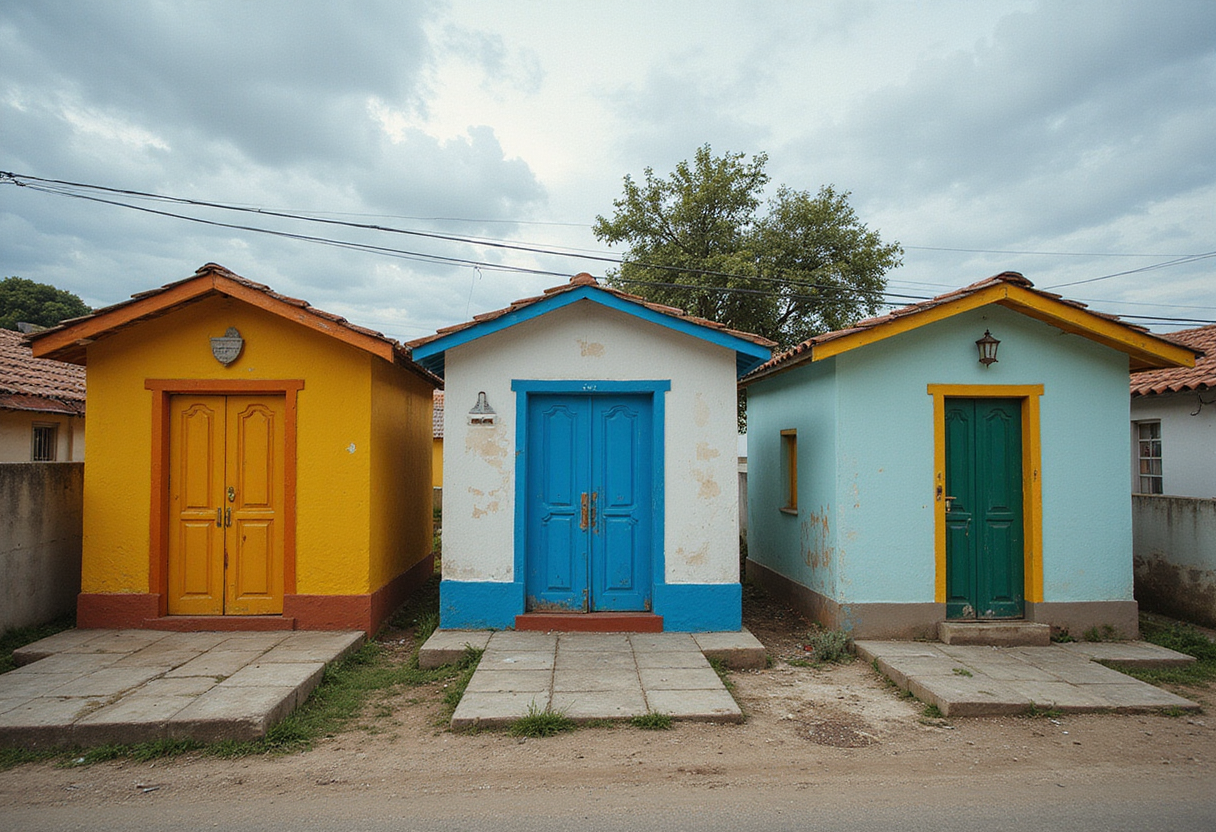
The film moved indoors. Three family homes. Ordinary people collecting modest salaries under Venezuela's government. Trompiz's mother features prominently. She told him after viewing a cut: "If you believe that it will help the political situation in Venezuela in any way, if it at least helps in this process of trying to look for a democracy in Venezuela — do it. Do not be afraid for me."
"Those are the kinds of conversations [you have]," Trompiz said.
Why does Trompiz frame his community as the 'periphery of the periphery'?
Trompiz grew up on the edge of Maracaibo. He sees his community as existing on a kind of periphery — geographically, politically, and culturally.
"Caracas is what much of the outside world pictures when it thinks of Venezuela," he told Variety. The arts, he argues, need to rethink their inclusion of other places. They carry "different points of view that can create a more complex perception, analytical situation, and narrative." Afro and Indigenous communities, he says, sit in the "periphery of the periphery."
How has Venezuela's political shift reshaped the film?
Trompiz could not celebrate Nicolás Maduro's removal. "I don't want to thank Trump for this. I wanted Maduro out, but not with U.S. intervention, because it won't be free."
The root of fascism, he says, is still in Caracas. Millions have left the country, leaving those who remain uncertain about what comes next.
"It's a terrible situation, because it's like a two-headed political government. Trump and this other government from Venezuela."
He notes small improvements: less fear of jailing, some opposition figures released, small protests possible, and somewhat more criticism of the government on television, though not U.S. criticism. Critics remain jailed for past social-media posts, and economic conditions have worsened.
What does Trompiz want the film to argue?
"Three Houses" does not target a single government. "Even a left-side government can be fascist," Trompiz said. With U.S. intervention, he added, "we can see that a left or right [leaning] government can not only be fascist, but can also become allies."
Working on the film has taken an emotional toll. "It's worse than therapy," Trompiz said, describing the rollercoaster of emotions he experienced while editing. "I cried when I hadn't cried before."
"When I was in Venezuela, I was trying to feel stronger. A part of me was proud, saying, 'I don't want to cry for this government, or for this oppression.' But when I started to work on this film, I started to cry. I got sad, and I got angry, and then the reflection starts again. What can I do? And the film also is part of the reflection."
"Three Houses" is produced by Alamar Films (Venezuela), Piso Tres (Dominican Republic) and Peixe Aranha (Portugal), with support from the Doha Film Institute and Eurodoc Caribe. The Vancouver Works-In-Progress Forum will test whether a four-year project, built under threat of extortion and through a churning political landscape, can secure the partners it needs to travel to festivals beyond Caracas.
Source: Variety Film
More from Elena Vasquez
Show full bio
Senior reporter covering media and advertising at Arts & Voices.
369 articles