Programme
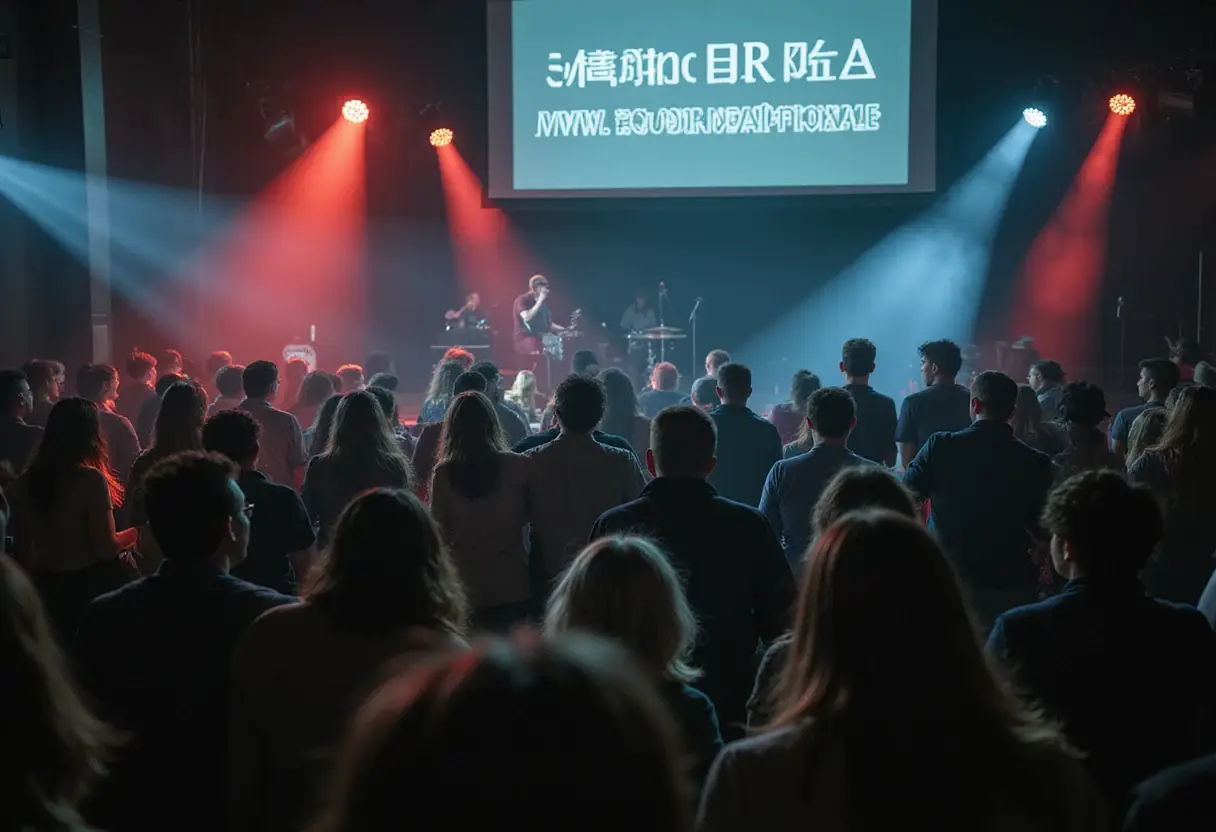
- Wildling Kollektiv performs Nov. 13 at Sunset Village Music Hall and Nov. 14 at 2727 Gallery in Berkeley.
- At age 14, Ibsen’s chorus group encountered a Denver choir singing a Russian motet.
- At Pepperdine University, Ibsen studied three fields—voice, piano and composition—while Brig Urias studied guitar with Christopher Parkening.
- Ibsen won the San Francisco Symphony’s Emerging Black Composers Project and spent time in the Vienna Boys Choir.
- Four program strands include John Dowland, African American spirituals, Spanish and Latin American songs, and Korn’s “Freak on a Leash.”
By Elena Vasquez
Composer, singer and SF Classical Voice contributor Jens Ibsen will perform with guitarist Brig Urias at Sunset Village Music Hall on Friday, Nov. 13, according to SF Classical Voice.
The duo will also perform as Wildling Kollektiv at 2727 Gallery in Berkeley on Saturday, Nov. 14. According to SF Classical Voice, the opening act features Urias and vocalist Marina Davis performing as Shadow Julian.
SF Classical Voice first presented Ibsen as the winner of the San Francisco Symphony’s Emerging Black Composers Project. It also noted his academic training, time in the Vienna Boys Choir and interest in prog metal.
What will the two-night recital include?
SF Classical Voice lists works by John Dowland, well-known Spanish and Latin American songs, African American spirituals and Korn’s “Freak on a Leash” in the program. The repertoire spans distinct musical sources.
Both dates offer breadth rather than a single-genre showcase.
How did Christopher Parkening shape the program?
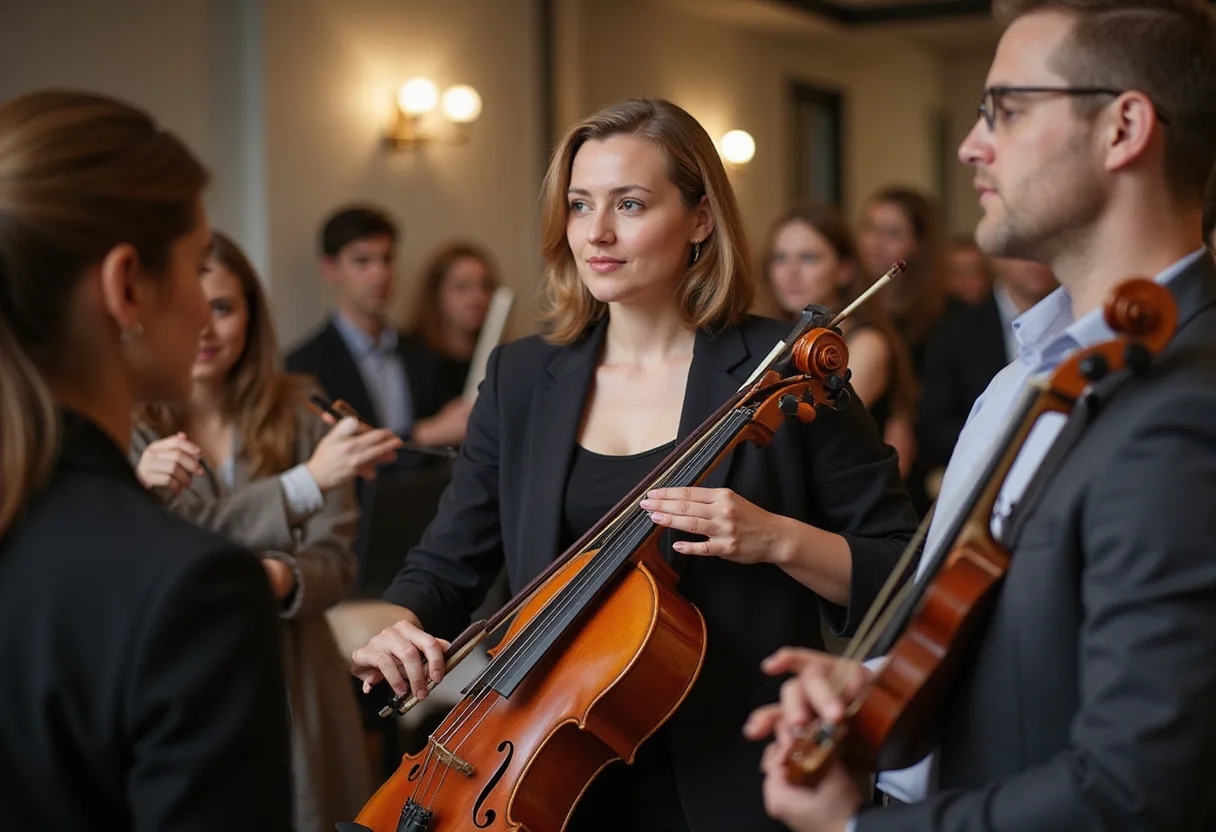
Many songs in the program were performed by Parkening with vocalists Kathleen Battle and Jubilant Sykes, according to SF Classical Voice. Ibsen and Urias met at Pepperdine University, where Ibsen studied voice, piano and composition and Urias studied guitar with Parkening. The profile calls the concert partly a tribute to a beloved teacher.
“Because of my particular voice and my inclinations I need to find myself in all kinds of music. I heard Jubilant sing this music in a masterclass with Parkening and I was taken with it,” Ibsen said.
The program links Parkening’s earlier performances with Ibsen and Urias.
Why does Ibsen resist a single category?
SF Classical Voice attributes Ibsen’s resistance to category to his upbringing. His father drummed Brazilian samba candomblé. His Black mother introduced him to vernacular Black radio music and Angelique Kidjo.
“I grew up in a multicultural household where my dad was drumming Brazilian samba candomblé and I heard vernacular Black music [on the radio] from my Black mother who drove me places. I got put on to [Beninese-French vocalist] Angelique Kidjo through her. So I always had an eclectic musical airspace,” Ibsen said.
His range began at home before formal musical training.
What changed at age 14?
At age 14, Ibsen’s chorus group met a Denver choir whose Russian motet redirected his interest toward Greek and Russian Orthodox repertory. He pursued that repertory independently, according to SF Classical Voice.
“I’ve barely sung the stuff,” Ibsen admitted. “I just really like it. In general, my favorite [classical] composers skew Soviet.”
A single motet widened his tastes without making him a specialist.
What did the School of the Arts allow?
SF Classical Voice places Ibsen at the San Francisco School of the Arts among many like-minded peers. The environment made his hybrid experiments seem ordinary. Violinists played hip-hop in the hallways.
Ibsen said: “In that environment, it didn’t occur to me that anything was unusual about this. When I heard violinists playing hip-hop in the hallways, I was like, ‘do you want to jump on a song with me?’”
He continued: “And so we did a mashup of James Brown’s ‘It’s a Man’s World’ and ‘Drop It Like Its Hot’ by Snoop Dogg and Pharrell Williams.”
The school treated genre boundaries as material for collaboration rather than obstacles.
How wide is Ibsen’s vocal range?
Ibsen sings both baritone and tenor and has developed a highly trained falsetto register, according to SF Classical Voice, which presents his voice as another reason not to assign him a fixed category. The profile says not to expect him to choose among his many cultivated interests.
His voice supplies no single label on which listeners can settle.
What comes next?
SF Classical Voice points readers toward Ibsen’s next SFCV articles and Substack contributions, although the profile supplies no publication dates for either. The recitals will put his wide-ranging program before audiences in San Francisco and Berkeley.
Two November dates will make his breadth audible.
Source: sfcv.org
More from Elena Vasquez
Show full bio
Senior reporter covering technology and product news in arts in the broadest sense at Arts & Voices.
1,123 articles