Justin Mays's 43 psychedelic digital images imagine life in 2085
Los Angeles digital artist Justin Mays presents 43 glitch-inflected images—chrome skulls, holographic crystals and synthetic faces—in a November 2026 gallery staged as a lost archive from 2085.
Programme
- 43 digital images by Justin Mays appear in the November 2026 Design You Trust feature.
- The gallery frames the work as files recovered from an abandoned computer in 2085.
- Mays studied graphic design and motion graphics in Florida, then worked in television production.
- He created live visuals for Miami's nightlife scene before settling in Los Angeles.
- His current practice spans animation, digital collage, experimental design and AI-assisted art.
Justin Mays, a Los Angeles-based digital artist, presents 43 digital images in a November 2026 Design You Trust feature that imagines files recovered from a computer abandoned in 2085.
The feature opens with a scenario: "Imagine stumbling upon an abandoned computer from the year 2085." Its hard drive, the piece suggests, holds the output of "a particularly eccentric cyberpunk philosopher." Inside sit chrome-plated skulls, holographic crystals, mysterious geometric symbols and synthetic faces.
What does Mays's visual world contain?
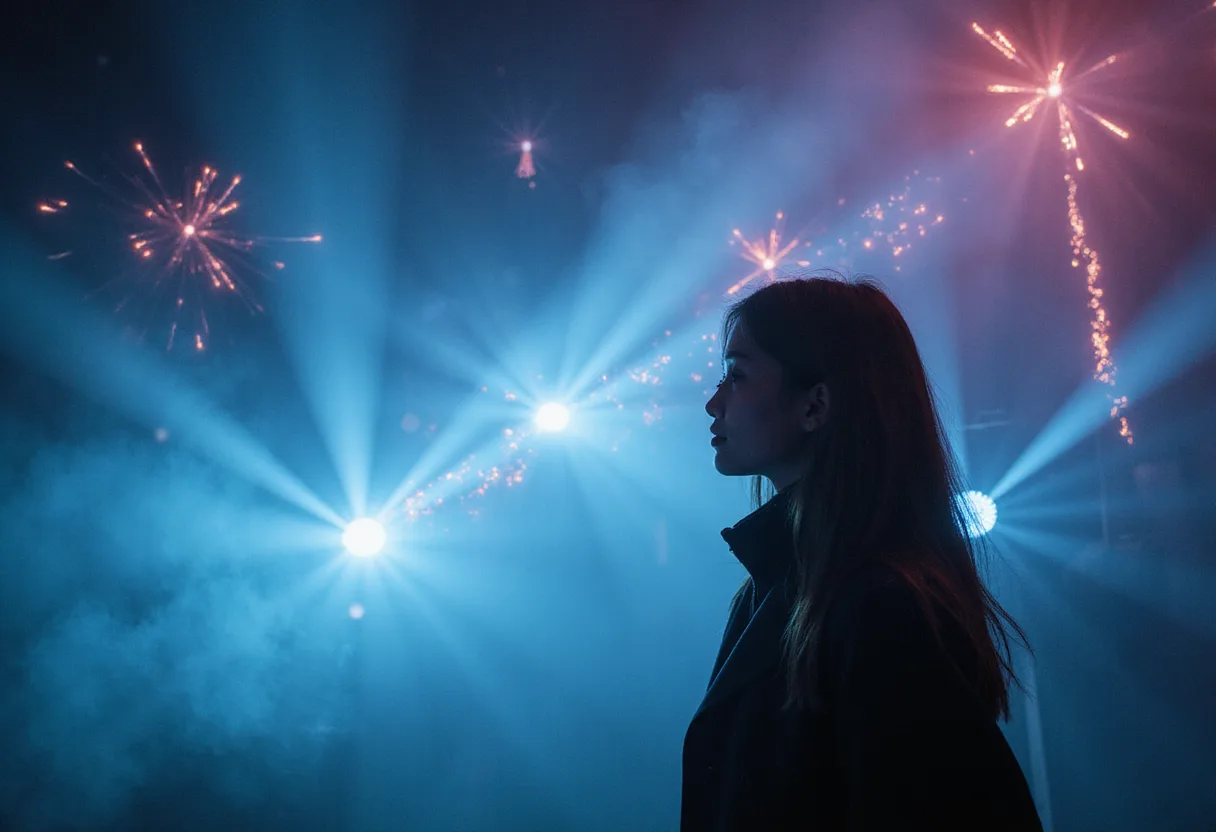
Mays builds his images through bold color and digital manipulation, drawing on Japanese graphic design, glitch aesthetics, sacred geometry and surrealist imagery. The feature describes a look that feels "simultaneously futuristic and nostalgic, spiritual and artificial, minimalist and wonderfully chaotic."
The recurring objects divide into five groups:
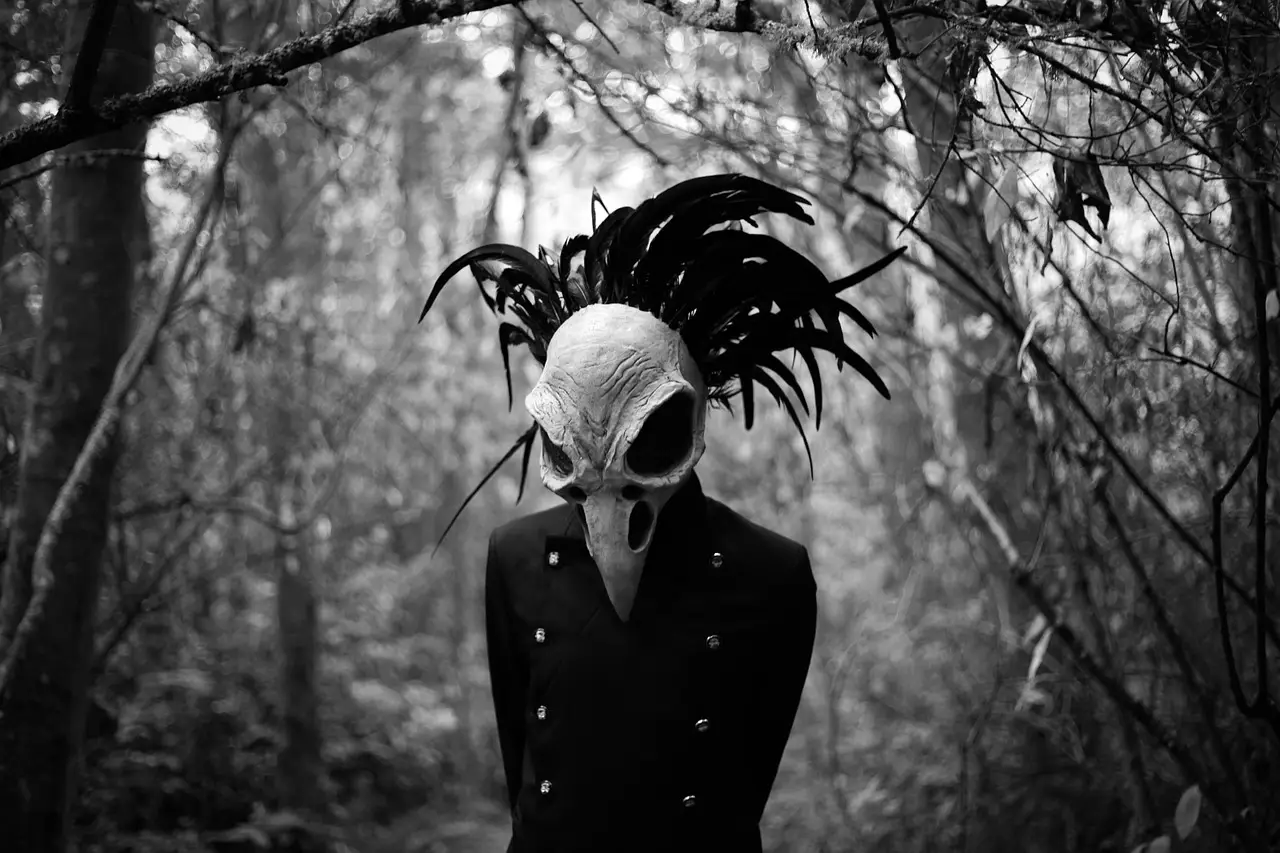
- Chrome-plated skulls, treated as polished objects rather than signs of decay.
- Holographic crystals, refracting color through hard geometric planes.
- Mysterious symbols, arranged as though they encode a private system.
- Synthetic faces, assembled from smooth gradients and iridescent surfaces.
- Mechanical artifacts, set against areas of soft, atmospheric color.
His compositions "frequently combine razor-sharp mechanical details with soft gradients, iridescent surfaces, and strange technological artifacts," holding machine precision against deliberately unstable space.
The result is a set that appears precisely engineered and carelessly discarded at once.
Where do the visual references come from?
According to the feature, Mays draws on four stated traditions: Japanese graphic design, glitch aesthetics, sacred geometry and surrealism. Retro science fiction supplies the setting, while psychedelic experimentation supplies the mood and the push toward altered color.
He also works in a format tied to record sleeves, and the feature's original headline casts the 43 images as album covers from a psychedelic future that never happened, a framing the sequencing sustains across the entire gallery.
The style is a collage of cultural borrowings rather than a single retro-futurist school.
What did Mays do before generative AI?
Mays studied graphic design and motion graphics in Florida, then worked in television production, and he created live visuals for Miami's nightlife scene before settling in Los Angeles, according to the feature.
His practice now spans animation, digital collage, experimental design and AI-assisted art. The profile stresses that he began experimenting with digital imagery "long before the current explosion of generative AI."
The feature supplies no dates for those career moves and names no exhibitions, sales or commissions. His public record, for now, stays visual rather than biographical, which makes the work itself the argument.
The documented career runs from Miami club visuals to AI-assisted collage without commercial milestones.
How does the feature present the work?
The gallery presents 43 plates, mostly at 990 by 1,240 pixels, a roughly 4:5 portrait ratio, while the headline frames them as album covers from a future that never arrived. Images carry no captions or individual titles, and one link sends readers to Mays's Instagram account, maysgrafx.
That curatorial restraint keeps attention on form. A chrome skull operates as emblem and ornament together, while the crystals and symbols imply a system the viewer can read but never fully decode.
The absence of titles leaves the motifs open to interpretation rather than pinning them to a fixed mythology.
What does generative AI change for Mays?
Mays now lists AI-assisted art among his methods, despite beginning his digital experiments before the current generative boom. The tools arrive late to his practice, not as its foundation.
His pre-AI experience in television production and Miami live visuals supplied the timing, motion and technical discipline that the feature attributes to his later collage work. The critical test is whether generative tools sharpen that vocabulary or dissolve its contradictions.
As AI-assisted production becomes routine, Mays's 43-image archive offers a clear benchmark for judging whether the technology extends an artist's identity or replaces it.
Source: designyoutrust.com
More from Elena Vasquez
Show full bio
Senior reporter covering technology and product news in arts in the broadest sense at Arts & Voices.
1,215 articles