Kali Malone's Burning Song: Bach's Leipzig Organ Meets Drone's Pop Turn
Kali Malone's Burning Song, recorded on Bach's organ at Leipzig's Thomaskirche, trades long drones for compact, emotionally direct pieces with Lucy Railton and Stephen O'Malley.
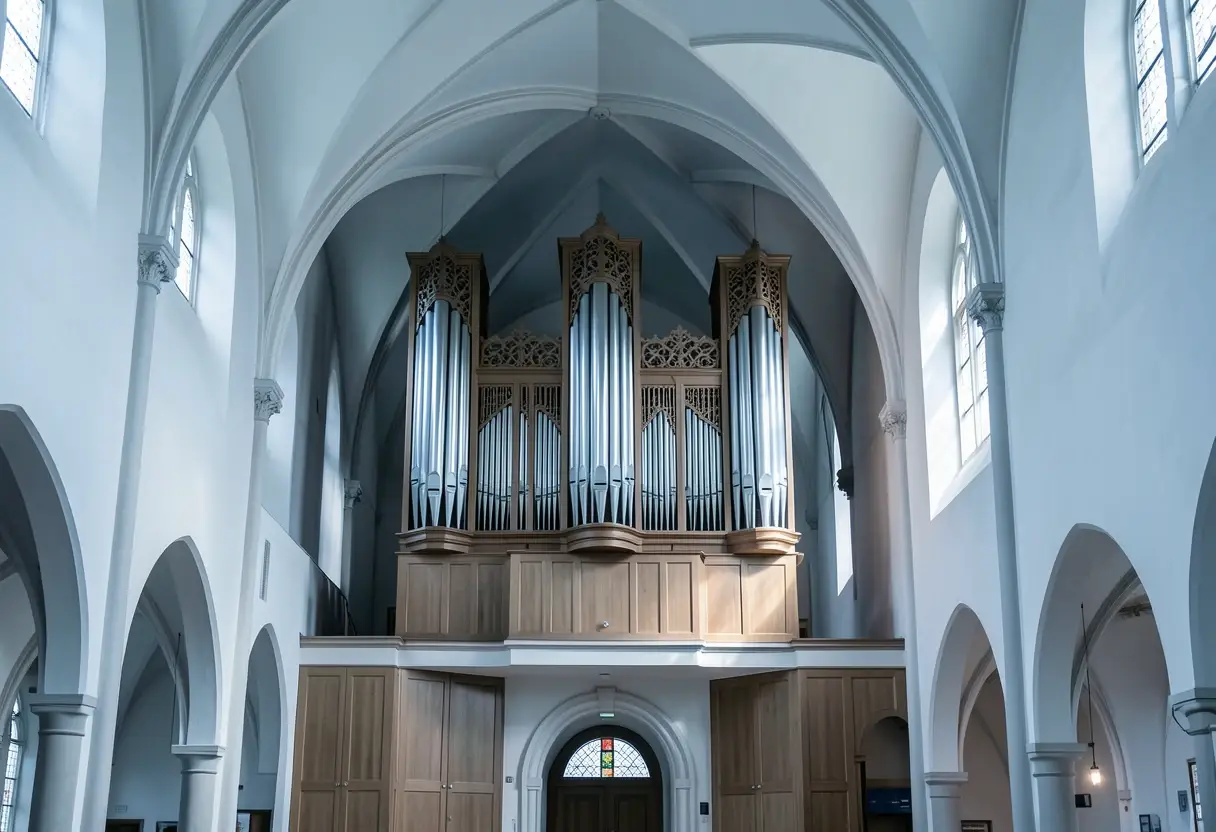
Programme
- Kali Malone recorded Burning Song on the Bach organ at Leipzig's Thomaskirche, where Bach was cantor for 27 years and is buried under the altar
- The album runs 40 minutes with Lucy Railton on cello and Stephen O'Malley of Sunn O))) on bowed acoustic guitar
- The pieces are significantly shorter than Malone's earlier extended drone works and abandon her contrapuntal canon form
Kali Malone recorded her new album Burning Song on the Bach organ at Leipzig's Thomaskirche — the church where Johann Sebastian Bach served as cantor for the last 27 years of his life and where he lies buried beneath the altar.
For an artist known for extended drone works, the record marks a sharp formal shift. The pieces on Burning Song run significantly shorter than the lengthy compositions that built Malone's reputation, and the US composer abandons the contrapuntal canon form (music where a melody overlaps and chases itself) that shaped her earlier writing.
"That made it feel like a church for music," Malone told Blackbird Spyplane, speaking about performing on the instrument above Bach's grave.
Who plays on it, and how?
Malone doesn't work alone here. The album runs 40 minutes and features two collaborators:
- Lucy Railton on cello, whose playing circles ominously on the track Crawling Ashore
- Stephen O'Malley of Sunn O))) on bowed acoustic guitar — also Malone's husband
The trio plays in tight synchronicity, and the review describes their collective sound as "crackle and breath and scrape simmering intensely." Texture, not melody, carries the record.
Individual tracks get vivid treatment. Grieving Figure opens with a sustained note the review compares to "a distant ship's horn," then brightens like the final moments of a fierce sunset. Bells on a Branch starts like a swarm of bees and ends, in the critic's word, utterly parched.
What does this change for Malone's listeners?
In short: attention replaces immersion. The reviewer argues that where Malone's longer pieces are "music to get lost in," the compact forms and liberated mood shifts of Burning Song "command acute attention." You don't drift through this one; you follow it.
The emotional register has shifted too. The review frames Burning Song as Malone's pop record within drone circles — shorter forms, a more direct expressive stance. Drone purists in "some arcane land" may read that as "unforgivable selling out," the critic notes, but "in more rational circles" the result remains 40 minutes of beautiful, plaintive tonality.
Crucially, this isn't sentimentality by numbers. The review explicitly rules out a "Max Richter-style lunge for the cheap seats." Instead, the heavy opening notes of Map the Path come across as solemn yet startlingly direct — the first time, the critic writes, that Malone seems to be "lifting her fingers from the keys and shaking the listener by the shoulders."
Why the venue matters
The Thomaskirche isn't backdrop; it's structural to the record's meaning. Bach wasn't just employed there — he's buried under the altar, making the instrument Malone plays literally sit above the composer's remains. For a drone artist whose entire practice revolves around sustained tones resonating through space, the church's acoustics and its musical inheritance are inseparable from the sound captured on wax.
The move suggests where Malone might head next: shorter forms, trusted collaborators, and instruments loaded with history — a combination that could pull drone music toward listeners who never thought they'd sit still for a 40-minute record of sustained tones.
Original: blackbirdspyplane.com
More from Grace Kim
Show full bio
Correspondent covering technology and product news in arts in the broadest sense at Arts & Voices.
953 articles