Kazakh Tapestry Pioneer Batima Zaurbekova Gets Landmark Retrospective at 80
More than 80 works mark tapestry pioneer Batima Zaurbekova's 80th birthday at Almaty's Kasteyev Museum, making the case for recognition beyond Kazakhstan.
Programme
- "Threads of Heritage" opened September 24 at Almaty's Abylkhan Kasteyev National Museum of Arts and runs through November 9.
- The retrospective presents more than 80 works to mark Batima Zaurbekova's 80th birthday.
- Zaurbekova, born in 1946, received the Shokan Valikhanov State Prize in 1980 and the title Honored Worker of Culture in 2004.
- The Kasteyev's permanent collection holds 18 Zaurbekova tapestries recognized as part of Kazakhstan's national cultural legacy.
- Her newest work, "Transitional Season" (2026), took two months to complete in felt and appliqué.
By Elena Vasquez
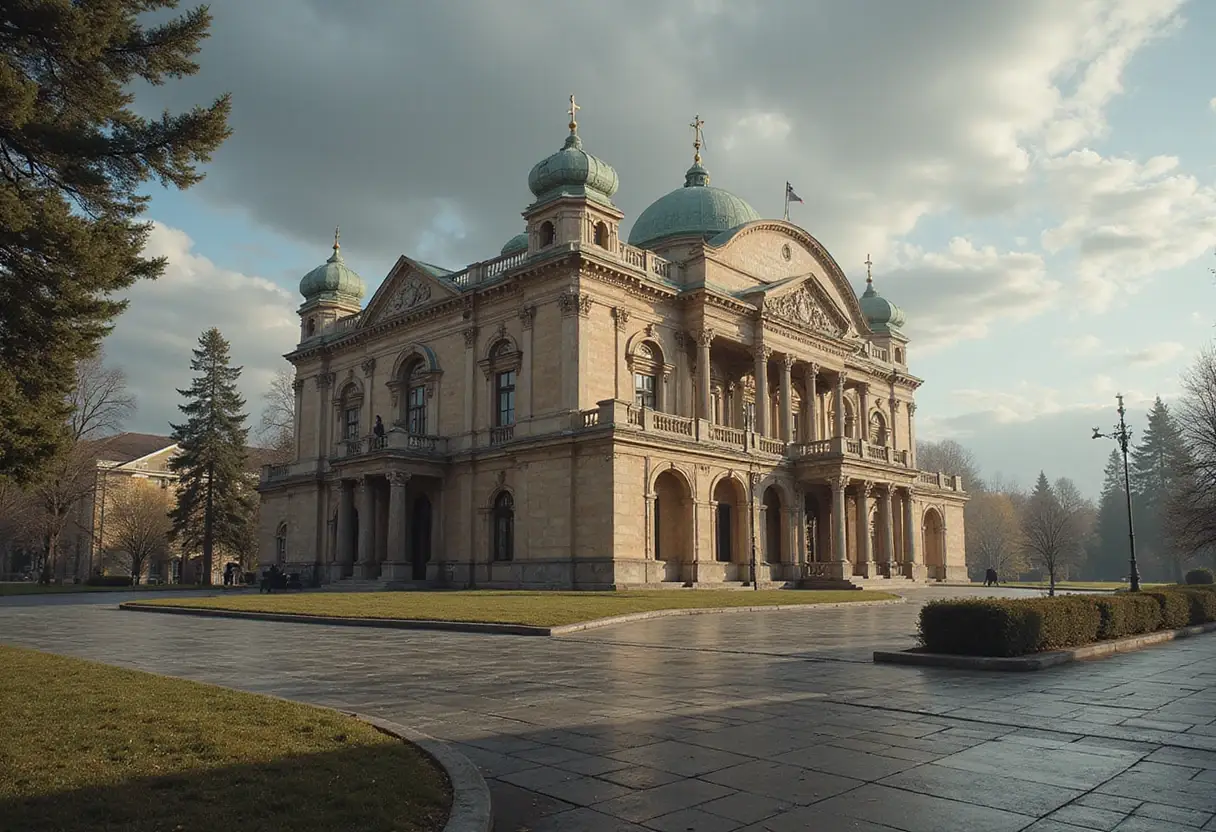
More than 80 works by Batima Zaurbekova went on view September 24 at Almaty's Abylkhan Kasteyev National Museum of Arts of the Republic of Kazakhstan. The retrospective, "Threads of Heritage," marks the tapestry pioneer's 80th birthday and makes the case that an artist celebrated at home deserves an audience abroad.
Zaurbekova is among Kazakhstan's most celebrated artists. Beyond its borders, her name is far less known. The gap says less about her work than about who has been doing the looking — and framing.
The opening drew Kazakhstan's cultural and political elite, including Minister of Culture Arman Kyrybayev and entrepreneur Nurlan Smagulov, who in 2025 opened a private museum of modern and contemporary art — the largest of its kind in Central Asia — not far from the Kasteyev.
"I don't think I have enough words to describe how I'm feeling," Zaurbekova said in an interview at the museum. "I'm feeling really overwhelmed, and I think I would call it happiness."
The show runs through November 9.
How did Zaurbekova find tapestry?
Zaurbekova was born in 1946 in the Zhambyl region west of Almaty, an area dense with Silk Road heritage sites. Her mother, a seamstress specializing in dresses and national costumes, first taught her needlework, textiles and craftsmanship.
She trained as a painter at the Oral Tansykbayev Almaty College of Decorative and Applied Arts, now the Alma-Ata Art School. Tapestry became her medium upon graduating in 1969.
"All the preconditions were there for me to be a painter," Zaurbekova said. "But tapestry was something new, something exciting, and it absorbed me to the extent that even without thinking, I just started doing it."
Working on a vertical loom, her pieces are "back-breakingly slow" to make, she said. The pace never slowed her output. Since 1969 she has produced hundreds of tapestries, from intimate experimental early works to monumental later pieces.
Recognition came early. Tapestry gained momentum in Kazakhstan's fine art world in the early 1970s, and Zaurbekova was identified as one of its pioneers. In 1980 she received the Shokan Valikhanov State Prize of the Kazakh SSR. In 2004, just over a decade after independence, she was named Honored Worker of Culture of the Republic of Kazakhstan.
"Threads of Heritage" draws on rarely seen works from her personal archive and the museum's permanent collection, which holds 18 of her pieces recognized as part of the national cultural legacy. The takeaway: the numbers record a career honored at the state level for four decades.
What does the exhibition argue?
The show moves chronologically but reads the work through two lenses at once: Kazakh themes and motifs, and the figures and ideas of Western Modernism. It acknowledges the Western frame without bowing to it.
Her tapestries draw on Kazakh history — figures in traditional dress, rugged mountain landscapes, ancient symbols — while remaining decisively Modern in form. Wall texts place her in conversation with Paul Klee, particularly his idea that nature is the fundamental guide of form; with the philosophy of Maurice Merleau-Ponty and his concept of unified physical reality; and, conceptually, with Franz Marc, though the texts note the disparate cultural landscapes the two artists worked from.
"I take all these ancient patterns, ancient elements that symbolize something for the Kazakh people, and then I reinterpret them in the Modern context," Zaurbekova said. "My work is a traditional work, it is a national work, not folk, a work from Kazakhstan."
Was the Soviet period a constraint?
Zaurbekova built her career inside the USSR, a context associated with Socialist Realism's dominance. She does not recall it shaping her practice.
"I did not feel any restrictions, any limitations on my work. I was free to do whatever I pleased," she said.
A Western institution might parse that period more closely. The Kasteyev's exhibition all but leaves it out, staying true to the artist's own lived experience.
Is she still working at 80?
For the first 25 years of her practice, Zaurbekova completed every aspect of each work — until, she said, "my eyes wouldn't let me continue." She shifted to drawing and painting and to designing gridded patterns executed with studio assistants.
Her advice to younger fiber artists mirrors what she tells herself: "Keep creating. Always keep creating."
Preparing the exhibition rekindled her. Her daughter began responding to works she found beautiful or fascinating, inspiring the artist again. "I thought my spring of creativity was dry," Zaurbekova said. Now, she said, "I still have energy to do more."
She spent two months on the show's final piece, "Transitional Season" (2026), made of felt and appliqué. "It's a new, experimental, totally different from what I used to do. Apparently, there's still some creative energy left in me!"
Why the international moment may come now
Institutions have recently revisited artists overlooked through structural bias. Zaurbekova does not fit that pattern — awards have marked her career for decades, with this retrospective only the latest.
Her path resembles that of Latin American artists celebrated at home before the wider art world took notice: fiber artist Olga de Amaral, acclaimed in Colombia before her international reputation as an icon of the medium, and Gego (Gertrud Goldschmidt), recognized in Venezuela as a pioneer of abstraction and kinetic art decades before global embrace.
Zaurbekova may be heading for a similar breakout.
For now, her hopes for the show are humbler. "Some may like it, some may not like it," she said. "But I hope that they see me in my works, I hope they embrace what I do, and they are able to sense and feel the message that I was trying to send."
"Threads of Heritage" runs through November 9 at the Abylkhan Kasteyev National Museum of Arts of the Republic of Kazakhstan, Almaty.
Source: artsjournal.com
More from Elena Vasquez
Show full bio
Senior reporter covering technology and product news in arts in the broadest sense at Arts & Voices.
1,158 articles