Kazakhstan's Desert Rock Mosques Join UNESCO World Heritage List
Kazakhstan's five sacred rock mosques of the Mangystau desert joined the UNESCO World Heritage List in July. The 12th-to-18th-century Sufi sites include Beket-Ata and Shopan-Ata.
Programme
- The Rock Mosques of Mangystau joined the UNESCO World Heritage List in July.
- The five complexes — Beket-Ata, Shopan-Ata, Karaman-Ata, Shakpak-Ata and Sultan-Epe — date from the 12th to 18th centuries.
- Beket-Ata lies roughly 170 miles from Aktau in a remote canyon.
- Shopan-Ata's necropolis contains more than 2,000 monuments; Karaman-Ata's stretches across seven hectares.
- The Mangystau desert covers roughly 64,000 square miles.
Kazakhstan's five underground rock mosques of the Mangystau desert joined the UNESCO World Heritage List in July. The "Rock Mosques and Associated Sacred Sites of Mangystau" — Beket-Ata, Shopan-Ata, Karaman-Ata, Shakpak-Ata and Sultan-Epe — are scattered across a roughly 64,000-square-mile desert and collectively date from the 12th to the 18th centuries.
Until about 20 years ago, pilgrims reached the best-known shrine, Beket-Ata, only by a faint trail up steep limestone-and-chalk cliffs. "There was no proper path then, but people made the difficult climb in the heat and wind," said guide Yerzhan Nagmanov, who now leads visitors up stairs carved into the stone. That arduous journey, travelers believed, "was part of the pilgrimage."
Each mosque honors a different Sufi master, and at all five the line between architecture and geology dissolves. Walls, ceilings and floors are all variations of the rock from which the mosques were excavated — carved into caves, tucked along cliff contours and tunneled below ground in a rock-cut style that grew out of nomadic building traditions. Pilgrims come to honor the masters, pray for blessings and seek guidance in times of difficulty.
What does the UNESCO listing change for visitors?
Reaching the sites still requires long drives across remote terrain with limited or no mobile coverage and few fuel services. A sturdy vehicle and a trusted local guide remain essential. The writer toured all five complexes through guided 4x4 trips with Red Maya Travel and Mangystau Tour 999.
The sites themselves:
- Shopan-Ata. Named for a 12th-century Sufi teacher, it holds a 12-chamber rock-cut mosque and a necropolis of more than 2,000 monuments, including domed mausoleums and carved stone steles known as kulpytas. Pilgrims circle two sacred wooden poles three times counterclockwise and tie strips of white cloth to them — customs likely rooted in Shamanic and Tengrian traditions that became intertwined with Muslim saint veneration.
- Beket-Ata. Founded by the 18th-century Sufi teacher Beket Myrzagululy, the mosque lies in a remote canyon about 170 miles from Aktau, the Caspian-side gateway to Mangystau. Its interconnected chambers follow the cliff's curves; an imam receives visitors, and one chamber holds Beket-Ata's grave. A dining hall serves free freshly cooked meat, while visitors leave bread, sweets, tea, yogurt and jam for those who come after.
- Shakpak-Ata. The oldest of the five, on the Tyub-Karagan Peninsula, its cruciform mosque is cut into a chalk cliff whose honeycombed surface formed millions of years ago beneath the ancient Tethys Sea. Drawings and inscriptions in Arabic, Persian and Turkic — some from the 18th century — record pilgrims who crossed Central Asia long before 4x4s and Starlink.
- Sultan-Epe. Set beside a deep canyon watered by a stream through mulberry, buckthorn and blackberry thickets, it honors a protector of seafarers and fishermen overlooking the Caspian. Local tradition names Sultan-Epe as son of Hakim-Ata, a renowned Sufi poet and disciple of Khoja Ahmed Yasawi.
- Karaman-Ata. A seven-hectare necropolis stretches across open desert, dotted with funerary monuments more than 1,000 years old. A narrow passage descends into a circular room associated with Sufi rituals including devotional whirling.
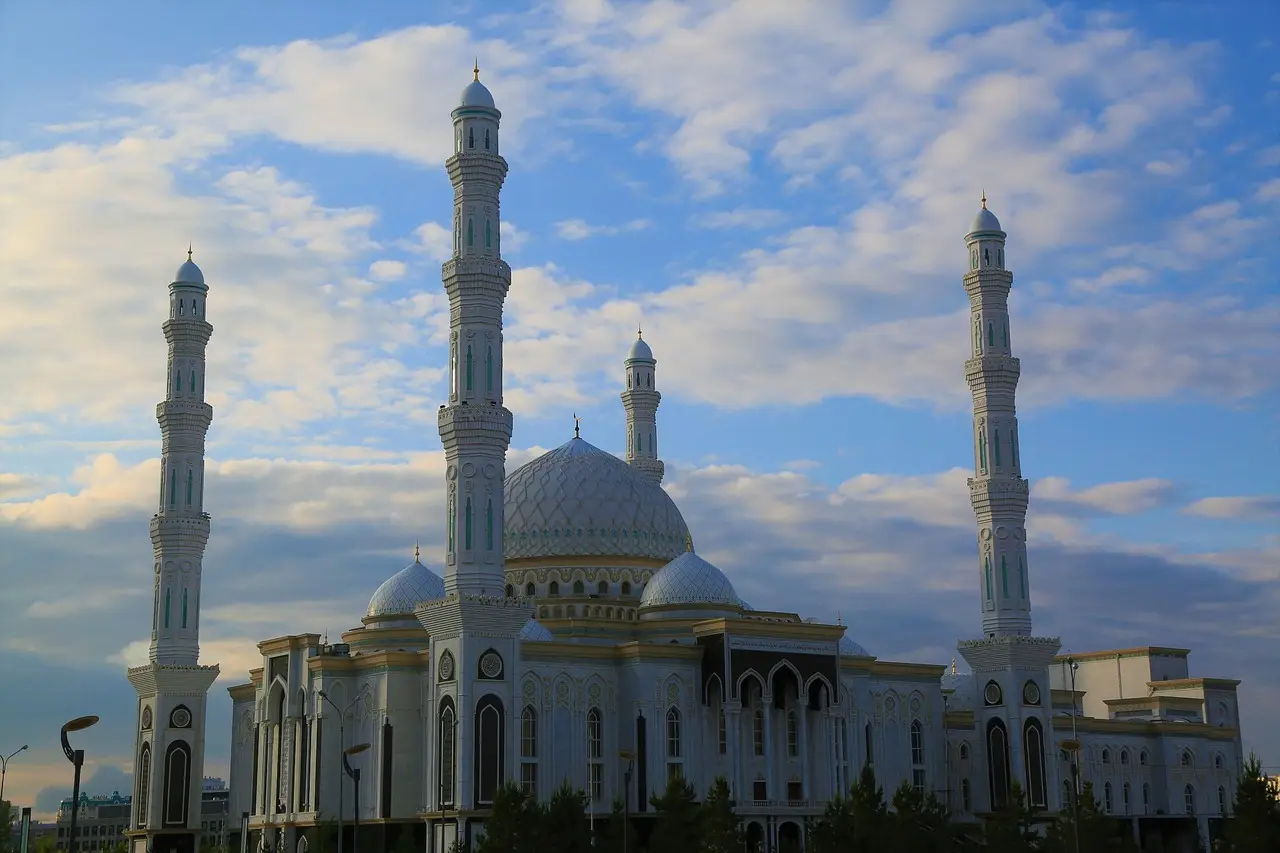
The complexes grew around the few natural resources — wells above all — that made desert life possible, and legend holds that Shopan-Ata appeared to Beket-Ata in a dream, making that shrine an important stop before the canyon site. For visitors accustomed to grandeur such as Astana's marble-clad Grand Mosque, the rock shrines offer devotion in organic form rather than gilded splendor. With UNESCO recognition now secured, the challenge for Mangystau will be managing a pilgrimage route that devotion, not infrastructure, has sustained for centuries.
Original: whc.unesco.org
More from Marcus Bennett
Show full bio
Staff writer covering people, launches and day-to-day practice in arts in the broadest sense at Arts & Voices.
1,043 articles