Keanu Reeves-Voiced 'Hidari' Seeks New Partner After U.S. Talks Collapse
Dwarf Studios rejected a U.S. offer funding the full budget for all rights to the Keanu Reeves-voiced samurai film; talks then stalled when executives lost their jobs.
Programme
- Dwarf Studios is seeking a new partner for 'Hidari' after U.S. talks stalled; the U.S. company had offered full funding in exchange for all rights.
- Overseas sales made up 56% of anime industry revenue in 2024, up from 20% in 2014.
- More than 90% of Japanese anime and films are backed by production committees (seisaku iinkai), according to industry estimates cited by Questry CEO Ibe Tomonobu.
- 'Hidari' director Kawamura Masashi's pilot short was made in 2023, partly via crowdfunding, and brought Keanu Reeves aboard.
- Japan holds co-production treaties only with China and Italy, according to Knockonwood founder Yamaguchi Shin.
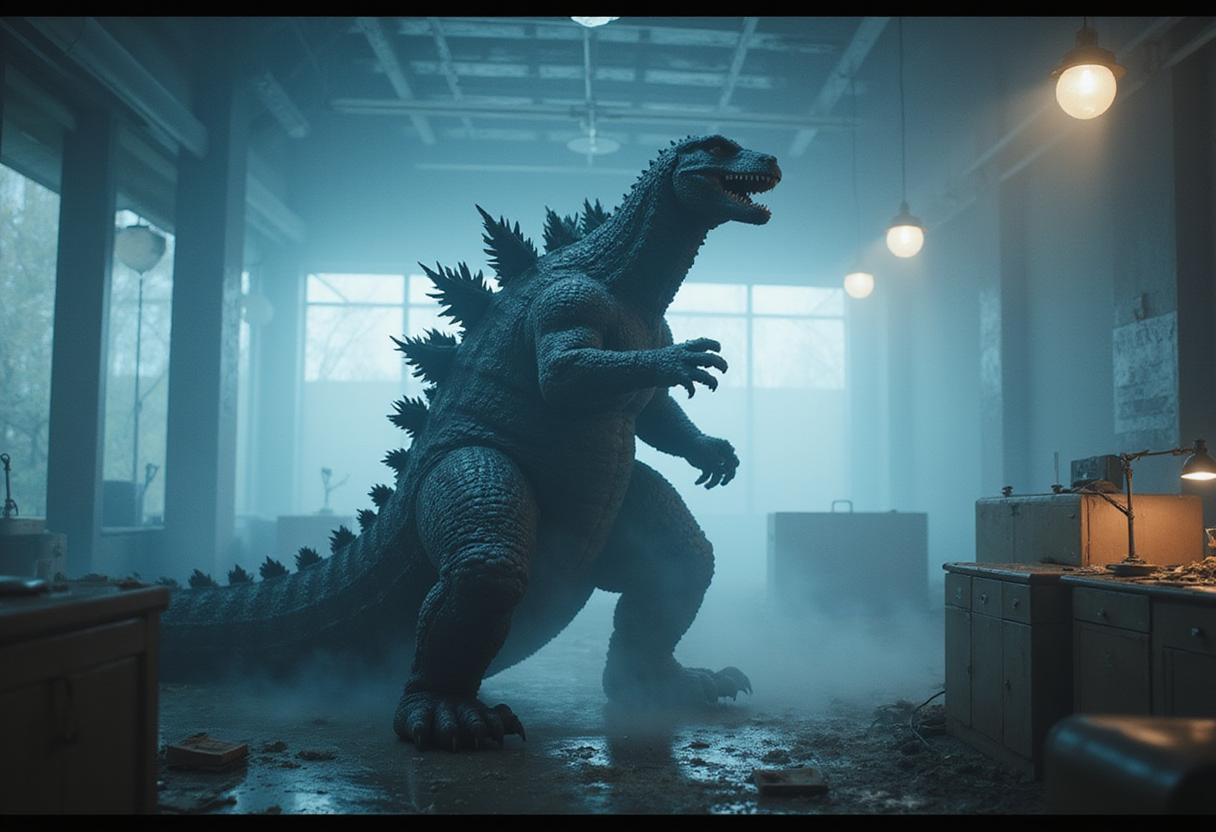
Dwarf Studios is hunting a new partner for "Hidari," its stop-motion samurai film voiced by Keanu Reeves, after negotiations with a U.S. company collapsed when the executives on the other side of the table lost their jobs amid Hollywood's upheaval. Producer Matsumoto Noriko broke the news on Sunday at the Busan International Film Festival's Asian Contents & Film Market.
The Japanese studio rejected a funding deal that would have cost it control. "Even with Keanu, we cannot stop the fire," Matsumoto told the audience at "Co-Producing with Japan: Opportunities and Challenges," a Producer Hub session co-hosted by VIPO, with Japan as the focus country this year. She appeared alongside Questry CEO Ibe Tomonobu and Knockonwood founder Yamaguchi Shin, moderated by VIPO's Tanimoto Hiroyuki.
What killed the U.S. deal?
The unnamed American company offered to fund the entire budget of "Hidari," directed by Kawamura Masashi and produced by Dwarf, Whatever and Tecarat — on one condition: it would take all the rights. Matsumoto said the company respected Dwarf's creativity and was prepared to pay enough, but full funding would have left the studio with no control over a highly original project. Dwarf wanted to keep half the rights and asked Ibe to raise the Japanese share. Before talks advanced further, Matsumoto's counterparts lost their jobs, and Dwarf restarted its search.
"Hidari" had been a highlight of the Annecy Animation Showcase at Cannes and at Annecy itself earlier this year. Dwarf made a pilot short in 2023 at its own risk, partly through crowdfunding; the pilot traveled far enough to bring Reeves aboard. Questry has since set up a special purpose company so overseas and local investors can put money into the film side by side, and now wants to back pilots and development-stage work that Japanese studios usually finance themselves.
Why Japan can't fund it alone
Ibe, who spent 11 years at Goldman Sachs before founding Questry about four years ago, put the share of Japanese anime and films backed by production committees, or seisaku iinkai, at more than 90%, citing industry estimates. Publishers, broadcasters, streamers, toy companies and ad agencies each buy in mainly to win a "window" — the right to exploit the title in their own business. Window fees are deducted first, so members often earn more from their window than their stake, while studios work for a fee and see little upside.
The system works for titles made in Japan for Japan, Ibe said, but the fit worsens as projects go global. Only Japanese companies can sit on a committee, and a co-production with few Japanese windows to sell gives them little reason to invest. Overseas sales made up 56% of anime industry revenue in 2024, up from 20% in 2014, he noted.
"If the world needs a project, we want to put money into it, even if the Japanese market can't see it yet," Ibe said. In Korea, by contrast, producers often take around 40% of profit after recoupment. "How you raise money decides how you share it," he said.
How co-productions actually get made
Yamaguchi, who has wrestled with financing for more than 20 years, offered three case studies:
- "Love on Trial" (Fukada Koji): Knockonwood joined in 2017. The film drew 60% of its budget from a Toho-led committee, 29% from the government's JLOX subsidy and 11% from presales through MK2 Films and Art House. It world premiered at Cannes and had its Asian premiere in Busan last year.
- "Rental Family" (Hikari, starring Brendan Fraser): Sight Unseen put in seed money in 2020; Searchlight Pictures signed on in 2023, covering 90% of the budget, with a JLOX location incentive covering the rest. It premiered in Toronto in 2025 and was released in 73 countries.
- "Ibuku" (Eddie Cahyono): Playing in Busan competition this year, with Indonesia's Talenta Media and Yasa Buana Films at 80%, Knockonwood at 15% and Thailand's White Light gap fund at 5%. Christine Hakim stars in the 16mm film.
"Independent filmmakers and producers never give up because we have to find the new ways," Yamaguchi said. Japan has opened up to co-production over the past two years, he added, though it lags on language, legal and accounting, with co-production treaties only with China and Italy — neither working well for the Japanese side.
What comes next?
Stop-motion compounds the difficulty: co-productions typically require 20% to 30% of the budget spent outside Japan, hard to manage when the shoot cannot easily be split. Tanimoto said the JLOX subsidy has been upgraded this year into a new program, IP360, with higher minimum budgets, and the Agency for Cultural Affairs offers a co-production subsidy covering 20%, subject to caps.
Dwarf, which co-owns NHK mascot Domo-kun, has found partners before: "Komaneko" drew more than 250,000 moviegoers in France, over 10 times its home ticket sales, and "Mogu & Perol" is being developed with French and Taiwanese partners. "Even if I give up co-production, I don't give up finding collaborators," Matsumoto said — meaning "Hidari" will reach screens, one way or another.
Source: Variety Film
More from Elena Vasquez
Show full bio
Senior reporter covering media and advertising at Arts & Voices.
397 articles