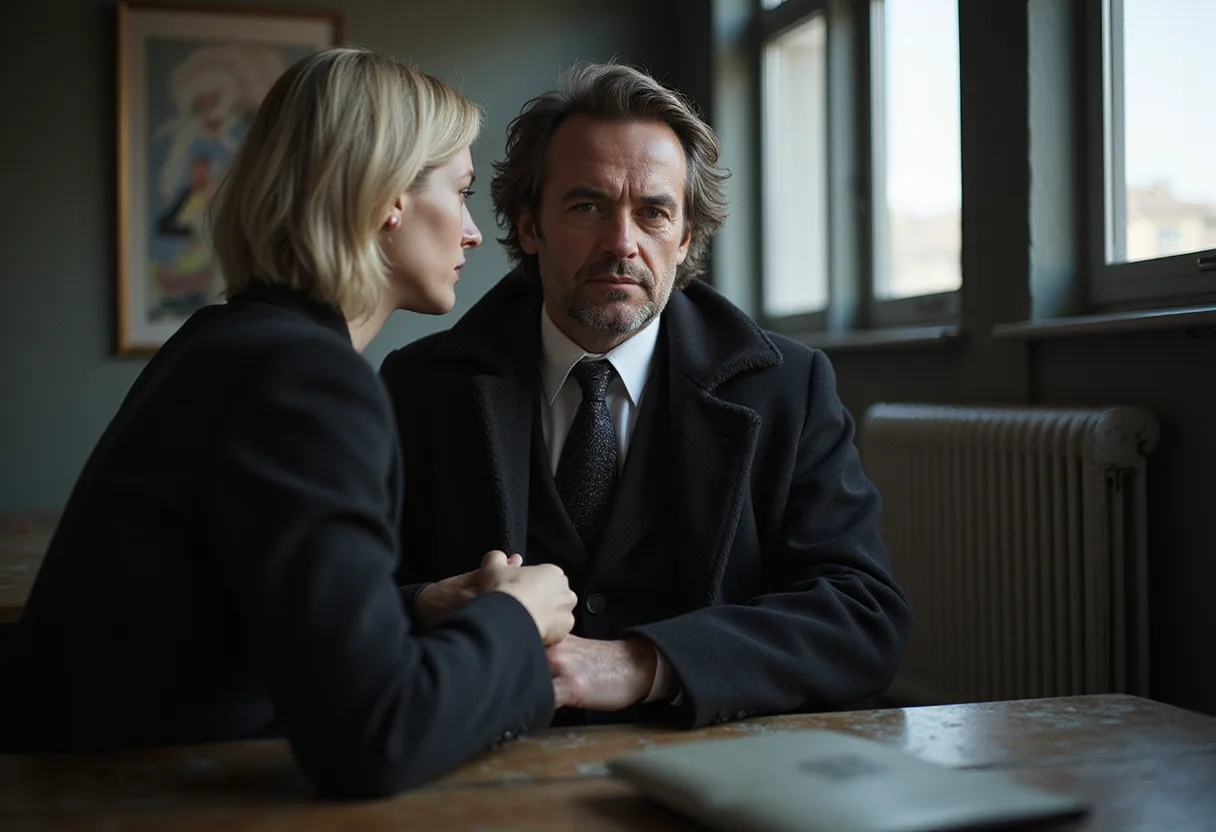
Keira Knightley Returns to the Stage in Icke's 'The Lives of Others'
Keira Knightley returns to the London stage in Robert Icke's chilling 'The Lives of Others' at the Adelphi through Jan. 9 — but the secret police steal the show.

Programme
- Keira Knightley stars in Robert Icke's stage adaptation of 'The Lives of Others' at London's Adelphi Theater through Jan. 9.
- It's her first stage role since a Broadway 'Thérèse Raquin' over a decade ago.
- The play adapts the Oscar-winning 2007 film about Stasi surveillance in East Germany, set in 1984.
- Luke Thompson plays playwright Georg; Andrew Woodall plays culture minister Hempf.
Keira Knightley is back onstage in London, playing a besieged German actress in Robert Icke's adaptation of "The Lives of Others," running at the Adelphi Theater through Jan. 9. The verdict from the review desk: slick, graceful, chilling — and surprisingly light on its leading lady's shoulders.
The production adapts the Oscar-winning 2007 film about state surveillance in communist East Germany. Icke's version belongs to a curious London tradition: famous actresses portraying embattled fictional actresses. Nina Hoss recently played a Swedish one in "Electra/Persona." Cate Blanchett played a Russian one in "The Seagull" last year. Sheridan Smith took an American one in "Opening Night," as did Gillian Anderson in "All About Eve." Knightley is simply the latest recruit to the genre.
What happens in Icke's version?
The year is 1984, the place East Berlin. Knightley plays Christa-Maria, a feted stage star who lives with her partner, the celebrity playwright Georg (Luke Thompson). Georg is a socialist who toes the government's ideological line. It doesn't matter. The corrupt culture minister Hempf (Andrew Woodall) has the Stasi (East Germany's feared secret police) bug the couple's home anyway.
The motive is not ideology. Hempf is infatuated with Christa-Maria and wants Georg out of the way. Because the minister can destroy her career, she is powerless to resist his advances. The machinery of the state, in other words, has been reduced to a jealous man's dating strategy. Icke's production knows this, and leans into the grotesque.
Does Knightley carry it?
Not quite, per the review. The anguish of Christa-Maria's predicament calls for gravitas, and Knightley — in her first stage role since a Broadway adaptation of "Thérèse Raquin" over a decade ago — doesn't quite have it. Never less than engaging, her frantic furtiveness reads as a commonplace infidelity rather than soul-rending torment.
That flaw, however, doesn't sink the production. Icke's version is more concerned with evoking noirish menace than with recreating the film's slow-burn realism, and on those terms it works. In this adaptation, the review notes, the secret police steal the show from the star whose name sells the tickets.
What is the production's most striking moment?
A grim seduction scene. Cass Elliott's "Make Your Own Kind of Music" plays while Hempf aggressively seduces Christa-Maria. The juxtaposition of that big, uplifting chorus with the grotesque action onstage is, in the reviewer's word, suitably unsettling. It's the clearest signal of what this staging is after: menace dressed in pleasant tunes, dread hiding behind polish.
The comparison with its source film is instructive. The 2006 German original built its power through slow-burn realism; Icke trades that for noir. Whether audiences arrive for Knightley or for the Stasi, they'll find the state's watchers are the ones worth watching.
Source: NYT Arts
More from Daniel Okafor
Show full bio
News editor covering companies, deals and strategy in arts in the broadest sense at Arts & Voices.
921 articles