King Ghidorah Gets Ground-Level Terror in 'Godzilla Minus Zero'
Director Takashi Yamazaki's 'Godzilla Minus Zero' puts King Ghidorah at human eye level, applying research from a 2021 theme park ride to the dragon's closest close-ups yet.
Programme
- Takashi Yamazaki directed both 'Godzilla Minus One' and 'Godzilla Minus Zero'
- Yamazaki designed 'Godzilla the Ride' at Seibuen Amusement Park in 2021 with studio Shirogumi
- Producer Kazuaki Kishida said the ride concept required Ghidorah to be 'very scary and very close-up'
- VFX artist Tatsuji Nojima based Ghidorah's destruction beam on slow-motion lightning research
- 'Godzilla Minus Zero' is now playing in theaters
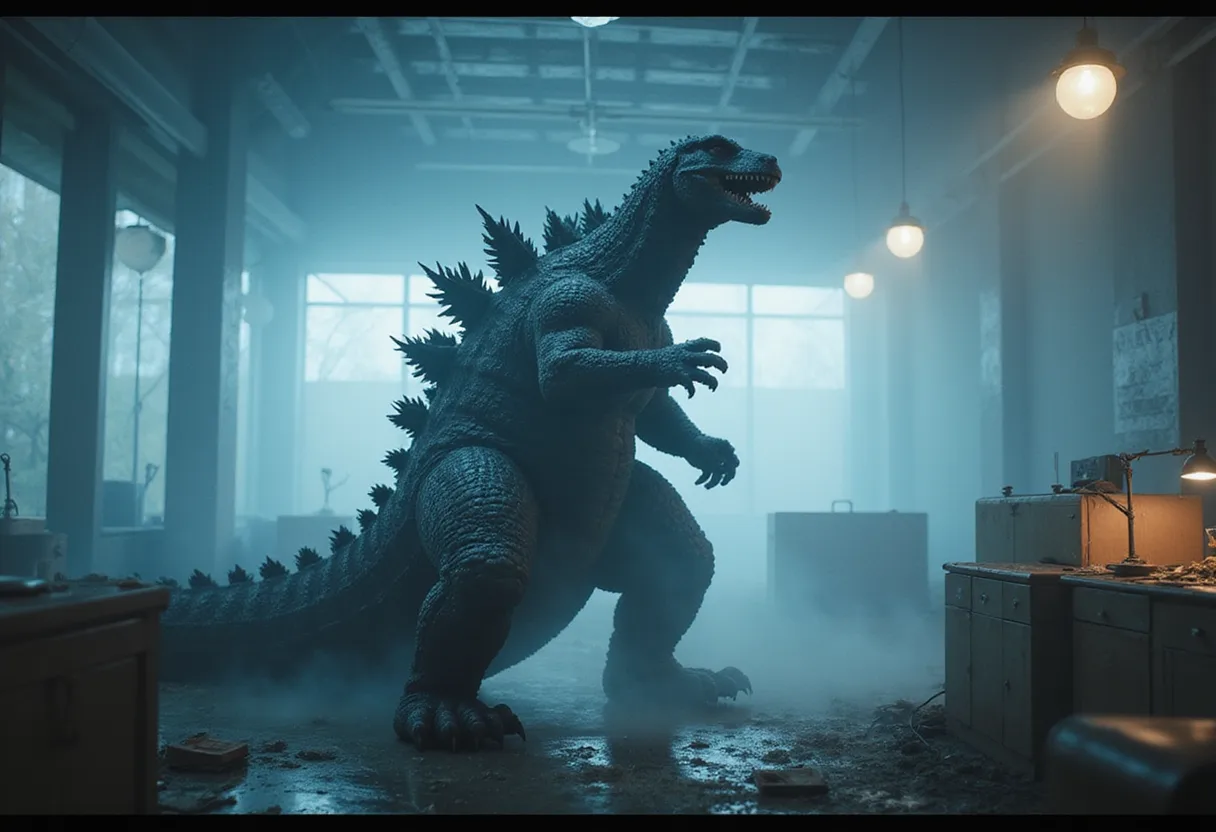
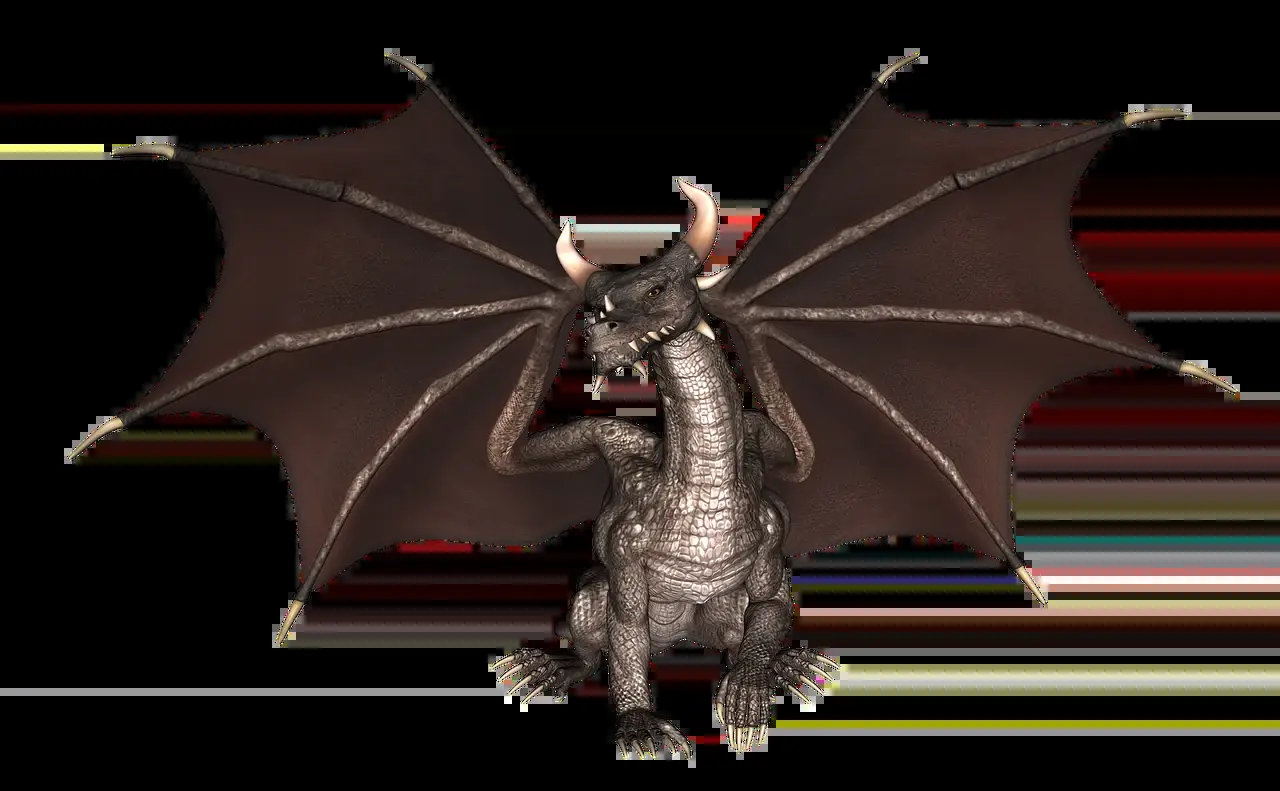
Takashi Yamazaki's "Godzilla Minus Zero" puts King Ghidorah on the ground, at human eye level, for longer than any film in the monster's history. The three-headed space dragon, usually shown in flight or towering far above Godzilla, here crawls, hunts and stares — and the film is scarier for it.
The film builds on the visual foundation — and the rubble of Tokyo's Ginza district — that Yamazaki pounded into his previous feature, "Godzilla Minus One." Like that film, "Minus Zero" stays in conversation with the big cultural and emotional ideas behind Toho's giant monsters, and it remains attuned to the beloved visual details of a franchise stretching back to the original "Godzilla" and the Shōwa era.
Why did Ghidorah never get close-ups before?
Historically, for budgetary and technological reasons, King Ghidorah has rarely been ready for a close-up. Even in CGI-heavy films such as "Godzilla: King of the Monsters," closer shots of the dragon still emphasize sheer scale — three heads bearing down on a puny human or ten. Three heads, the logic goes, are more terrifying than one.
"Minus Zero" breaks that pattern. The film spends long stretches on a single head, or framed tightly around one, and its Ghidorah proves as frightening on the ground as it is in the air. The reason traces back to a theme park.
Yamazaki was tapped in 2021 to design "Godzilla the Ride" at Seibuen Amusement Park — its full title is Godzilla the Ride: Giant Monsters Ultimate Battle. That assignment forced him and animation studio Shirogumi to solve a specific problem: how to make Ghidorah terrifying from the other side of a safety rail.
Producer Kazuaki Kishida, who produced both "Minus One" and "Minus Zero," told IndieWire the ride concept had to feel "as though the audience was under attack by Ghidorah itself. So it had to be very scary and very close-up." In the ride, he explained, "we see Ghidorah basically crawling on the ground with its neck, because it has a very long neck, and then really going after the audience. To bring King Ghidorah very close to humans and bring the eyeline closer was a huge core concept for this. So there was a lot of research that had gone into the ride that we were able to apply to 'Godzilla Minus Zero.'"
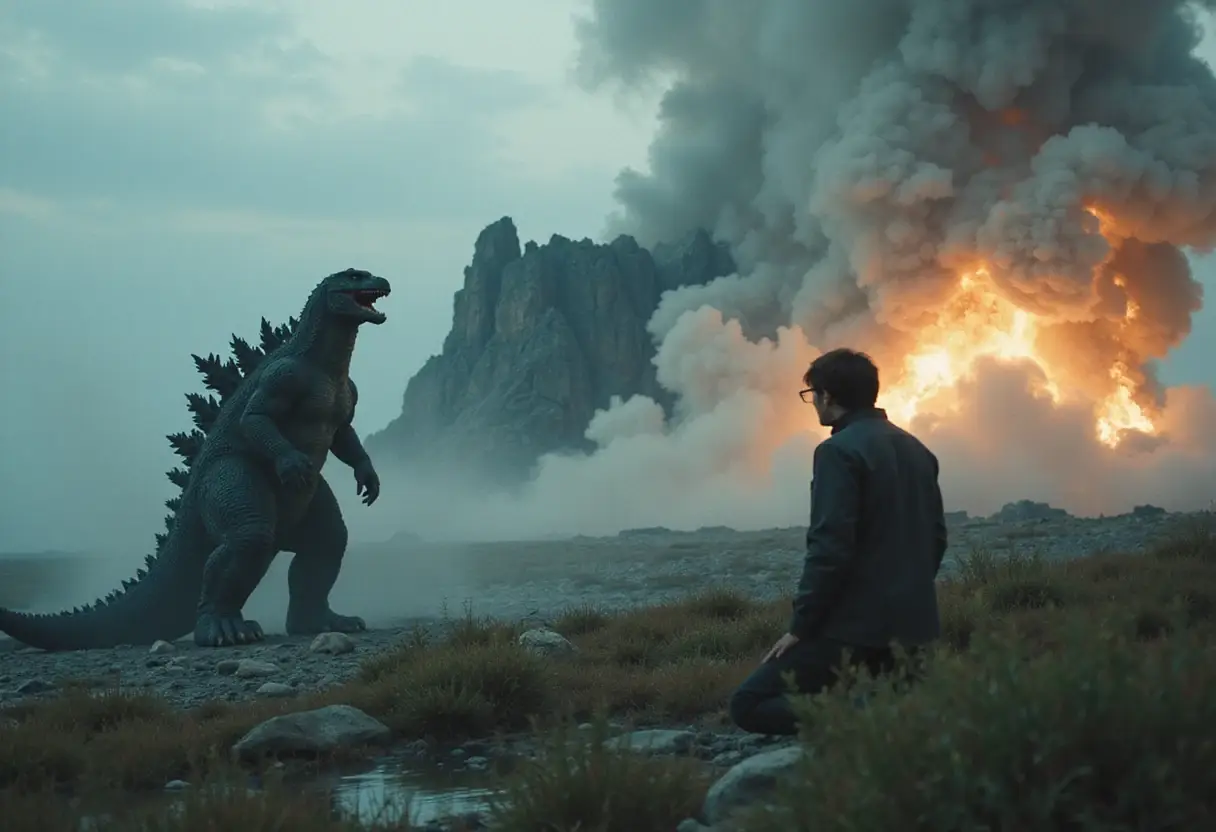
The film uses that eyeline to great effect. During the initial attack on Matsumoto City, as scientist Kanji Murakami (Min Tanaka) and Akira Hagiwara (Ko Maehara) scramble to document the new monster and survive the destruction of entire city blocks, the camera pushes uncomfortably close to Ghidorah's eye. It is one of the most unnerving moments in the film.
How did the effects team build the destruction beam?
The spectacular side of Ghidorah is grounded in the natural and the tangible wherever possible. For the dragon's destructive beam, visual effects artist Tatsuji Nojima researched how lightning visualizes itself more deeply than even he expected.
"Everyone sort of recognized the string of light, that line of light. But if you look at lightning in slow motion, it leaves a line of something that lingers — this is apparently just water vaporizing instantly and turning into plasma," Nojima told IndieWire. "I don't fully know the science behind it, but there's a visual effect that lightning leaves behind. So for Ghidorah's destruction beam, I wanted to emphasize that element of it. I scatter particles around, kind of blur the imagery, and then let it linger longer than it normally would."
What does this change for the franchise? It demonstrates that research built for a ride can reshape a feature film's grammar — the sense of Ghidorah's power lingering, and of standing too close to where the dragon can see you, is what makes this version feel so dangerous.
"Godzilla Minus Zero" is now playing in theaters.
Source: indiewire.com
More from Marcus Bennett
Show full bio
Staff writer covering people, launches and day-to-day practice in arts in the broadest sense at Arts & Voices.
1,156 articles