Leonkoro Quartet Delivers UK Premiere of Zinovjev's 'Anthem' at Wigmore Hall
The Leonkoro Quartet premiered Sauli Zinovjev's 'Anthem' at Wigmore Hall on 6th October; Macaulay ranks it beside Bartók's greatest quartets.
Programme
- Leonkoro Quartet gave the UK premiere of Sauli Zinovjev's four-movement quartet 'Anthem' at Wigmore Hall on 6th October.
- 'Anthem' is a co-commission from the Wiener Konzerthaus and Wigmore Hall; the composer attended.
- Mark Padmore gave what Macaulay understood as his unofficial Wigmore farewell on 5th October with Jonathan Biss.
- Iestyn Davies recited Gluck, Haydn, Beethoven, Schumann, Schubert and Brahms with harpist Oliver Wass on 8th October.
- 'What the Animals Say' at the Finborough Theatre earned four Fringe Theatre Awards nominations; the run ends 24th October.
By Elena Vasquez
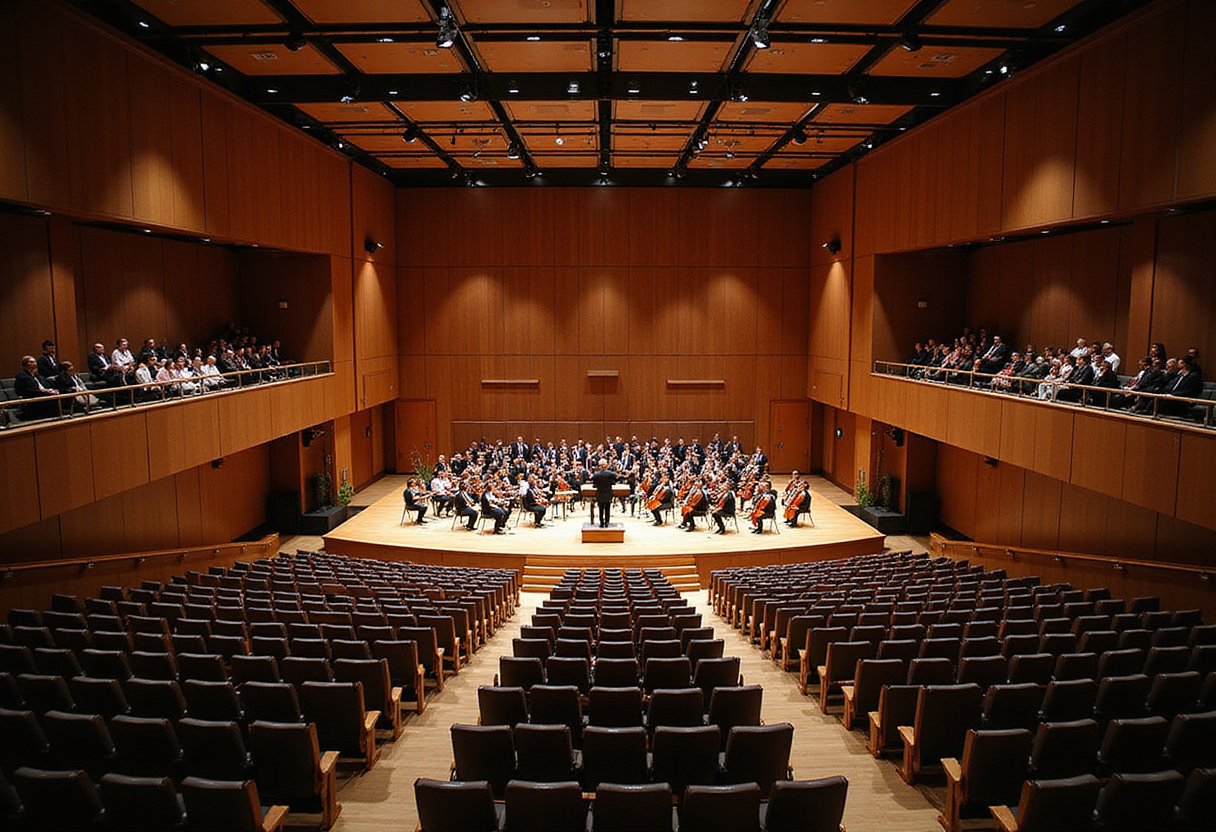
The Leonkoro Quartet gave the UK premiere of Sauli Zinovjev's first string quartet, Anthem, at a packed Wigmore Hall on Tuesday 6th October. The Finnish composer attended and received warm applause from the audience; he applauded the quartet back.
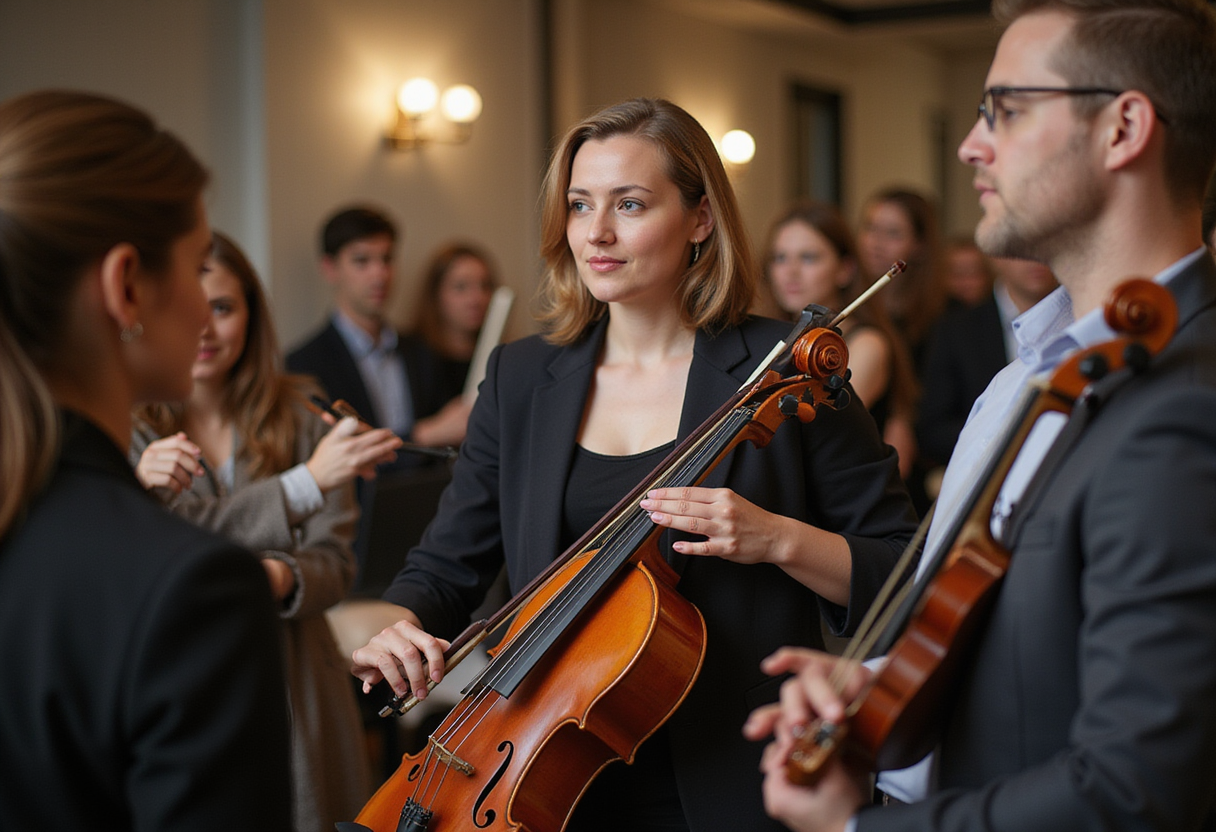
The Berlin-based ensemble — two young women, two young men — opened with Beethoven's String Quartet No. 4 in C minor, Op. 18 No. 4, and Schubert's A minor Quartet D804, "Rosamunde". The concert was streamed live and remains available on YouTube.
What did the critics say about 'Anthem'?
Alastair Macaulay, reviewing for Slippedisc, called the evening "superb, even sensational". He quoted Zinovjev's own description of the players as "the electrifying Leonkoro Quartet, which represents the pinnacle of quartet playing in my generation".
Macaulay's verdict on the new work was unambiguous, if self-flagged as possibly hyperbolic. He wrote that Anthem is "the greatest premiere of any work of the performing arts in my experience in the 2020s, a work to be considered in the same thought as the greatest quartets of Bartók".
The quartet is classically formal but often extreme in sonority and rhythm. Some sections call for tapped strings; others only plucked. Some passages abandon metre altogether. "At every point we're being taken where we have not gone before, and yet the mind that guides us is ordered, keenly imaginative, and large," Macaulay wrote.
Anthem is a four-movement co-commission from the Wiener Konzerthaus and Wigmore Hall. A composer hailing his own interpreters from the stage is rare; that exchange of applause marked the evening's tone.
What happened at Padmore's Wigmore farewell?
Two days earlier, on Monday 5th October, tenor Mark Padmore gave a lunchtime recital at Wigmore Hall with pianist Jonathan Biss. The programme held four Schubert songs and Schumann's Kerner Lieder.
Macaulay reported that Padmore, "no longer in the voice of yesteryear", sounded strained at the top and bottom of his range and tremulous in between. He understood the concert to be Padmore's unofficial farewell to the venue. "I am grateful that I have golden memories of him there and elsewhere," he wrote.
Padmore has been a Wigmore regular for many years. For a singer long identified with the hall, a lunchtime Schubert and Schumann programme was a fitting, if valedictory, close.
How did Iestyn Davies fare with harp?
Countertenor Iestyn Davies returned to Wigmore Hall on Thursday 8th October, again with harpist Oliver Wass after their January recital. He began with a half-hour solo suite from Gluck's Orfeo ed Euridice, then moved through Haydn (O tuneful voice), Beethoven (Adelaide), three Schumann lieder, four by Schubert, and two by Brahms.
Macaulay rated the song selection "exquisite". His criticism focused on diction: Davies's words there are "neither differentiated nor weighted", and the singing is "not just impersonal but detached". Even so, he found "considerable mountain-stream beauty: not stirring the heart but calming the mind".
The Schumann group drew from Liederkreis Op. 39 ("Mondnacht"), Myrthen Op. 25 ("Der Nussbaum"), and Nachtlied Op. 96 No. 1.
Why does a one-hour play earn four nominations?
At the Finborough Theatre, David Ireland's first play, What the Animals Say (2009), has drawn four Fringe Theatre Awards nominations since Macaulay saw it on Sunday 4th October: Best Duo Performance in a Play, Best Set Design, Best Director, and Best Production. The production runs until 24th October.
The play lasts one hour and has two characters, both male, both Northern Irish. One became an actor, the other a footballer; they meet as strangers and discover they were at school together. Macaulay found the result "hilarious, violent, and wholly surprising — a power struggle where each wants what the other has".
Robby Martin and Matthew Blaney play the pair; Harry Burton directs. Designer Alex Marker conjures a waiting room and a dressing room on the Finborough's tiny stage "with miraculous economy", according to Macaulay. He called all four nominations "very well deserved".
Ireland has written four plays since, all multi-award winners, staged in Britain, Ireland, Australia and the United States by actors including Woody Harrelson, Andy Serkis and Martin Freeman. The Finborough run gives London audiences until 24th October to catch the play that started it — and a new quartet that Macaulay ranks beside Bartók has already entered the repertoire.
Original: youtube.com
More from Elena Vasquez
Show full bio
Senior reporter covering technology and product news in arts in the broadest sense at Arts & Voices.
471 articles