Lincoln in the Bardo Opens at the Met; First Review Lands Within Hours
Seven hours after curtain, the Times's Emma Hoffman delivered the first verdict on Missy Mazzoli's Lincoln in the Bardo at the Met: it has legs, with one caveat for the conductor.
Programme
- The first review of Lincoln in the Bardo appeared in the London Times seven hours after the final curtain.
- The opera is composed by Missy Mazzoli, with a libretto by Royce Vavrek after George Saunders's novel.
- Critic Emma Hoffman praised the libretto's humor and a cello motif she called 'a Méditation for our times'.
- Hoffman criticized conductor Yannick Nézet-Séguin for not giving the score space to breathe in Act Two.
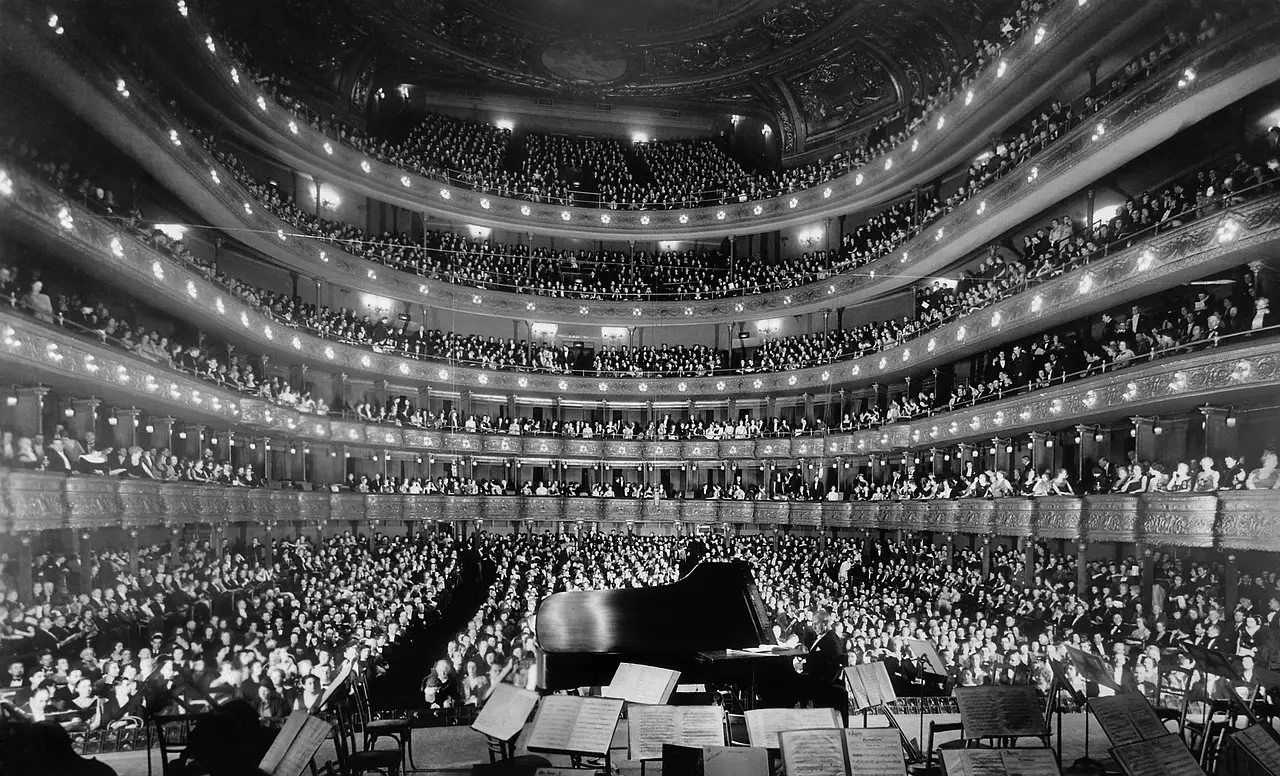
- The production image is credited to Karen Almond of the Met.
Seven hours after the final curtain, the first review of Lincoln in the Bardo at the Metropolitan Opera appeared in the London Times, written by critic Emma Hoffman. Her verdict: the opera, composed by Missy Mazzoli with a libretto by Royce Vavrek, has staying power.
The work adapts George Saunders's novel, and Vavrek's libretto solves the book's central challenge — its collage of primary source quotations — by cutting it away entirely. Instead, the text focuses on a core group of characters circulating around young Willie Lincoln.
Hoffman identifies three protectors around the dying boy:
- his father, Abraham Lincoln;
- a wraith-like girl;
- enslaved individuals cast into what the libretto calls a "sick pit".
That last group, Hoffman writes, "ground us in the period and the stakes of Lincoln's grief." The libretto also preserves the humor of Saunders's novel, and the critic reports a striking result at the Met: "I have never heard the Met audience laugh so much outside a buffo comedy."
What does the score sound like?
Hoffman describes Mazzoli's musical evocation of the bardo — the Tibetan liminal state between death and rebirth that gives the novel its title — as changeable in its contours. Sweeping, polytonal sections give way to choruses of kazoos. Snatches of Americana turn sour amid eerie tremolos and grinding percussion.
The review also singles out an unabashedly emotional centerpiece: a wrenching cello motif that accompanies Lincoln into his son's tomb. Hoffman calls it "a Méditation for our times."
Where does the production fall short?
The criticism is aimed at the podium. Hoffman wishes conductor Yannick Nézet-Séguin had "given Mazzoli's score space to breathe, especially during the frantic second act." It is the review's one noted reservation, and it concerns tempo and pacing rather than the composition itself.
The production image is credited to Karen Almond of the Met.
The speed of the verdict matters here. A seven-hour turnaround from a major international paper signals the level of attention surrounding this premiere, and a broadly positive first notice — laughs, emotional force, a distinctive sound world — sets a strong opening frame for the critical reception that will follow from New York's own reviewers in the coming days.
Original: thetimes.com
More from Marcus Bennett
Show full bio
Staff writer covering people, launches and day-to-day practice in arts in the broadest sense at Arts & Voices.
653 articles