Liquid Tongues: Polish Pavilion Makes Access the Artwork
Bogna Burska and Daniel Kotowski's Liquid Tongues at the Polish Pavilion makes Deaf epistemology the work's foundation, with a choir of Deaf and hearing performers at its core.
Programme
- Liquid Tongues by Bogna Burska and Daniel Kotowski is installed at the Polish Pavilion, Venice Biennale, curated by Ewa Chomicka and Jolanta Woszczenko and produced by Zachęta National Gallery of Art.
- The central work, "Chór w Ruchu (Choir in Motion)" (2026), features Deaf and hearing performers narrating the story of biologist Roger Payne, whose 1970 album Songs of the Humpback Whale helped catalyze the whaling ban.
- The installation draws on the concept of "Deaf Gain" (2010), coined by Deaf Studies scholar H-Dirksen L. Bauman, reframing deafness as cultural and perceptual expansion.
VENICE — At the Polish Pavilion of the Venice Biennale, access is not bolted on. It is the entire epistemology of the work. Liquid Tongues, the installation by Bogna Burska and Daniel Kotowski, curated by Ewa Chomicka and Jolanta Woszczenko and produced by Zachęta National Gallery of Art, builds meaning through skin, bone and sternum as legitimately as through the ear.
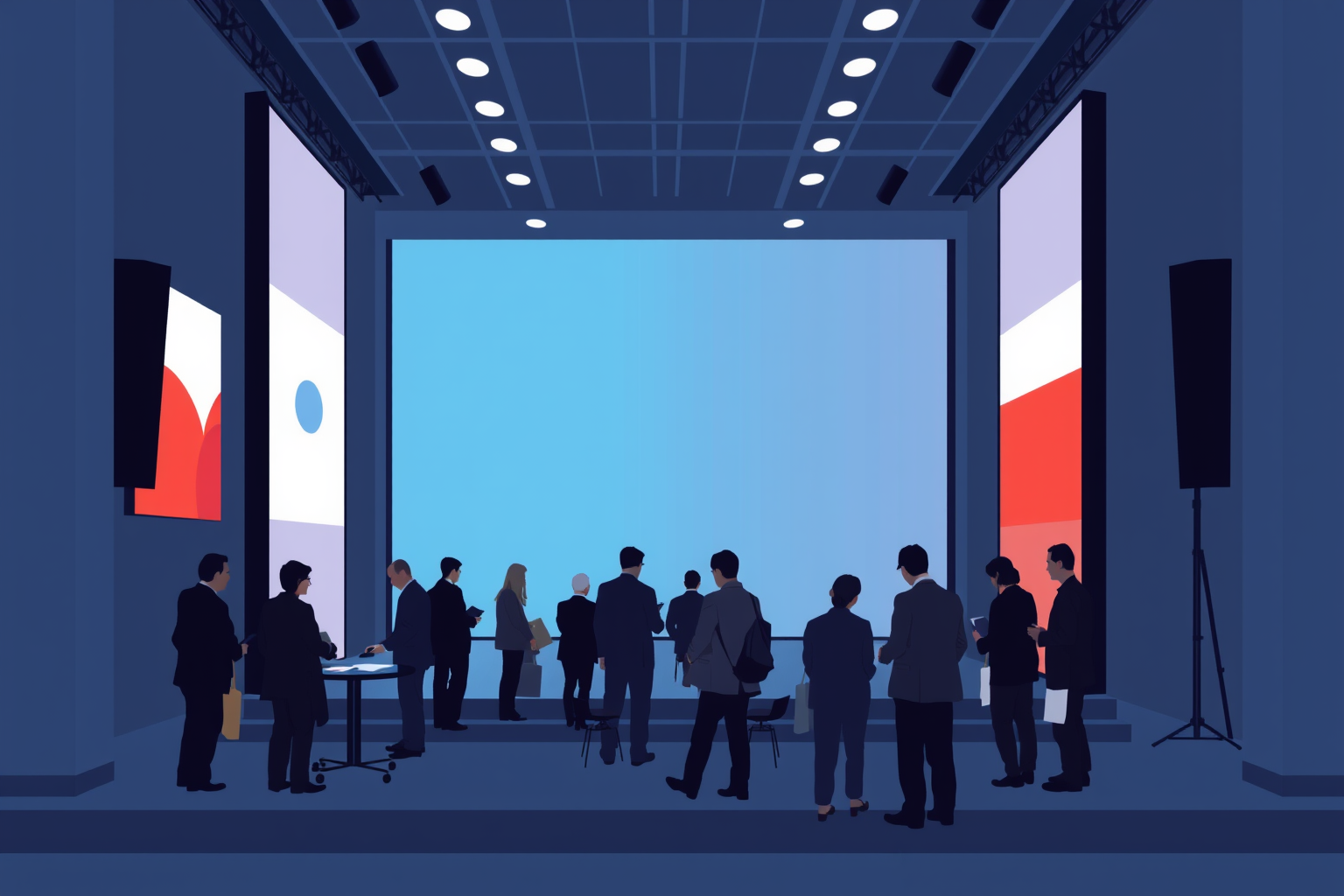
The visitor is submerged immediately. Video projections shot in a Warsaw swimming pool fill the space with aqueous blue, while low-frequency acoustic waves modeled on cetacean vocalizations and echolocation press against the body. Sound here is not overheard. It is worn.
At the center sits "Chór w Ruchu (Choir in Motion)" (2026), an ensemble of Deaf and hearing performers who simultaneously narrate the story of biologist Roger Payne in phonic English and International Sign Language. Payne's 1970 recordings Songs of the Humpback Whale helped catalyze the whaling ban.
Alicja Czyczel's choreography borrows the logic of fish shoals: bodies move as a single distributed organism, with no soloist and no conductor. Aleksandra Gryka's score and Magda Mosiewicz's cinematography complete a structure in which no channel — voice, sign, image, vibration — holds primacy. Everything is translation; nothing is the original.
The conceptual anchor is "Deaf Gain" (2010), a term coined by Deaf Studies scholar H-Dirksen L. Bauman that reframes deafness not as deficit but as cultural and perceptual expansion.
Kotowski, a Deaf artist whose practice has long interrogated language, biopower and the oppression of phonetic training, is the crucial figure. His authorship keeps the work from tipping into metaphor tourism — the temporary borrowing of another group's lived experience as an aesthetic frame. It also places Liquid Tongues in conversation with the two artists who have most powerfully brought Deaf epistemology into contemporary art: Christine Sun Kim and Joseph Grigely.
For disabled visitors, the pavilion has already done the work of translation, in every direction at once. As one crip curator and art historian noted after the visit: "I did not have to translate myself to enter it."
The installation stands as a working argument that biennale-scale art can treat access not as a compliance line item but as a generative artistic method — a precedent other national pavilions will now be measured against.
Original: loc.gov
Marcus Bennett
Show full bio
Staff writer covering industry trends and analytics at Arts & Voices.