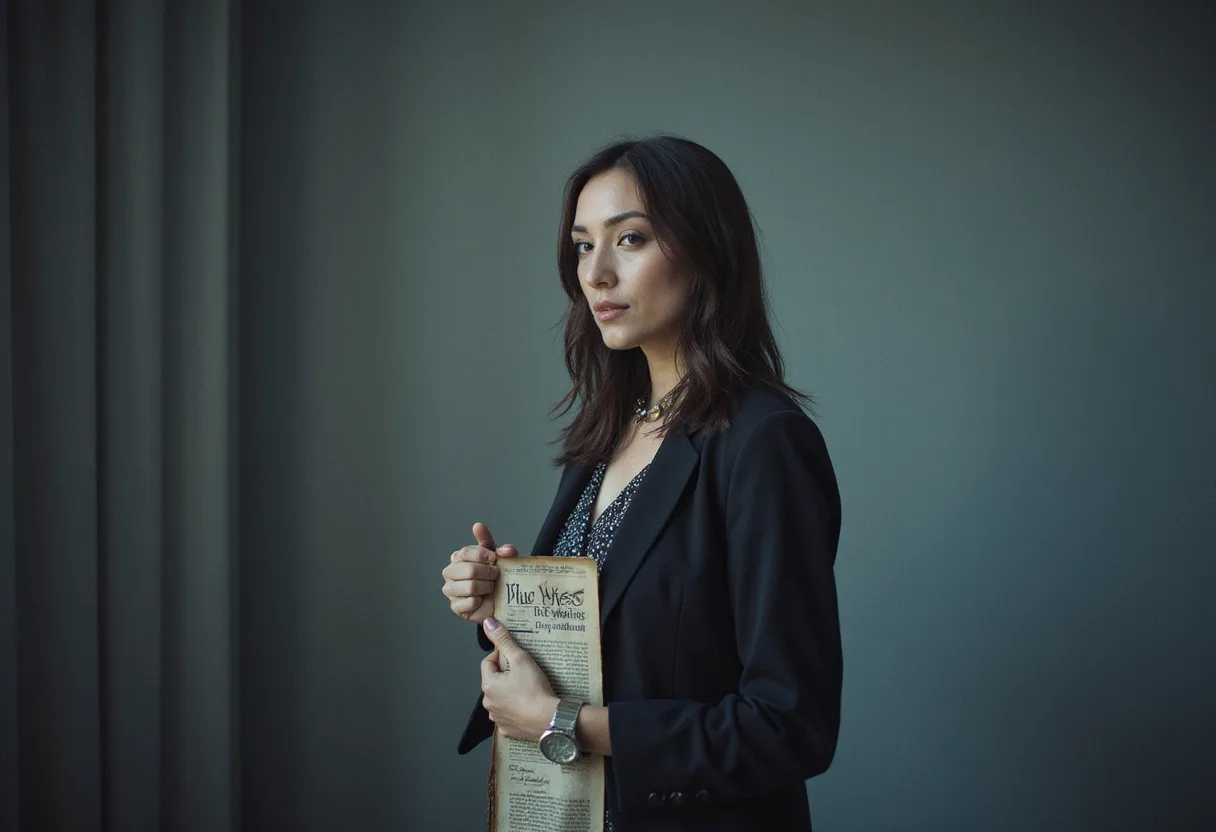
Liz Harris Releases First Album Under Her Own Name
Liz Harris, known as Grouper, releases her first album under her own name: soundtracks to Tanja Engelberts' We Exhale and Takashi Makino's Constellation, built from the films' own water recordings.

Programme
- Music for Two Films About Water is Liz Harris' first release under her own name rather than Grouper.
- Harris moved from Portland to Astoria, Oregon, in 2013; the Columbia River releases hundreds of billions of gallons per day into the Pacific.
- The album compiles scores for Tanja Engelberts' We Exhale and Takashi Makino's Constellation, both short films about water.
- Harris and Jefre Cantu-Ledesma previously honored the late filmmaker Paul Clipson on the 2022 Raum album Daughter.
- Grouper's 2008 song 'Heavy Water/I'd Rather Be Sleeping' remains a signature work.
Liz Harris has released her first album under her own name: Music for Two Films About Water, a compilation of soundtracks she wrote for two short films in the last several years. Harris is better known as Grouper, the project behind the acclaimed 2008 song "Heavy Water/I'd Rather Be Sleeping."
The release marks a shift in billing, not in method. Harris lives in Astoria, Oregon, at the mouth of the Columbia River, where she moved in 2013 from further-upstream Portland. The river discharges hundreds of billions of gallons of water a day — the most released into the Pacific by any American river — and that volume has arguably shaped her music's waterlogged character. Her guitar sometimes conjures crashing waves; at other times it stings like reeds brushing a face while floating downstream.
What are the two films and their scores?
The first soundtrack accompanies We Exhale, directed by Tanja Engelberts. The film charts the progression of France's Rhône River, from its source high in the Alps through the industrial hinterlands that extract its resources. Harris' track, "Untitled (From We Exhale)," integrates the water sounds Engelberts recorded for the film directly into its compositional framework. The roar of the water grows louder or dimmer depending on where Engelberts' microphone was positioned.
Even without the visuals, the sense of mapping out a space is uncanny. Harris opens up more room by adding distant bells that glint forlornly, like half-seen lights in a fog.
The second film, Takashi Makino's Constellation, takes a far more static approach: an assembly of shifting paper collages suspended in layers of faded water texture. Harris' music accordingly does much less here than on the We Exhale score. It is mostly piano suspended in a grayish sea of water sounds. In short: Engelberts' film honors flux, and Makino's honors stillness — and the two scores follow suit.
How deep are Harris' ties to experimental film?
Harris' connections to the experimental film world run deep, most notably through her long collaboration with the late filmmaker Paul Clipson. On the 2022 album Daughter, released as Raum with Jefre Cantu-Ledesma, the two paid tribute to Clipson by integrating the sound of his projector into their musical approximation of his abstract, color-drunk style. Harris achieves a similar effect on the new record by maintaining the water sounds from the films within the music.
By the reviewer's account, the album is literally a record of the audio of the two films — unless very small edits were made that escaped notice. The takeaway in plain words: this is Harris' actual film soundtracks, water noise and all, preserved on record.
For listeners who came to Harris through "Heavy Water/I'd Rather Be Sleeping," the new album extends that song's central contrast — the roaring flux of water set against the stasis of sleep — into full soundtrack form.
Source: pitchfork.com
More from Elena Vasquez
Show full bio
Senior reporter covering technology and product news in arts in the broadest sense at Arts & Voices.
1,760 articles