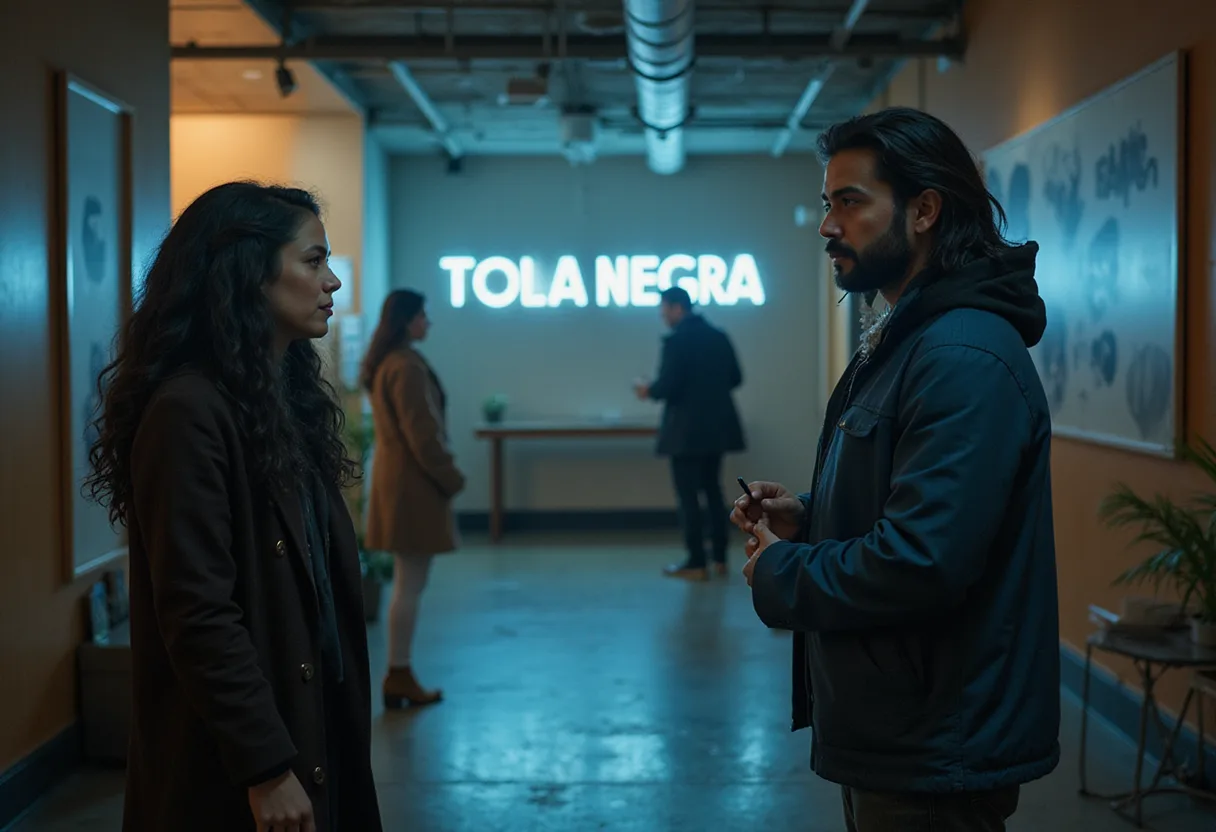
Los Javis Say Filmmaking Is 'Our Weapon Against Intolerance'
Los Javis won best directing at Cannes for 'La Bola Negra,' completing four pages Lorca left unfinished. Netflix streams it Dec. 2. "Our weapon against intolerance and hate is our writing."

Programme
- Netflix begins streaming 'La Bola Negra' on Dec. 2 after a select theatrical run.
- Directors Javier Calvo and Javier Ambrossi won the best directing prize at Cannes in May.
- The film is based on four pages of an unfinished play by Federico García Lorca, murdered in 1936.
- The story spans three timelines: 1932, 1937 and the present day.
- Penélope Cruz portrays the Madrid cabaret performers known as cupletistas.
By Elena Vasquez
Netflix will begin streaming La Bola Negra on Dec. 2. The film, directed by Spanish filmmakers Javier Calvo and Javier Ambrossi — known collectively as Los Javis — won the prize for best directing at the Cannes Film Festival in May. It is playing in select theaters now.
The film spans three timelines: a young man blackballed for being gay in 1932, a soldier who falls in love with a wounded enemy prisoner in 1937, and a contemporary writer who inherits something from a grandfather he never knew. That inheritance ties the three stories together.
"We don't have that many movies or books about the history that connects us as a community, the queer community," Ambrossi said. "That's why we wanted to make it big. We wanted to make it epic and we wanted to make it bold."
What did Lorca actually write?
The film rests on four pages. That is all the famed Spanish poet and playwright Federico García Lorca wrote of a play about a young man subjected to the "black ball system" of 1930s Spanish private clubs. Members dropped balls into a box to decide belonging: a white ball meant you were in, a black ball meant you were out.
Lorca never finished the play. In 1936 he was arrested and murdered. To complete his script, Calvo and Ambrossi studied his world. "We read letters. … We were following the clues," Ambrossi said. "We were like detectives." Calvo added: "It was fun to discover that he would like to talk about his projects in parties."
For Calvo, the black ball carries a larger meaning. "We are all connected by this black ball that we all share, that we pass to each other, every generation, a black ball, that is silence, pain, shame, but also it's a spark of life and desire and love and joy," he said. "I feel like it made me feel proud of my community and of the brave people that fought before me."
Why the cupletistas matter now
Penélope Cruz portrays the cabaret girls, or "cupletistas," who performed in Madrid in the early 20th century. Calvo said that generation believed freedom was permanent — and then two dictatorships arrived. "They were persecuted, they were murdered, they disappeared. And it's shocking to understand that today almost no one remembers them," he said.
He drew a direct parallel to the present. "We think we could be free forever, like we're going to be free forever, we conquered the rights, we're here. But history repeats itself. Fascism is rising and it's a worrying thing and our weapon against intolerance and hate is our writing and making movies and this is what we're here to do."
One line in the film likens a gay man's heart to an "ocean of secrets." Ambrossi admitted the image is not entirely original. "That's not very poetic, because it's a tribute to Titanic. So it was more like a wink to the audience. The people that know, know," he said. Still, he defended the film's poetic register: "I think poetry is the opposite of fascism. Because poetry is full of meanings for everyone, and it's polysemic and poetry everyone will understand differently."
What happened between the directors?
The duo's partnership nearly collapsed during production. They were friends, then a romantic couple for 13 years, then broke up. "It was unhealthy. It was like we needed to find ourselves," Ambrossi said.
Calvo described what followed. "You need to be honest as an artist. And we had a mature conversation. We said, let's move on and let's write. Let's keep on directing this movie in an honest and cathartic way," he said.
Ambrossi connected the split to the film's subject. "When you're writing a movie about paying tribute to the people that came before you in the LGBTQ+ community and about how our rights are based on their suffering, it's like I just need at least to try to be happy, and we weren't happy in that relationship. So we changed," he said.
The collaboration itself endures. Calvo called it "connected brains": "Even in an interview, I know when he has to talk, I know when I have to talk, when he wants to intervene. It's a true connection." Ambrossi credited their differences — his emotional, atmosphere-driven approach against Calvo's specificity — and said they were already discussing their next project in a car on the day of the interview. Netflix viewers can judge the result themselves from Dec. 2.
Source: NPR Arts
More from Elena Vasquez
Show full bio
Senior reporter covering technology and product news in arts in the broadest sense at Arts & Voices.
919 articles