Lucy Worsley's Keys to the Castle: four European castles, zero ego
Lucy Worsley's four-part Keys to the Castle travels from the Doge's Palace in Venice to Versailles, Blenheim and Neuschwanstein, and the Guardian's reviewer calls it cheer on demand.
Programme
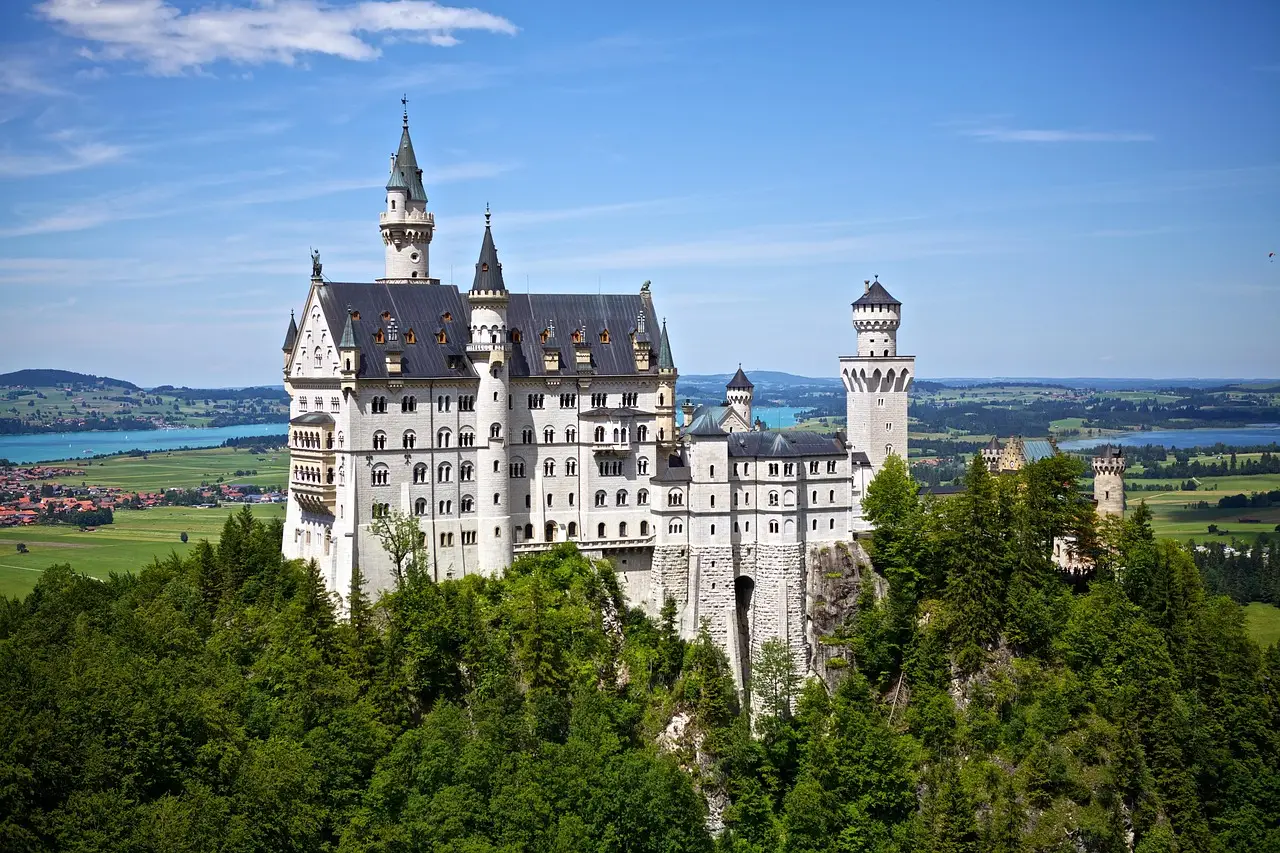
- Keys to the Castle is a four-part series: the Doge's Palace in Venice, Versailles, Blenheim, then Neuschwanstein Castle in Bavaria
- The Guardian review, published 23 November 2026, calls the series "heavenly TV that instantly brightens up your day"
- The reviewer praises Worsley's "abundant confidence without ego," which lets guest historians speak without the presenter showing off
- The series ends at Neuschwanstein Castle, whose founder Ludwig II the reviewer calls its "poor, lonely conceiver and inhabitant"
- The reviewer says the show makes viewers "want to spontaneously book a holiday"
By Marcus Bennett
Four castles, four parts, and a presenter who never talks down to the audience. Lucy Worsley's Keys to the Castle begins at the Doge's Palace in Venice, moves on to Versailles and Blenheim, and ends at Neuschwanstein Castle in Bavaria. The Guardian's review of the series, published on 23 November 2026, calls it "heavenly TV that instantly brightens up your day."
The review starts with the presenter's wardrobe and hair. "So neat! So bright! So wonder where she gets them and if I could carry one off!" the reviewer writes of Worsley's coats, then turns to the hairclips and a smaller question: "How big has she gone this time? Is it going to stay in?" The jokes set the tone the reviewer values throughout: pleasure, delivered without embarrassment, and without a hint that the audience is being humoured.
Beneath the jokes sits the reviewer's real argument. Worsley has "her energy, her indefatigability, her determination to impart what she knows in the most accessible way and, above all, her abundant confidence without ego." That last quality does the technical work in the series. It allows other historians to be interviewed and to share their knowledge with the lay person at home, without the presenter interrupting to demonstrate what the guest is about to explain.
The reviewer names that distinction as a personal bugbear: historians on television who spend their screen time "champing at the bit to show that he or she knows this already and that they are just letting them simplify things for the good of the show." Worsley is absolved of the charge, and the reviewer says so directly, thanking her for not adding to his burdens.
The route the series covers:
- Venice — the Doge's Palace, where the series opens
- Versailles
- Blenheim
- Neuschwanstein Castle, Bavaria, the finale
The review is also explicit about the effect this has on a viewer who normally braces at the mention of a history programme. "To feel cheerful as you approach a history lesson is a great boon," it says, and to have that lesson concern one of the reviewer's favourite subjects is another. By the time the camera turns towards the Doge's Palace, the reviewer describes himself as "practically insensible with delight," still waiting for the first tumblers on the lock to turn.
What does Worsley's approach change for the viewer?
For a viewer who dreads history on television, the change is that expertise is performed without any sense of superiority. The reviewer's practical question is whether a history programme is worth an evening, and in this assessment the answer turns on tone rather than on argument: the show is "heavenly" because it makes the audience feel looked after. That, in turn, produces the review's characteristic recommendation. Worsley "discovers the delights of European castles," and the series "makes you want to spontaneously book a holiday."
The series is not uniformly warm. Neuschwanstein, the last stop, gets the reviewer's "joy of deepest joys," though the castle's founder gets none: Ludwig II is described as its "poor, lonely conceiver and inhabitant." The pleasure attaches to the building, not to the man who imagined it, a distinction the reviewer makes in a single parenthetical dash.
What the review leaves the viewer with is a route rather than a verdict on scholarship: four stops, one presenter, and a running demonstration that history on television can be cheerful without turning into a performance of expertise. If the reviewer's verdict holds, the case for European castles rests on the visit rather than on the lecture, and the programme's own itinerary makes the argument in the order it prefers — the door first, the traveller second.
Source: theguardian.com
More from Marcus Bennett
Show full bio
Staff writer covering people, launches and day-to-day practice in arts in the broadest sense at Arts & Voices.
1,725 articles