Maia Ruth Lee Makes Translation a Physical Act at Tina Kim Gallery
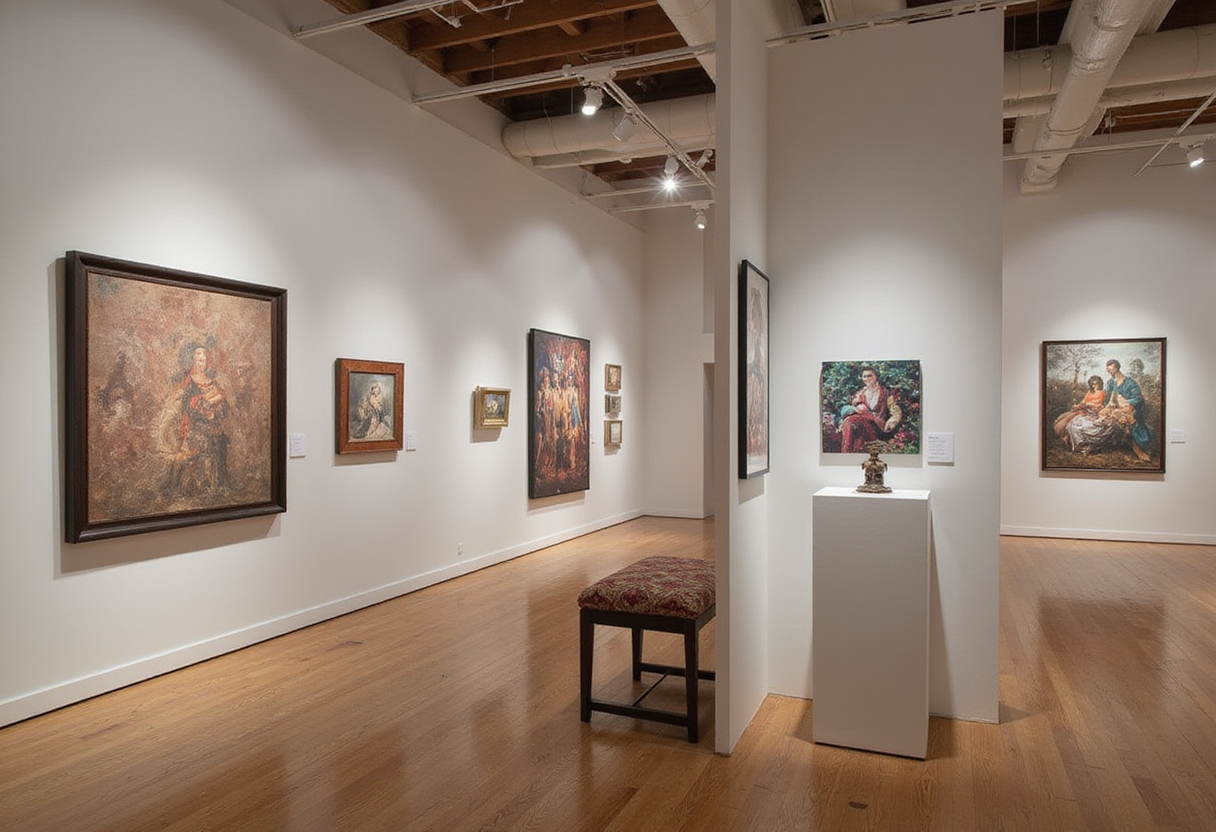
Maia Ruth Lee's "Double Vision" at Tina Kim Gallery turns translation into a physical condition, with works in canvas, latex and steel dated 2026 exploring migration and inherited language.

Programme
- Maia Ruth Lee's solo exhibition "Double Vision" is on view at Tina Kim Gallery.
- Works in the show, including the "B.B. Tetris" series, "Expandable Luggage" and "Double Vision Video work #1", are all dated 2026.
- Lee's parents were Bible translators who moved to Nepal and developed a written alphabet for the oral Sherpa language.
- The exhibition's motifs recur across canvas, latex and steel.
- The video installation was photographed in an installation view by Min Park.
Maia Ruth Lee's solo exhibition "Double Vision" opens at Tina Kim Gallery, and translation never arrives there. For Lee, translation is not a means of moving meaning between languages. It is a condition to be embodied and probed.
The artist brings a singular family history to the project. Her parents were Bible translators who moved to Nepal and developed a written alphabet for the oral Sherpa language. In "Double Vision," Lee unfolds the act of translation through her own visual practice, carrying the work of her parents into the gallery while testing what survives the crossing.
What does the show look like?
Three recurring visual languages run through the exhibition, appearing across canvas, latex and steel:
- Grid-like patterning inspired by the luggage seen at Kathmandu airport
- Illegible glyphs that resist reading while invoking writing systems
- Images drawn from the family archive
The works draw on motifs of migration, but the motifs themselves migrate. They move across the gallery and mutate as they take on new forms. A single gesture — stacking — produces opposite effects in different works. In the modular canvases of the "B.B. Tetris" series, all dated 2026, stacking evokes playfulness. In "Expandable Luggage" (2026), the same gesture turns heavy: the growing height of the stacked forms suggests a belabored migration.
A video work, "Double Vision Video work #1" (2026), is included in the installation, documented in an installation view photographed by Min Park.
Why translation matters here
Lee treats translation as a migration of a kind. Some things carry across; others are left behind. That formulation gives the exhibition its structure. The grid of airport luggage, the glyphs no one can read, the family photographs — each motif crosses from one origin into a new material, and each crossing exacts a cost or produces a surprise.
The artist's biography sharpens the stakes. To grow up among translators who invented an alphabet for a language that had none is to witness translation as creation rather than transfer. Lee's works refuse the neat version of that inheritance. Her glyphs stay illegible. Her grids recall transit rather than settlement. Her stacked forms suggest both game and burden at once.
"Double Vision" runs with works dated 2026, and the exhibition positions Lee as an artist who makes the interval between languages — the space where meaning is neither here nor there — into something a viewer can stand inside.
Original: storage.ghost.io
More from Tom Whitfield
Show full bio
Market editor covering industry trends and analytics at Arts & Voices.
367 articles