Mary Cassatt Returns to Paris: Musée d'Orsay Restores Her Place
The Musée d'Orsay opens a show of 80 Cassatt works, unseen letters and a digital recreation of her lost Chicago mural, restoring her to impressionism's core.
Programme
- The Musée d'Orsay exhibition features 80 paintings, pastels and prints by Mary Cassatt, many previously unseen.
- Cassatt died in June 1926; France has held only one retrospective of her work since.
- Her 4m x 18m mural Modern Woman, made for the 1893 Chicago World's Fair, is lost; the show displays a digital representation.
- The exhibition transfers to London's National Portrait Gallery in January, then to Boston's Museum of Fine Arts.
- Women were not admitted to the École des Beaux-Arts until 1897; Cassatt arrived in Paris in 1866.
Daniel Okafor
Paris will show 80 works by Mary Cassatt at the Musée d'Orsay, a century after her death and a century of French amnesia. The exhibition opens in Paris and travels to London's National Portrait Gallery in January, then to the Museum of Fine Arts in Boston. Its ambition is blunt: reinstall Cassatt as a pillar of French impressionism, not a footnote to it.
Cassatt painted alongside Edgar Degas, exhibited with Claude Monet and Camille Pissarro, and called herself "American, American through and through." That double handicap — woman and foreigner — is precisely why France forgot her, according to the show's curators.
"She was overlooked because she was a woman and a foreigner," said Caroline Corbeau-Parsons, one of the exhibition's curators. Cassatt's favourite subjects — mostly women and children — invited stereotype as well. "We hope this exhibition will put Mary Cassatt back in her rightful place in the history of impressionism," Corbeau-Parsons added.
What will visitors actually see?
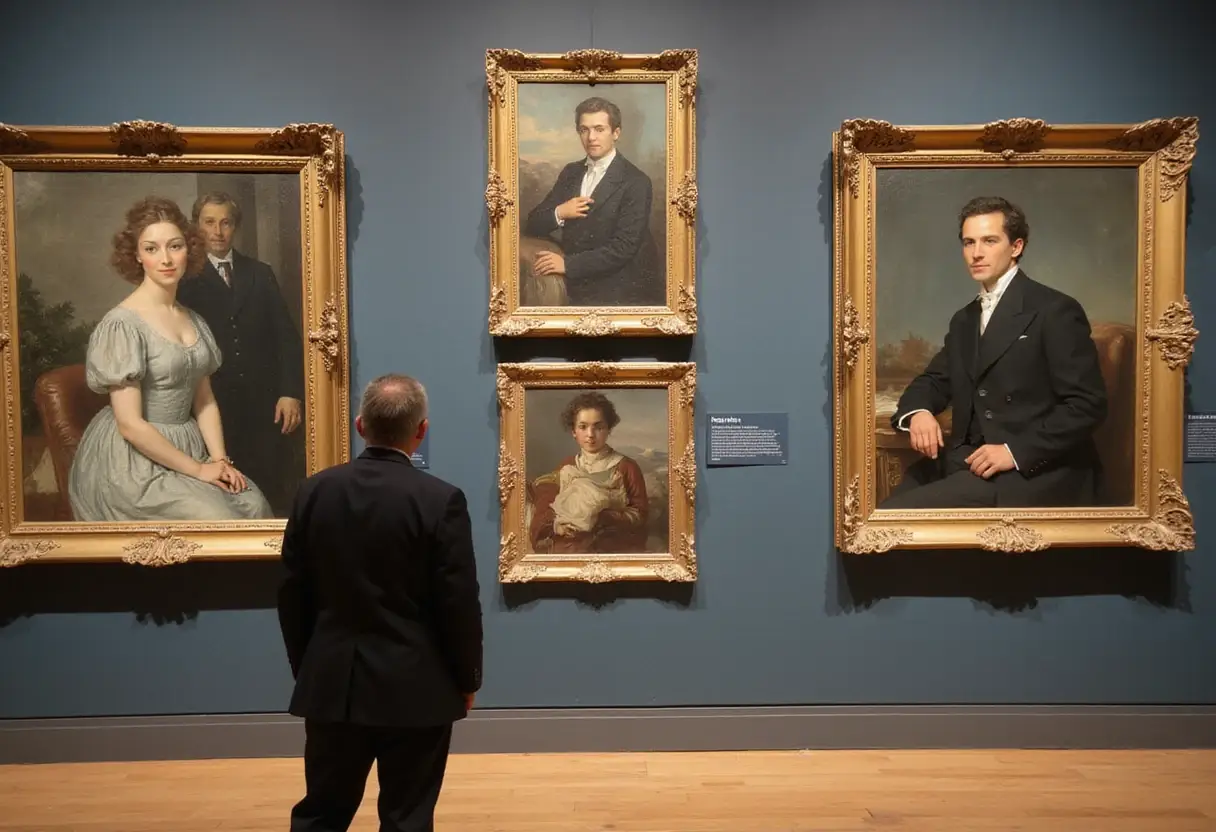
The show gathers 80 paintings, pastels and prints spanning her career. Many come from private European and American collections and have never been shown publicly. Unpublished private letters accompany them.
One centrepiece is a ghost. Modern Woman, the 4-by-18-metre mural Cassatt painted for the 1893 World's Fair in Chicago, has long disappeared. The work she was most proud of survives only as a digital representation — a mural reduced to pixels, which is not nothing, but is not the mural.
How did a banker's daughter reach the impressionists?
Cassatt was born into a wealthy Pennsylvania banking family with French Huguenot roots. She first visited France in 1854, aged ten, and fell for the country. Back home she enrolled at the Pennsylvania Academy of the Fine Arts, where restrictions applied: women could paint reproductions after statues, but not nudes, in an era when painting ranked as a social skill rather than a career.
Her father, Robert, despised the bohemian art world. He didn't stop her moving to Paris in 1866, aged 21, chaperoned by her mother and various female relatives. The École Nationale Supérieure des Beaux-Arts would not admit women until 1897, so Cassatt took private lessons with its masters and copied masterpieces in the Louvre.
She found the Paris art atmosphere, in her own words, "stifling and petty," and eventually bought a chateau in the Oise department north of the capital.
The turning point came at an exhibition by rebel artists who had rejected the Beaux-Arts academy — "the intransigents," a circle including Monet, Berthe Morisot, Pierre-Auguste Renoir, Édouard Manet, Alfred Sisley and Pissarro. Degas invited her to exhibit with the group the press nicknamed the impressionists. They later collaborated on works including Little Girl in a Blue Armchair, one of her best-known paintings. The traffic ran both ways: Cassatt introduced Degas and the impressionists to America.
Why did France forget her?
Cassatt lived in France for 32 years, yet the country has hosted just one retrospective since her death in June 1926. Curator Anne Robbins gives two reasons: prejudice and commerce.
"Although Mary Cassatt's work is represented in the Musée d'Orsay collection, her presence there is significantly less prominent than that of her fellow impressionists, including Berthe Morisot and Marie Bracquemond, the two other 'ladies of impressionism', to use the words of art critic Gustave Geffroy in 1894," Robbins said. "She was not part of the major French collections of her time, so her paintings were not included in the catalogues of national museums."
Most of her canvases went to American collectors. France kept the reputation, America kept the paintings. Cassatt, a lifelong advocate for women's rights, painted mothers and children because 19th-century Paris demanded the genre — and painted women's social and private lives as conventions constricted them.
The National Portrait Gallery's January transfer gives British audiences the same argument. Whether Parisian institutions now buy the painting as well as the thesis is the question the next catalogue will answer.
Source: theguardian.com
More from Daniel Okafor
Show full bio
News editor covering companies, deals and strategy in arts in the broadest sense at Arts & Voices.
1,389 articles