Mega Mega: Romford's rave revolution gets its own exhibition
Romford's empty Time & Envy club hosts Mega Mega, an exhibition on how Boogie Times and Suburban Base made the suburb a 90s dance music power.
Programme
- Mega Mega: Romford's Suburban Sound Revolution opens in the former Time & Envy nightclub, closed in 2024.
- Boogie Times record shop opened in 1989 with a bank loan secured before Danny Donnelly's 18th birthday.
- Suburban Base, founded 21 April 1991, became the first UK independent rave label with a US office, in Los Angeles in 1994.
- Smart E's Sesame's Treet, released by Suburban Base, reached No 2 in the UK singles chart in July 1992.
- The exhibition title quotes Underworld's 1995 track Born Slippy.
Romford, an outer London suburb, has turned its shut-down nightclub Time & Envy into an exhibition venue to celebrate the town's unlikely reign over 1990s UK dance music. The show, Mega Mega: Romford's Suburban Sound Revolution, takes its title from the shouted climax of Underworld's 1995 anthem Born Slippy — "mega mega mega, going back to Romford" — sung by frontman Karl Hyde.
Before the records, Romford had three claims to fame. It produced snooker champion Steve Davis, hosted punters at Romford dog track over chicken in a basket, and, for those in the know, traded the UK's best underground dance vinyl.
Where did it start?
The hub was Boogie Times, a record shop opened in 1989 by Danny Donnelly with a bank loan secured just before his 18th birthday. Born in Stratford, east London, Donnelly moved to Romford at five when his parents relocated to the old Essex market town. His father commuted back to run the family corner shop; Danny inherited the trade. "I was already buying and selling records at school," he says.
He loved rare groove (hard-to-find jazz, funk and R&B records prized for their breakbeats — the percussive passages sampled by producers). At 14 he bought huge bedroom speakers, later used for flat parties around east London. "You'd hire someone's flat, charge at the door and it would be treated like a club for the event," he says.
Luck helped. Pirate station Fantasy FM launched next to his dad's Stratford shop in 1989, and future drum'n'bass star DJ Hype came calling at Boogie Times with DJ Krome. "Krome said: 'Your mum makes the best cheese and onion sandwich,'" Donnelly recalls.
How did a suburb compete with London?
On the day of the Rumbelows Football League cup final, 21 April 1991, Donnelly brainstormed a label name in the office above the shop: Suburban Base. Pressing small vinyl runs let him outflank central London shops hoarding exclusives. "We could keep exclusive to our shop for at least the first few weeks. People had to come to us," he says.
The label's outsider status showed. Smart E's, from nearby Loughton, released the kids-TV-sampling Sesame's Treet — full-on cheese to some purists, but it reached No 2 in the UK singles chart in July 1992. "It was hugely popular amongst rave DJs before it crossed over," Donnelly says.
Romford's ecosystem ran on more than vinyl. "Pirate radio, the community around record stores and flyering was the analogue version of the internet," Donnelly says. Stations such as Conflict FM in Rainham and Force FM, above a sweet shop, broadcast to the borough. Tony Grimley's Culture Shock night at Romford's biggest club, Hollywood, replaced slow dances with DJs like Andrew Weatherall, Danny Rampling and Underworld's Darren Emerson. "Every time we booked Danny, we reached capacity," he says.
Simon Duggins, AKA Uncle Dugs, later of Rinse FM, caught the bug after spotting a circus big top beside the A13. "I walked into that rave a budding professional footballer," he says. "I walked out wanting to be Slipmatt."
What did the scene sound like?
As breakbeats sped up and ragga MCs (reggae-style vocalists) multiplied, Suburban Base helped define jungle, with dancefloor fillers like Remarc's RIP. DJ Rap, AKA Charissa Saverio, found the scene unusually open. "You saw Black people and white people together for the first time," she says. "You could just be you."
Suburban Base went global: first independent UK rave label to open a US office, on Hollywood and Vine in Los Angeles in 1994, then Brazil, where Donnelly found DJ Marky in a São Paulo record shop. Marky's track LK became one of drum'n'bass's biggest UK hits. "If you travel to São Paulo now wearing a Suburban Base shirt, someone will come up to you," Donnelly says.
Donnelly later sold Boogie Times to a Gravesend seller and compiled hit CD series including Pure Garage and Euphoria. Duggins soundproofed a Dagenham primary school for Rinse FM and staged garage nights featuring DJ EZ, Masterstepz and Pay as U Go Cartel — acts that pre-empted grime.
What will visitors see?
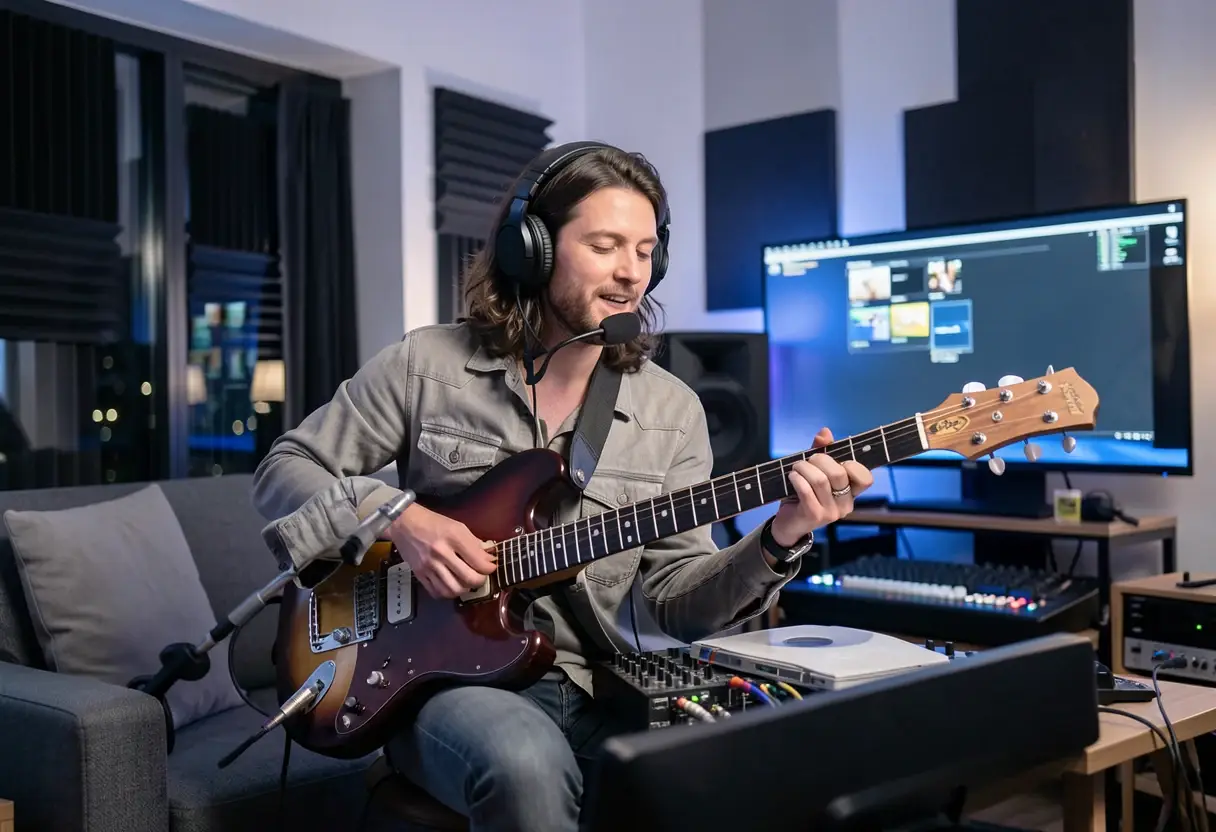
The exhibition fills the empty Time & Envy, closed for good in 2024 — the same venue where Todd Edwards played his legendary, frequently viral New Year's Day 2003 set. It includes a replica 90s studio with original Suburban Base equipment, and a pirate station rebuilt with original transmitters, aerials and Boogie Times turntables. "Young people now are so interested in those analogue and early digital forms of music making," says curator Katherine Green.
Donnelly offers a sober verdict on the empire built from his parents' garage. "I definitely played my part in the global expansion of the scene," he says. The ethos, he insists, was less glamorous: "Creating a label identity — and putting barcodes on the records."
Original: haveringlondon.com
More from Daniel Okafor
Show full bio
News editor covering companies, deals and strategy in arts in the broadest sense at Arts & Voices.
877 articles