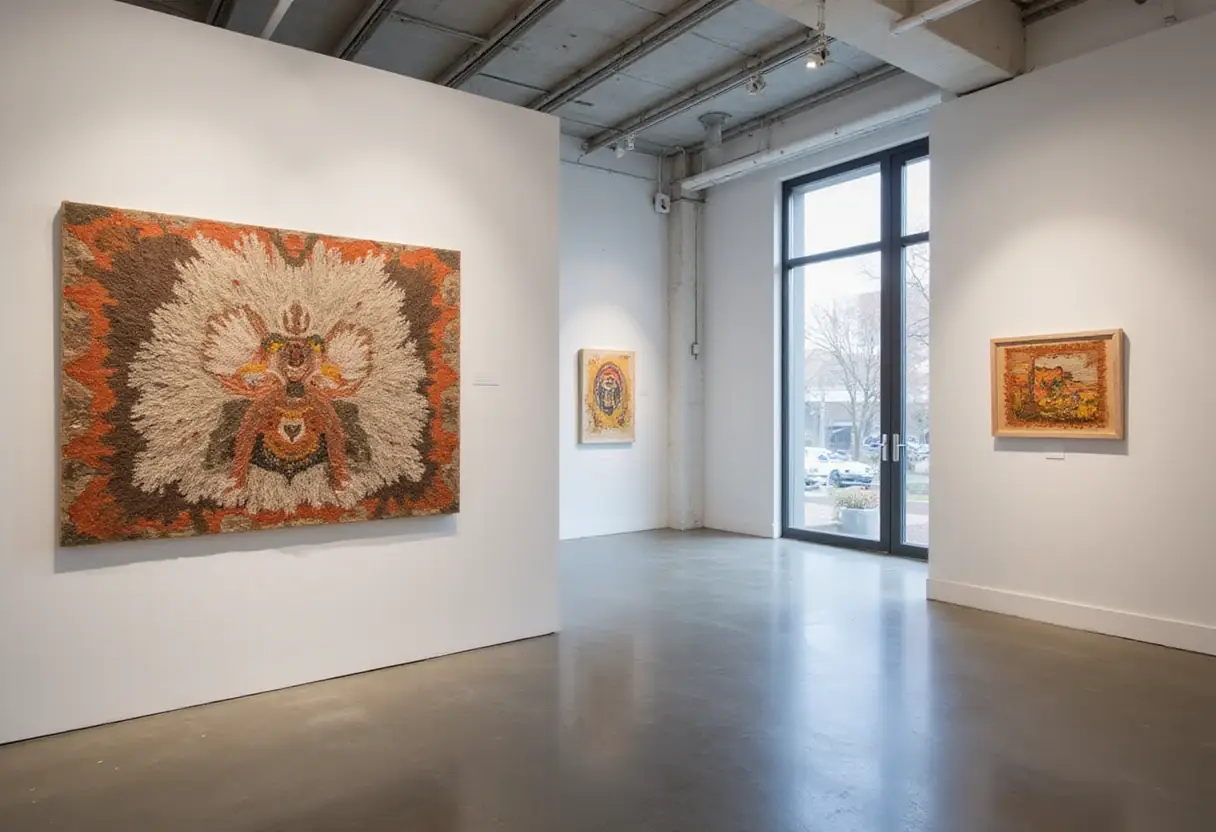
Michael Strangelove opens ‘Women in the Victorian Imagination’
Michael Strangelove’s hand-cut collages combine Victorian imagery with Group of Seven landscapes at Art House Café, pairing a 64th-birthday opening with broad claims about women and colonialism.
Programme
- Michael Strangelove opened Women in the Victorian Imagination on his 64th birthday.
- The Art House Café show combines Victorian paintings, sculptures, hand-colourized book pages, advertisements and magazines.
- Group of Seven landscape paintings provide the show’s stated Canadian character.
- The exhibition remains on display for the rest of November, with individual pieces for sale.
- Gallery manager Genevieve Chase-Onions said the collection grew over the last couple of months.
By Tom Whitfield
Ottawa-based Michael Strangelove marked his 64th birthday by opening Women in the Victorian Imagination, his latest exhibition and Art House Café’s featured-artist show for November. The hand-cut collage series remains at the café on Somerset Street for the rest of November, with individual pieces available for purchase.
Strangelove has made art since the 80s and describes his artwork as “eclectic.” The collages draw on Victorian paintings and sculptures, hand-colourized book pages, and Victorian newspaper advertisements and magazines. Each layer shifts a historical image into a new composition, although the report does not explain the selection process or the order in which Strangelove assembled the materials.
He also inserted landscape paintings by the Group of Seven, identified in the account as a celebrated group of Canadian landscape artists. The stated purpose was to give the work “a distinctive Canadian feel and appearance.”
That effect is visible in Delaney St. Pierre’s exhibition photograph, but neither the account nor the description specifies which Group of Seven paintings Strangelove used or how prominently they appear in each collage.
The show’s stated aim is to challenge how viewers see women and to consider alternate perspectives. Each individual piece is presented as a story about the woman it depicts. The account does not identify those women, summarize their stories or provide the historical sources for those interpretations, so the interpretive claim remains broader than the evidence supplied.
“The men in the Victorian era, boring portraits. Women are much more exciting and dynamic and reveal so much more about what we thought about women and still think about women,” said Strangelove.
His wording supplies a thesis rather than a close reading of Victorian portraiture or an account of how each source image alters its original meaning.
Art House Café was packed for the opening. Guests included close friends and passersby who stopped to see the exhibit. Strangelove promoted it through an old-fashioned campaign of hanging posters around town, and many attendees found the event through that grassroots approach.
“I think it’s really interesting to reinvent new art from pieces that already exist,” said Ari Zamin. “I love the layering of text, and it really does a good job of tapping into colonialism and connecting global colonialism to misogynistic colonialism of female bodies.”
That argument belongs to Zamin. The report does not show whether Strangelove or the gallery managers intended the same colonial reading, or whether the exhibition labels make that connection. The layered text may support it; the account does not establish it.
Art House Café’s gallery managers organize the featured artist for each month and helped make the event happen.
“Michael came to us with the idea of Women in the Victorian Imagination,” said Genevieve Chase-Onions, one of gallery managers. “The collection grew over the last couple months, and he really worked with the space to build the exhibition into what it is. We’re really excited to see it come together.”
Her account locates the proposal with Strangelove and credits him with building the collection around the café’s space. It does not specify how many works he made, how long each took or which parts of the room shaped the final arrangement.
What does this change for visitors and buyers?
The practical change is access. Visitors can see the series at Art House Café through the rest of November, and the individual pieces are for sale. The report gives no prices, dimensions, framing details, edition status or complete sales list. It also gives no opening date, only the fact that the exhibition coincided with Strangelove’s 64th birthday.
Prospective buyers therefore have the venue but not the transaction details; they would need to contact the café about availability and terms. The show’s wider ambitions also remain untested by the report. It offers no detailed account of what the work adds beyond recombination, beyond Zamin’s account of colonialism and the layered text.
The next measurable test comes before November ends: whether the advertised pieces find buyers. The report supplies neither prices nor sales commitments, so that outcome remains open.
Source: algonquintimes.com
More from Tom Whitfield
Show full bio
Market editor covering people, launches and day-to-day practice in arts in the broadest sense at Arts & Voices.
1,633 articles