Midterms Tomorrow: What Artists and Arts Workers Should Watch
Tomorrow's midterms, the first since Trump's second term began, decide control of Congress and with it federal arts funding, with Michigan's Senate race at the center.
Programme
- Midterms are tomorrow, the first nationwide election since Trump began his second term.
- Abdul El-Sayed leads Mike Rogers by an average of five points in Michigan's Senate race.
- Only 84% of artists have access to health insurance, per a 2023–25 NORC survey.
- Rogers has received over $13 million from pro-Israel lobbying groups, the most of any Senate candidate this cycle.
- Republicans hold narrow majorities in both chambers of Congress, which controls NEA appropriations.
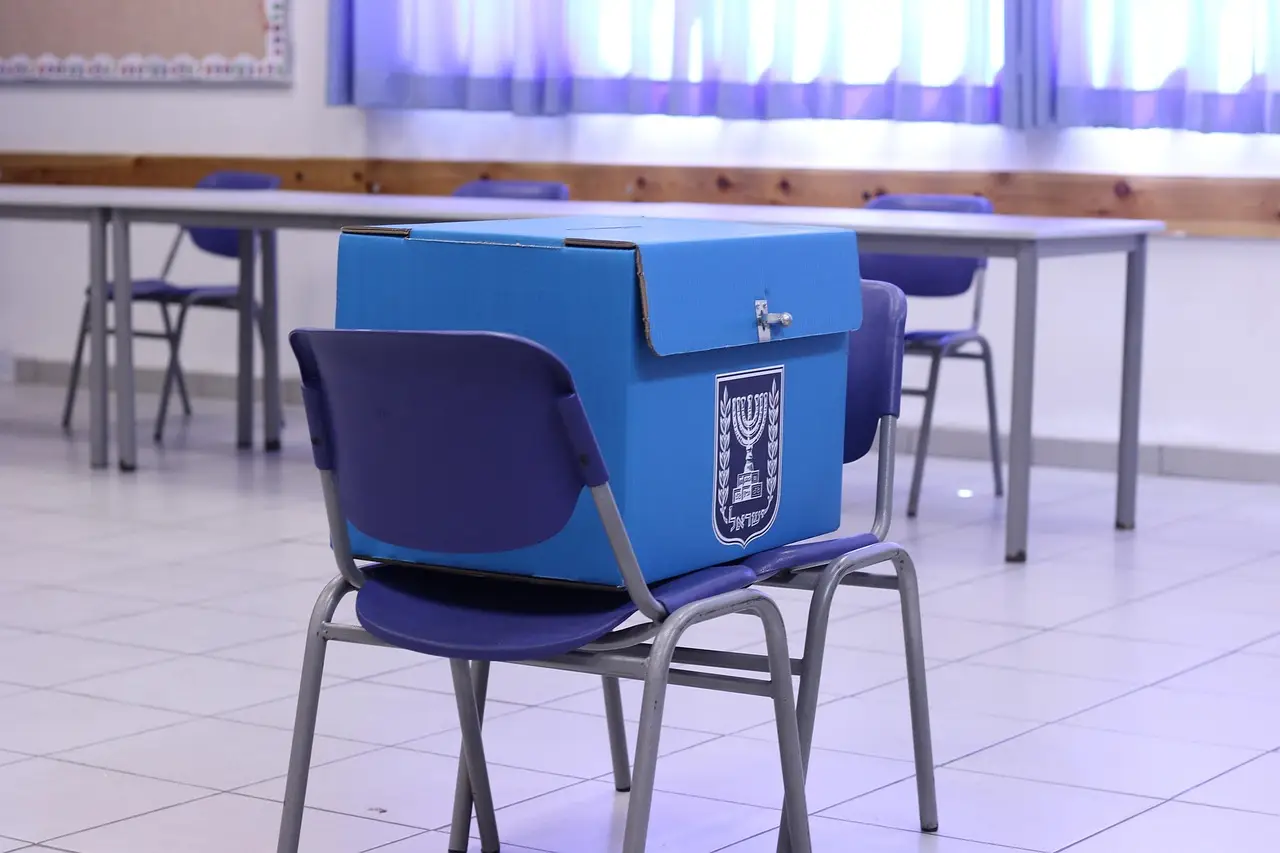
Voters head to the polls tomorrow in the first nationwide election since President Donald Trump began his second term, and artists across the United States have concrete reasons to pay attention. Congress decides appropriations for federal arts entities such as the National Endowment for the Arts, and Republicans currently hold narrow majorities in both chambers. Control of the House and Senate will shape cultural funding for years to come.
The stakes follow a bruising period for the cultural sector. Trump has pursued financial and ideological crackdowns on the Smithsonian, moved forward with unapproved pet projects around the US Capitol before federal approval, and presided over border construction that damaged cultural landscapes — including a 1,000-year-old Native etching in Arizona. Dozens of other policies targeting history and heritage have added to the pressure. Tomorrow, many voters will line up with arts and culture policies on their minds.
Several candidates with direct ties to the arts are on ballots. Claire Valdez is running for Congress in New York. Musician Bobby Pulida is running in Texas. Longtime culture advocate Angie Nixon is competing in a Senate race. The guide below focuses on races that matter for artistic freedom, affordability for artists, and cultural funding, organized into Senate, House, and gubernatorial contests.
What does Michigan's Senate race change for artists?
The marquee contest is in Michigan. Democrat Abdul El-Sayed, an epidemiologist and former head of the Detroit and Wayne County health departments, leads Republican Mike Rogers by an average of five points in one of the cycle's most-anticipated races.
The campaign has been marked by repeated racism and culture war attacks on El-Sayed's Muslim faith and his criticism of Israel, launched by Rogers and President Trump. Rogers, a former FBI agent and United States Representative, received Trump's endorsement in July 2025. He has drawn more funding from pro-Israel lobbying groups than any other Senate candidate nationwide this cycle — over $13 million.
The winner will sit alongside Democratic incumbent Elissa Slotkin, who defeated Rogers in the 2024 Senate election and faces reelection in 2031.
At the center of El-Sayed's platform is "Medicare for All," a policy he co-authored a citizen's guide on with Micah Johnson in 2021. The issue bears directly on creative workers: only 84% of artists have access to health insurance, according to a 2023–25 survey by the National Opinion Research Center.
El-Sayed has framed unions as central to defending work itself. He said: "unions are one of the most important bulwarks for the dignity of work in a moment when AI is coming for a lot of that."
His union record is long. He has been a member of the National Writers Union, the SEIU (Service Employees International Union), the AFT (American Federation of Teachers), and the Michigan-founded UAW (United Auto Workers). The UAW represents workers at museums including Manhattan's Museum of Modern Art, the Metropolitan Museum of Art, and the Museum of Fine Arts, Boston.
Where does Mike Rogers stand?
Rogers has routinely aligned with Trump on key issues. Encore, a Michigan performing arts news outlet, notes that "his congressional majority is the one that proposed zeroing out the federal arts education funding," calling the contrast with El-Sayed's pro-educational funding agenda "not subtle."
Rogers has fiercely fought Medicare for All proposals. He has also consistently battled against the UAW in Congress, even while voicing support for its strikes on the campaign trail.
What happens next?
Polls close tomorrow evening. The results will determine whether the narrow Republican majorities in both chambers survive, and with them the fate of federal arts appropriations, arts education funding, and cultural policy under a second Trump term. For artists weighing health coverage, union protections, and federal support, the Michigan race and its counterparts offer the clearest signal yet of what the next two years of cultural policy will look like.
Original: google.com
More from Marcus Bennett
Show full bio
Staff writer covering people, launches and day-to-day practice in arts in the broadest sense at Arts & Voices.
974 articles