Kennedy Center Closure Designed to Hide Mismanagement, Beatty Claims
A 51-page court filing by Rep. Joyce Beatty alleges the Kennedy Center's two-year closure was engineered to conceal mismanagement, citing inflated costs and withheld consultant reports.

Programme
- Rep. Joyce Beatty filed a 51-page opposition brief in US District Court for D.C. on Friday alleging the Kennedy Center closure covers up mismanagement.
- Ticket sales dropped by as much as 70 percent after Trump took the chairmanship in February 2025.
- Congress appropriated $257 million for the building's upkeep in 2025; JLL revised estimates put true needs at $400–450 million.
- Delta's presentation claimed phased renovations would cost about $560 million, while JLL's updated plan calculated an added cost of only $41 million.
- Trump announced the two-year closure on February 1, 2026, to begin July 4, citing a review Beatty says never happened.
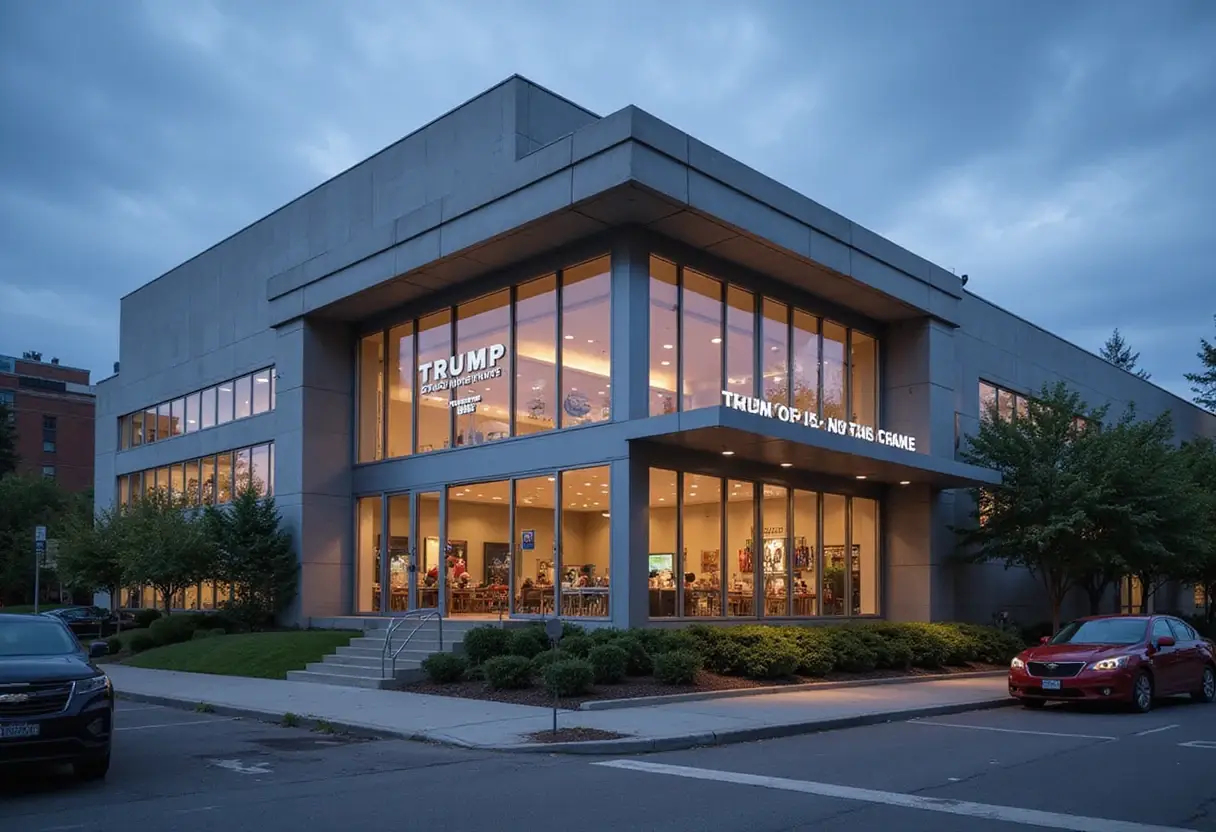
Ohio Democratic congresswoman Joyce Beatty charges that the proposed two-year closure of the Kennedy Center for the Performing Arts was designed "not in good faith for the best interests of the Center, but to cover up Defendants' own mismanagement and to please Trump." Her 51-page filing, submitted Friday in US District Court for Washington, D.C., escalates the legal fight over the institution since President Donald Trump installed loyalists on the board and became its chair.
Beatty, an ex-officio member of the board of trustees, argues that Trump dictated the closure date without proper board oversight. The filing describes the administration's response to information requests as "grudgingly—to put it generously," calls Trump's defense "a fake one-year review that never happened," and denounces a "sham process to lend a false patina of legitimacy." It also brands Trump's closure decision a "ukase" — a proclamation by a tsar — a pointed choice given Trump's admiration of Vladimir Putin. All of this appears on page one.
The Kennedy Center referred a request for comment to the Department of Justice, which did not immediately respond.
What does the timeline reveal?
The filing reconstructs a sequence it calls decisive. Facilities manager Charles Matthew Floca was charged with finding a consultant "to bless Trump's closure decision." Only the Delta Consulting Group applied, and it was required to deliver a recommendation within days. The board approved closure on August 13, 2025, but received Delta's written report only on August 31 — two weeks later. "The bizarre timeline says it all," the filing states.
A second vote followed on September 15, with preparatory materials provided just three days in advance. Those materials contained serious inaccuracies, Beatty says, including the claim that congressionally appropriated renovation funds must be spent by September 2029; the funds can be spent through September 2034.
The "kicker," in the filing's words: Floca told trustees that a phased repair approach would double construction costs by more than $300 million. Yet letters from real estate services firm Jones Lang LaSalle (JLL), which outlined the renovation schedule, made clear that "Delta's estimates were exaggerated." Those letters were not shared with trustees.
What do the internal messages show?
The filing quotes a September 10 text from the organization's chief financial officer to Floca: "We need to get shut" because "we are burning money." The text memorialized statements by board vice chair Jennifer Fischer in a conversation with Commerce Secretary Howard Lutnick. Fischer also said that "opponents [will] say [prior Kennedy Center president Richard] Grenell raised a ton of money and then we burned it to the ground."
The timeline, Beatty argues, serves Trump's desire to preside over the reopening. Lutnick himself said outside the courthouse: "why would the President agree to work on the restoration where he's going to be the President for the next… two-and-a-half years, and then he's leaving?"
How did the crisis develop?
Trump fired the longtime board chair in February 2025, stocked the board with supporters, and was swiftly elected chair. Floca was appointed in March 2026 despite, the filing notes, lacking arts management expertise. Attendance and donations dropped significantly. In December 2025, the board announced it would add Trump's name to the center; Beatty sued to stop it. Artists canceled performances and ticket sales fell by as much as 70 percent.
On February 1, 2026, Trump announced that "I have determined" the center would close on July 4 for a two-year renovation, citing a "one year review" with experts. "No such review ever happened," the filing says. Congress had appropriated $257 million for upkeep in 2025, with construction phased over time and the center remaining open. Floca has testified that the two-year duration was set by Trump on Truth Social.
Despite a court ruling prohibiting the closure, management wound down programming. Floca, the filing says, took no steps to develop the 2026–27 season and encouraged the National Symphony Orchestra to leave the campus, depriving the center of thousands of ticket sales.
What do the numbers actually say?
JLL first advised that total closure was necessary, then revised its assessment: phased renovations were feasible, though the center's "true needs approach $400–450 million," and staying open during work would cost an additional $60–80 million. That revision was withheld from trustees. Delta was instead told to assume a two-year closure beginning July 6, and documents indicate Lutnick "shaped the content of Delta's presentation," which put phased renovations at roughly $560 million — more than twice the congressional appropriation. JLL's updated plan calculated only an additional $41 million for a phased approach. The defendants produced JLL's revised report only after depositions ended, and Floca denied under questioning that any updated plan existed.
On September 15, after Beatty's appeal removed a resolution to add Trump's name to the facade — a proposal warning of "certain fiscal collapse" otherwise — Floca told trustees phased work would double costs, and the board voted for closure. That evening Trump posted that the center would close immediately. The next day Floca announced the main building must close for safety reasons, and Trump told reporters that without his name on the facade, "it's going to close, it will end up being ripped down." That night, a photographer captured him on Air Force One holding a placard that appeared to read "Kennedy Center DEMOLISHED."
The court's handling of Beatty's challenge will now determine whether the institution reopens on Trump's schedule at all.
Original: democracydefendersaction.org
More from Marcus Bennett
Show full bio
Staff writer covering people, launches and day-to-day practice in arts in the broadest sense at Arts & Voices.
998 articles