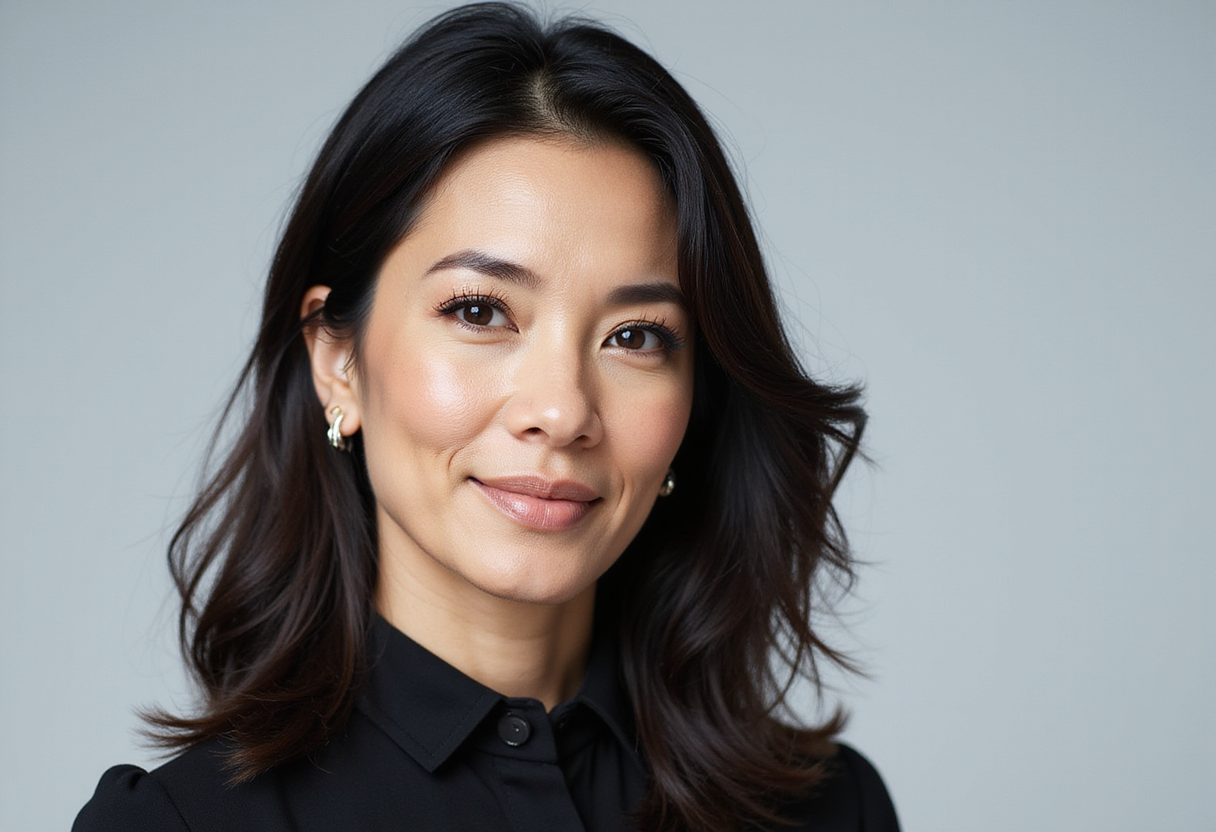
Moon Choi Returns to Busan as Juror With 'Bedford Park' and a Molière-Winning Play in Hand
Moon Choi, who won 14 awards in a year and then hid her trophies, returns to Busan as a juror as 'Bedford Park' screens and a Molière-winning play heads to the screen.
Programme
- Moon Choi won 14 awards in a single year for 'Anarchist from Colony' and 'Our Body', including Busan's 2018 Actress of the Year.
- 'Bedford Park' premiered at Sundance in January, winning the Special Jury Award for Debut Feature; Sony Pictures Classics took worldwide rights.
- Choi serves on Busan's seven-member competition jury under president Zhang Yimou, alongside Bi Gan and Samal Yeslyamova.
- Hyundai Motor Company backed 'Bedford Park' as its first investment in an independent feature.
- Choi will perform a Korean stage adaptation of Molière-winning play 'Une histoire d'amour' in Seoul next year.
Moon Choi won 14 awards in a single year from two films — and then locked the trophies in a cabinet. "Whenever I saw them displayed somewhere, I kind of felt pressure," Choi tells Variety. "I felt like I had to prove something to show them that I was worth it."
Known in Korea as Choi Hee-seo, the actor swept Korea's new actress prizes for her turn as Japanese anarchist Kaneko Fumiko in "Anarchist from Colony" and added Busan International Film Festival's Actress of the Year honor in 2018 for "Our Body," which bowed in Toronto. She was around 30 at the time.
"I felt that being successful at a young age can do some bad things to you," she says. "It didn't make me feel proud, but it actually kind of made me feel crestfallen because I felt like I had to reach a height that goes beyond those awards."
What followed was a candid stretch: more independent films, Korean TV series that "flopped really badly," and "A Girl with Closed Eyes" with Kim Minha, which still has no release date two years after its Busan premiere. Through all of it, she was waiting for "Bedford Park."
Why is Choi back in Busan as a juror?
Choi now sits on the seven-member jury for Busan's competition section, only in its second year. Zhang Yimou presides over a panel that also includes Bi Gan, Kei Ishikawa, July Jung, Vietnamese producer Tran Thi Bich Ngoc and Kazakh actor Samal Yeslyamova. "Bedford Park" screens in the festival's Flash Forward section.
"I don't have the pressure that I need to prove anything to anybody," Choi says. "I'm kind of feeling like a student trying to learn from all these films that I'm going to be watching alongside amazing people like Zhang Yimou and Bi Gan."
Her yardstick comes from Asghar Farhadi's idea that a good film begins once the audience leaves the cinema. Two days before heading to Busan, she watched Lee Chang-dong's "Possible Love," starring her friend and stage partner Jeon Do-yeon, with her father. Outside the theater, the pair argued over whether the final shot of a full moon offers hope. Her father read the title as a paradox pointing to an impossible love; she saw the opposite.
"I just felt so fulfilled because of those conversations I had with my father, which is rare," Choi says. "I want to look for the films that leave us with these amazing questions as we exit the theater, rather than the films that I feel like that give us definitive answers."
As an actor, she will watch for performances that linger "not because they were so perfect, but because they were so truthful in the moment."
What is 'Bedford Park'?
Written and directed by Stephanie Ahn, the film follows Audrey (Choi), a Korean American physical therapist in New Jersey caught between her immigrant parents' expectations and her own life. After her mother is hurt in a car accident, Audrey forms an unlikely bond with Eli (Son Suk-ku), the former wrestler behind the wheel.
The film world premiered in Sundance's U.S. Dramatic competition in January and won the Special Jury Award for Debut Feature. Sony Pictures Classics picked up worldwide rights during the festival, and the film has since played Toronto's Discovery program.
Choi auditioned seven years ago. Ahn sent her the full screenplay in advance — which she says is rare — and she finished it on her phone in one sitting. Audrey's tug-of-war between being a dutiful Korean daughter and living for herself mirrored Choi's own upbringing: Japan from ages nine to 12, two years in Seoul, then three in New Jersey. Back in Korea, classmates teased her as "the Japanese kid."
"It seemed like wherever I went, I didn't belong anywhere," Choi says. "Although I'm not a Korean American immigrant, I thought that I could resonate with that."
How did a 15-minute short save the film?
The financing took years. Choi was unknown in the U.S., Ahn was a first-time director coming from editing, and Eli was originally written as a white character — with names like Tom Hardy and Jake Gyllenhaal floated as a dream. COVID shut everything down. Four years in, the team shot a 15-minute short as a proof of concept for financiers.
Choi showed it to Son, a friend of a decade from the days when they would drop off casting resumes together. By then he had broken out as a star, and he told her he would want the role if Eli were Korean American. She pitched rewriting Eli as a Korean American adoptee to Ahn, who met Son over Zoom and reworked the script. Son then brought in Hyundai Motor Company, which backed the film as its first investment in an independent feature. Choi was made an executive producer.
"They were kind enough and generous enough for me to be able to focus on acting on set," Choi says. Post-production brought three-hour Zoom calls over cuts and music cues. "That was, I think, when I felt like, 'Oh, this is what producing feels like.'" Watching the finished film at Sundance felt like "giving birth to something so valuable," she says — a sentiment Son shared.
What comes next?
Choi recently closed the final leg of Simon Stone's staging of "The Cherry Orchard" with Jeon Do-yeon at New York's Park Avenue Armory in September, after premieres in Seoul in 2024 and tours of Hong Kong, Singapore and Adelaide. "She just held my hands, and she said, 'Moon … I'm so happy for you, and just know that you are greater than what you think you are,'" Choi recalls.
She has signed on to lead a Korean stage adaptation of "Une histoire d'amour," Alexis Michalik's play about a lesbian couple's attempt to have a child. The play premiered in 2020, won a Molière that year, and Michalik has since made it into a film. Choi performs it in Seoul next year and, after a Zoom call, has Michalik's blessing to option it for a screen version she pictures in Brooklyn.
"Should I direct it, produce it? I'm not sure," Choi says. She wants to write the screenplay herself. "I don't know, it's going to take 10 years, maybe."
She sees Korean cinema in recovery but leaning hard on genre — Park Chan-wook and Lee Chang-dong have delivered new films in back-to-back years — and she wants more filmmakers her own age. "Who do we have after Lee Chang-dong and Park Chan-wook?" she asks. With new representation at Gersh and Cognition signed six months ago, she has been auditioning and sending self-tapes. "I am a total newcomer in Hollywood," she says.
Source: Variety Film
More from Marcus Bennett
Show full bio
Staff writer covering industry trends and analytics at Arts & Voices.
410 articles