Programme
- Mozart left 'Zaide' (1779-1780) unfinished, without overture, recitatives or plot resolution.
- Director David Hermann opts for a tragic ending: Zaide, Gomatz and Allazim all meet helpless death.
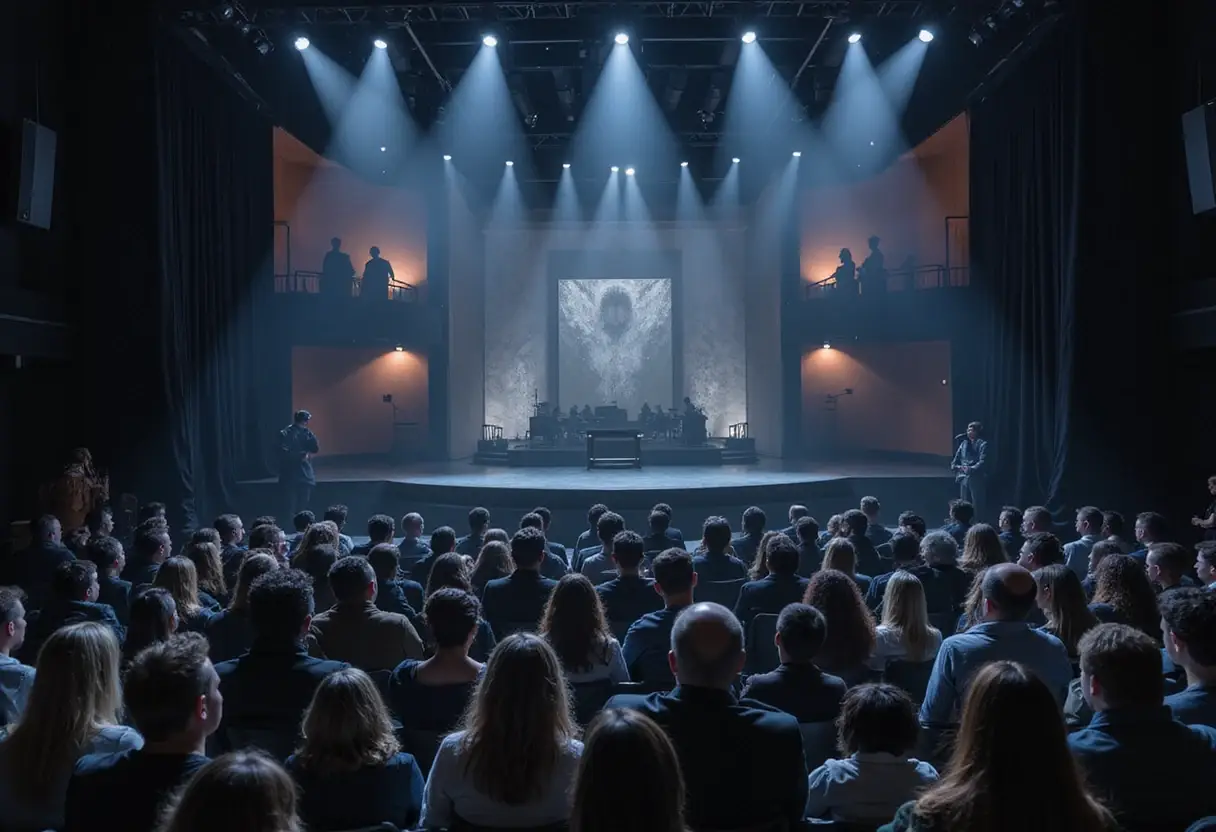
- Jo Schramm's set at Bockenheimer Depot combines a fashion runway with a Roman arena.
- Interludes are borrowed extensively from Mozart's 'Thamos, King of Egypt' (1773).
- The Frankfurter Opern- und Museumsorchester plays under conductor George Petrou.
Mozart never finished 'Zaide' — and director David Hermann has answered that gap at Oper Frankfurt with death for all three of its heroes.
The production, staged in the industrial Bockenheimer Depot as part of the 2026-27 season, confronts an old problem directly. Mozart wrote the singspiel in 1779-1780 during a frustrating period as a court musician in Salzburg. The German-language work lacks an overture, recitatives, spoken dialogue and any final plot resolution. Its captives fleeing a Turkish ruler's grasp foreshadow 'Die Entführung aus dem Serail'.
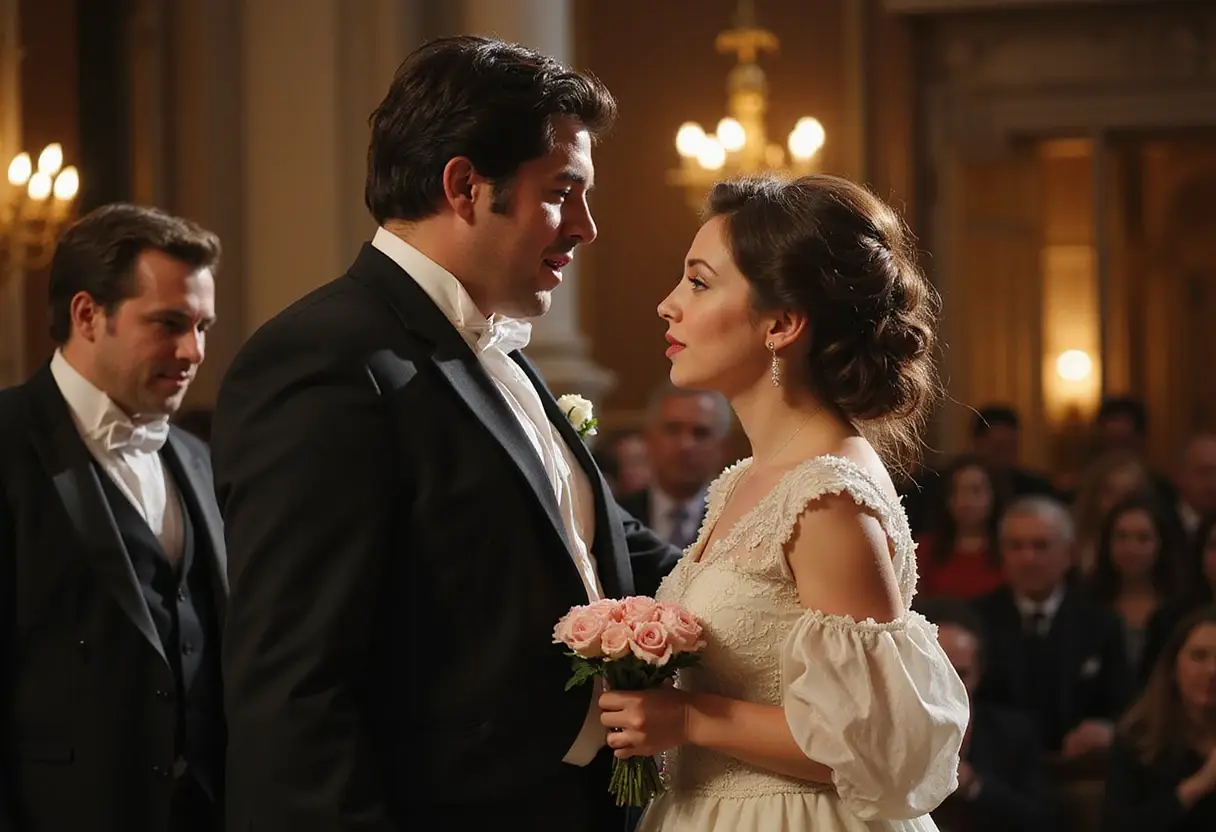
Hermann's solution is blunt. Zaide, her lover Gomatz and their helper Allazim walk straight into helpless death. Nothing on stage hints at redemption; beneath it, an actor dressed as an alien monster crawls constantly, a reminder of the hostile force controlling the captives' fate.
What does the staging look like?
Set designer Jo Schramm fuses an immersive fashion runway with an ancient Roman arena. The elements are concrete:
- An elongated oval track at the center, with two portal-like structures at its focal points resembling altars or gateways
- Rows of lights on each portal that extinguish, scene by scene, as hope slips away
- The orchestra pit placed between the two portals
- Suspended armor-like garments in red-white, suggesting both Roman armor and contemporary Japanese anime
Sultan Soliman's enslaved captives must clothe themselves in these rigs, marching pointlessly along parallel overhead tracks in mechanical exhaustion.
The visual concept is impressive but not flawless. As instrumental interludes borrowed from Mozart's 'Thamos, King of Egypt' (1773) develop, the circular marching turns repetitive. A slight friction runs between the chained captives' slow, heavy steps and the highly dramatic music.
The production also edits the two melodrama passages — spoken dialogue over music that Mozart modeled on Georg Benda's 'Medea'. New text fragments break words apart, leaving the viewer to wonder whether the characters, especially Gomatz, have lost their minds under torture.
Who carries the evening?
Karolina Bengtsson's Zaide shines as probably the sole beacon of hope in this dark world. Her soprano stays firm and radiant; in 'Ruhe sanft, mein holdes Leben' she brings genuine warmth. Captured again by Soliman, she delivers her fiery outburst against the tyrant without fear. One caveat: her first few minutes lean heavily on a tearful tone, which blunts the character arc slightly.
Michael Porter's Gomatz is convincing but anonymous — less a specific individual than an abstract symbol of collective suffering, his grounded vocal line matching his stumbling exhaustion on stage. Aleksander Myrling makes the most of the smaller role of Allazim, infusing it with genuine empathy and an elusive moral awakening.
Peter Marsh's Soliman, dressed in the same uniform as his gangsters, is cold and unyielding; his second-act fury aria, flanked by trumpets and timpani, conveys terrifying authority — though his desire for Zaide is almost impossible to sense. Pete Thanapat's Osmin bullies the captured couples with chilling precision, his repeated notes in 'Wer hungrig bei der Tafler sitz' laying bare the character's vulgar nature. The staging drops the libretto's minor satirical moments to preserve its oppressive tone.
In the pit, the Frankfurter Opern- und Museumsorchester under George Petrou plays with energy and theatricality. The 'Thamos' passages bridge the fragment's gaps effectively, with a dramatic gravity that hints at later 'Idomeneo' and 'Don Giovanni'. Petrou keeps tempos tight; brass and strings sound remarkably vivid.
The result is a well-crafted, 90-minute experience with robust logic — one that knows what it wants to say about power and the human spirit, and, as the review notes, could only be imaginable after witnessing the cruel twentieth century.
Source: Opera Wire
More from Tom Whitfield
Show full bio
Market editor covering people, launches and day-to-day practice in arts in the broadest sense at Arts & Voices.
624 articles