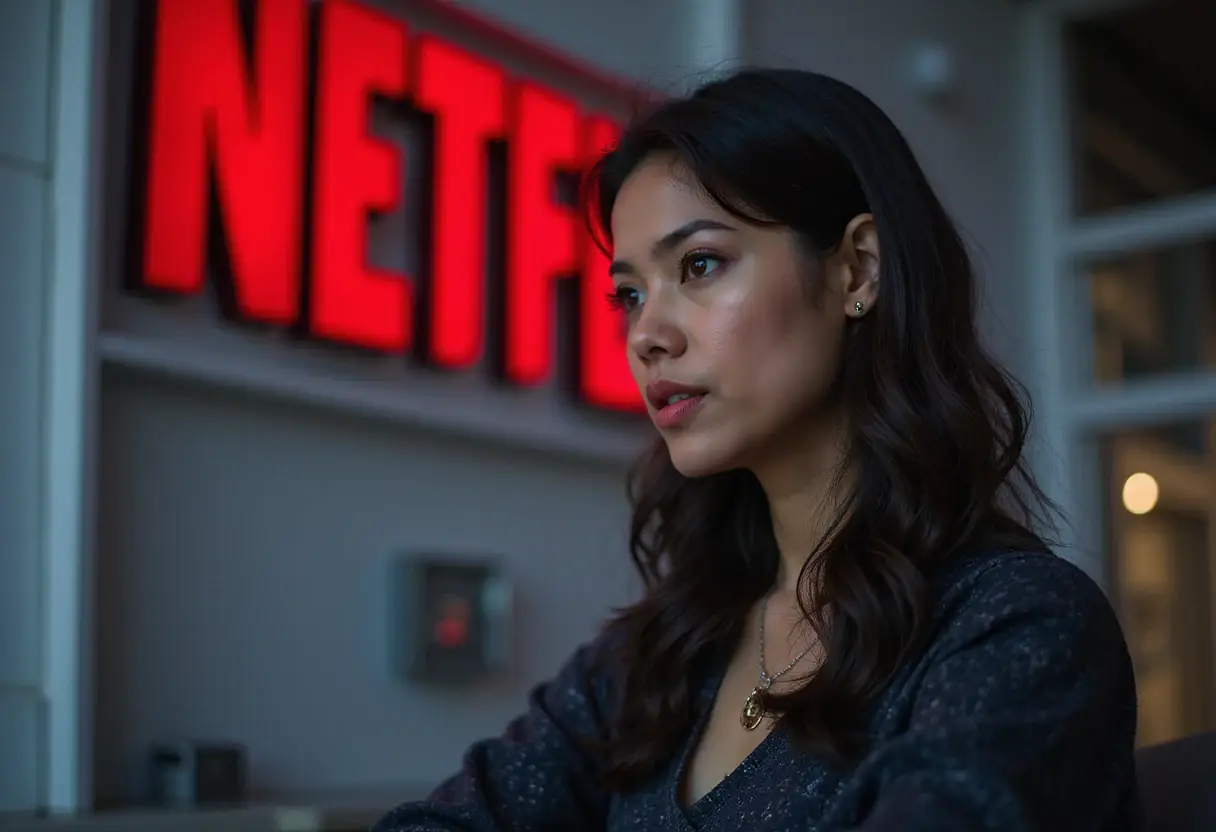
Netflix Has Four Titles Shooting in Jakarta as Indonesia Rewrites Its Film Law
Netflix is producing four titles through Jakarta's one-stop service as Indonesia drafts a revised Film Law, cuts location fees by 50% and pushes banks to accept film IP as collateral.

Programme
- Netflix has four titles in production in Jakarta, including the Extraction spinoff 'Tygo'.
- Jakarta cut certain location fees by 50% and added a 50% tax concession on cinema tickets for qualifying Indonesian films.
- Local productions took roughly 67% of Indonesia's box office last year.
- Indonesia's 27 film-school campuses produce about 1,200 graduates a year, with roughly 60% industry turnover.
- Fauzan Zidni's mandate runs to 2030; he wants at least two bilateral co-production treaties in force by then.
Netflix now has four titles in production in Jakarta, the Indonesian capital's Vice Governor Rano Karno confirmed, as the country's film agency drafts a revised Film Law that would rebuild how Indonesian cinema is funded and governed.
"We're very happy to say that Netflix now is doing [four] titles … through Filming in Jakarta," Karno said. The slate follows "Tygo," the streamer's spinoff of "Extraction." Under a memorandum of understanding tied to the inaugural Jakarta Film Summit, Netflix will also help develop local film talent.
The two tracks — one municipal, one national — run in parallel. Here's how each works.
How Jakarta is courting international shoots
The Jakarta Film Commission launched in June alongside Filming in Jakarta, a one-stop service for producers. Karno says production companies from Malaysia and India have already come to the city to shoot films and series.
The incentives are concrete. Jakarta has cut certain location fees by 50% and introduced a 50% tax concession on cinema admissions for qualifying Indonesian films. Karno admits the city has "barely scratched the surface" on production incentives and is studying Thailand and Malaysia as models.
Governor Pramono Anung has set the goal of making Jakarta a film hub on the scale of Busan. Karno — a veteran actor and filmmaker who says he has spent more than 50 years understanding the industry's problems — has driven much of the policy. Over five years, the city wants to build the full ecosystem: production, financing and market access. Post-production facilities, soundstages and studios are the biggest gaps, and Jakarta aims to fill them within three to five years.
Busan has been a close partner. Karno credits the Busan Film Commission with helping Jakarta join AFCNet, the Asian Film Commissions Network. "It's a momentum for us to be known [as the] future film hub in the region," he said.
The city is also spreading cinema access. Its Jaksinema initiative brings cinemas into public markets, with cheaper tickets aimed at lower- and middle-income audiences.
What changes under the new Film Law?
At the national level, Indonesia has no equivalent of France's CNC, Korea's KOFIC or Singapore's IMDA. The Indonesian Film Agency (BPI) can convene, advocate and coordinate — but it cannot fund films or mandate policy. Fauzan Zidni, BPI's chair, wants the revised law to change that with statutory authority and ring-fenced funding.
The first draft, prepared with the Ministry of Culture, has taken shape since Cannes. "It is still in discussion, and I will say more when the moment is right, but the direction is right and the momentum is there," Zidni said. He gave no date for getting the law through parliament.
Two ministries currently oversee film, and Zidni says BPI isn't trying to replace either. "That coordination problem is as much political as it is institutional, and solving it is part of the work," he said. He calls the Culture Minister's support the strongest it has been in years.
The financing bottleneck: IP as collateral
The Jakarta Film Summit will tackle what Zidni sees as the core barrier to institutional investment. Banks lend against physical assets — land, buildings, machinery — which production houses can't offer. Film IP, including copyright and distribution rights, has no valuation method banks or the Financial Services Authority (OJK) accept.
The legal groundwork partly exists. Government Regulation No. 24 of 2022 on the Creative Economy already allows IP-based financing. What's missing are OJK technical guidelines and a revision of OJK Regulation No. 40 of 2019 so IP can formally count as collateral. The summit will bring OJK, the Ministry of Creative Economy, the Directorate General of Intellectual Property, banks and the Indonesian Appraisers Association together to agree on a standard IP valuation method, a pilot financing scheme and a regulatory path.
Going outward: funds, treaties and streamer risk
Local productions took roughly 67% of Indonesia's box office last year, though Zidni says 2026 is tracking at slower growth amid global economic pressures. "What we have not built is the bridge that carries those stories outward," he said.
At the Lumière Summit, the Ministry of Culture announced a new international co-production fund, developed with CNC support and open to filmmakers worldwide working with Indonesian partners. It joins a matching fund under which the government contributes up to a set ceiling per project for producers who land international financing. Zidni concedes the matching fund alone won't help independents without overseas contacts. "What it does is create a concrete incentive to invest in building those relationships, the payoff is now tangible and government-backed, not hypothetical," he said.
Indonesia signed its first audiovisual co-production treaty, with the Netherlands, at JAFF Market in 2024, and talks with France are active. Korean producers are eyeing Southeast Asia, and Zidni calls Indonesia the obvious partner by scale — without giving a timeline.
There's a defensive logic too. Zidni, a former Disney executive, watched global streamers pull back from Southeast Asian originals after 2023. "A platform can change its content strategy, exit a market, or deprioritize Indonesian content, and we have no recourse," he said. BPI is pushing closer ties with international sales agents and regional Southeast Asian distribution.
Talent is the other pressure point: Indonesia's 27 film-school campuses produce about 1,200 graduates a year, but most aren't absorbed by the industry, and turnover runs near 60%.
Zidni's mandate runs to 2030. By then he wants at least two bilateral co-production treaties in force, a financing system with a track record, and Indonesian producers attending major international markets as regulars. "When the system works routinely, not heroically, that is when I will know we have built something that lasts," he said.
Source: Variety Film
More from Grace Kim
Show full bio
Correspondent covering technology and product news in arts in the broadest sense at Arts & Voices.
785 articles