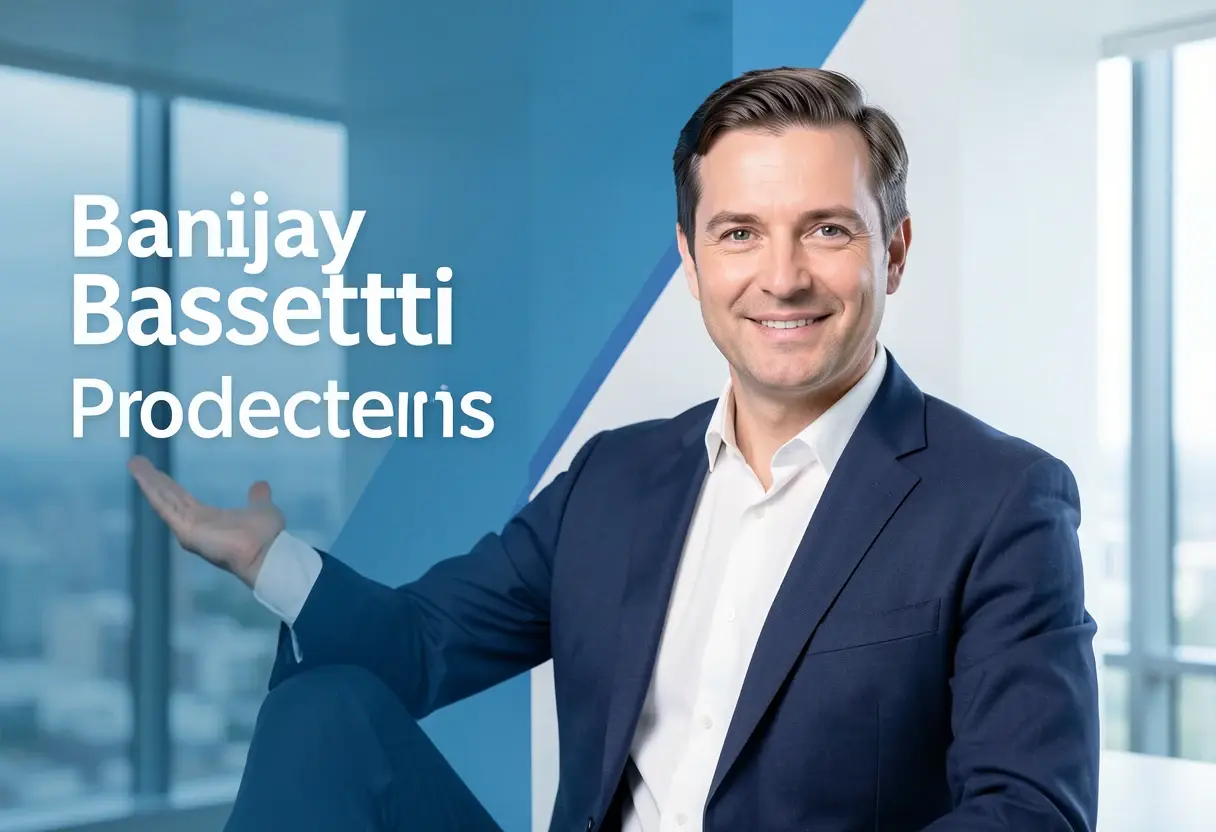
Banijay targets U.S. drama as the fight for IP intensifies
Frédéric Balmary says Banijay Entertainment will expand U.S. scripted production after its All3Media merger, citing €1 billion in creative investment and a key fight over IP.

By Daniel Okafor
At MIA, CEO Marco Bassetti said: “We invested one billion euros over the last four years in creativity, because it’s the root of our business.”
That spending anchors Banijay Entertainment’s latest strategic turn. The company now wants a larger presence in U.S. scripted production, or drama made for the screen.
Variety reported that the group has emerged from its merger with All3Media under the Banijay Entertainment name. Balmary described it as the world’s largest independent studio.
The move comes as Netflix renews its focus on American hits. Variety also placed it against a major shake-up in the streamer’s content leadership.
What does the All3Media merger change?
Balmary said the growing English-language market formed one rationale for the merger. The combined company wants to follow that growth through both production and distribution.
The merger has given Banijay a broader roster of writers, directors and producers, while making the English-language market a clearer strategic priority than it was before.
Before the merger, Banijay had expanded through acquisitions including The Forge Entertainment and other British investments. All3Media added George Kay, the creator of “Lupin,” and Sam Mendes to that roster.
Balmary said Banijay’s business rests on talent and intellectual property (IP), meaning the rights to exploit creative work. He wants the group to follow the English-language market rather than stand outside it.
How far will the U.S. expansion go?
Balmary said Banijay already works in the United States, but not as a studio. Its projects include the “Ripley” series and similar assignments, with the company involved more heavily in packaging than studio operation.
Balmary read Netflix’s last earnings call as evidence of demand, and linked that demand to Banijay’s ambition to operate more deeply rather than remain a packaging partner.
He said Netflix wants more U.S. hits. He expects Banijay to follow that growth and become more active in the market.
The strategy is clear. Execution remains the less tidy part.
Why do European dramas still matter?
The interview raised Balmary’s European strategy against Netflix’s changes and the Paramount and Warner Bros. merger, without spelling out the effects of either corporate transition.
Balmary said Netflix’s latest earnings call underlined growth among viewers for content from non-English-speaking countries. Banijay already has a substantial position in that market.
His case rests on a simple proposition: local European stories can travel, and a producer with international distribution can benefit when those stories reach a global audience.
In Italy, Balmary cited Groenlandia as one of the country’s most successful scripted companies. In Spain, he pointed to Pokeepsie’s “Drawn Together” on Amazon, which he called a success and said ranked number one worldwide.
Banijay wants to invest further in local European stories that can cross borders. The merger has sharpened that aim. It has not changed the underlying proposition.
Can the U.K. bridge Hollywood and Europe?
Asked whether more high-end television might be shot in the United States, Balmary gave a qualified answer. Netflix and the Hollywood studios face financial pressure, he said, and must balance cost against creative investment.
Balmary expects that pressure to favor careful deals, even as prestige writing retains its value when production budgets and global distribution ambitions collide.
He positioned the United Kingdom between Hollywood and Europe. Banijay can produce premium scripted drama there, and the company wants to grow that business.
He cited three recent English-language projects:
- “House of Guinness” — produced by Banijay and renewed for season two.
- “War” — recently released on HBO and described by Balmary as a success.
- “The Wanted Man” — coming soon on Apple and made with George Kay again.
Those titles supply both evidence and inventory. The next step is turning that pipeline into a more substantial U.S. studio presence.
What does retaining IP change?
At his MIA keynote, Bassetti defended what he called the “European production model.” Balmary said Banijay is fighting for the same principle.
“Retaining IP is really one of our big fights at the moment,” Balmary said.
He said the British model often allows producers to retain 50% of their IP. In practical terms, it works like a 50/50 co-ownership arrangement, preserving a meaningful stake while the project reaches the market.
His account is transactional rather than romantic: retained rights fund development, development supplies the next slate, and the cycle works only if producers keep enough ownership to reinvest.
That is why Bassetti treats creativity as the company’s root. Rights allow investment. Investment creates more work. The logic is legible, even if contracts remain less predictable.
Variety noted that the interview had been edited and condensed for clarity. Banijay’s next test is whether it can turn U.S. ambitions into greater ownership of English-language IP while sustaining the creative investment its merger case depends on.
Source: Variety Film
More from Daniel Okafor
Show full bio
News editor covering companies, deals and strategy in arts in the broadest sense at Arts & Voices.
732 articles