Niall McDiarmid's Colour: 15 Years of Hunting Brightness on British Streets
Scottish photographer Niall McDiarmid has spent over 15 years photographing colour across Britain; his new RRB Photobooks collection frames it as an antidote to grey times.
Programme
- Niall McDiarmid's Colour is published by RRB Photobooks.
- The project spans more than 15 years of photographing colour, mostly in London.
- Clapham Junction sees over 2,000 trains pass through every day, by McDiarmid's estimate.
- The book's most recent image, a yellow umbrella in Hoxton rain, was taken early this year.
- The final image shows Chris Ofili's Grenfell Tower memorial at Tate Britain.
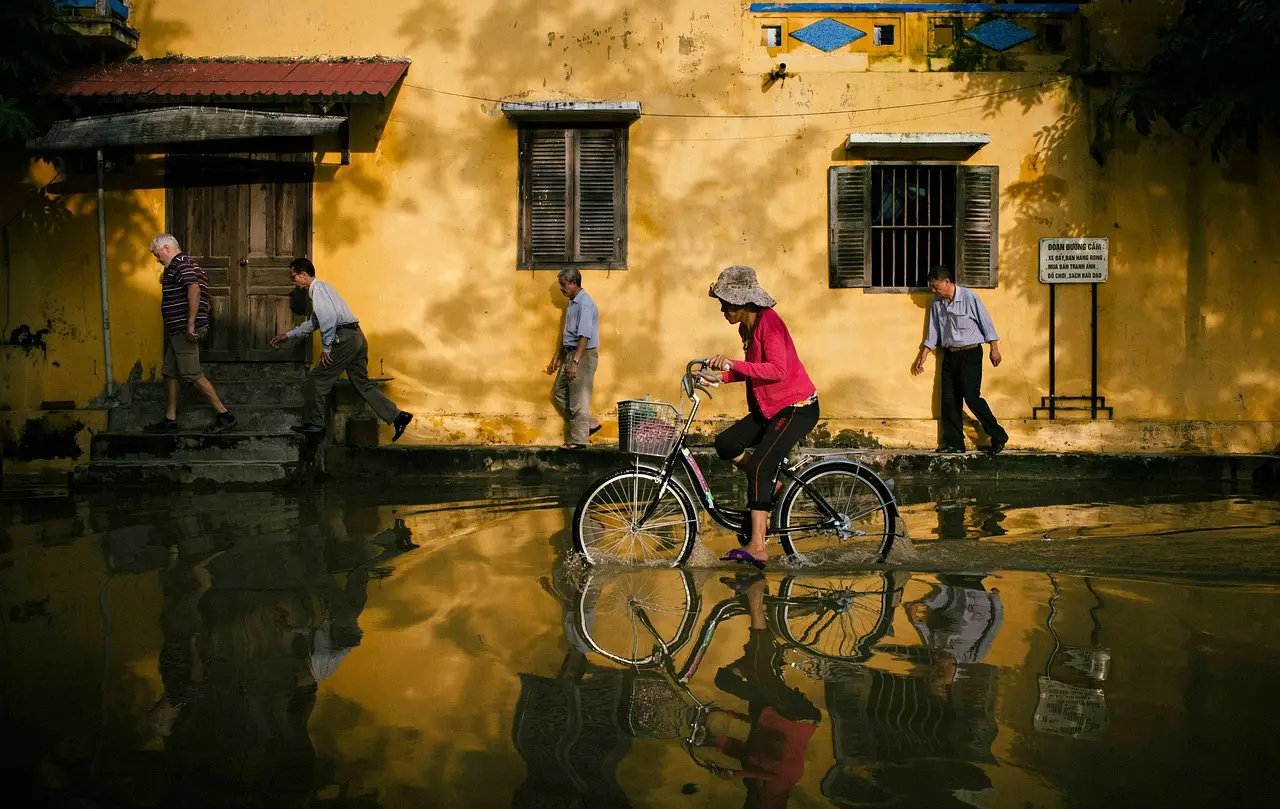
Scottish photographer Niall McDiarmid has spent more than 15 years photographing colour where he finds it, and the results are collected in Niall McDiarmid's Colour, published by RRB Photobooks. Most of the images come from London; several come from trips to other towns in search of brighter frames.
McDiarmid is blunt about the project's premise. "I set out with the project to photograph as much colour as I could," he said. "Frames that were full of colour from edge to edge, from corner to corner. I was looking for vibrancy, saturation, brightness, joy – and as much of it as I could find."
The work has a personal undercurrent. "The images were an antidote to the overwhelmingly difficult times that our family were going through at that time," he said. "In some ways finding colour helped me get through those days." That admission is the hinge of the book: the brightness on the page is a record of coping, not just composition.
Where the colour comes from
The photographs span predictable and improbable sources alike:
- A bright green kebab shop in south Wimbledon, complete with replica coloured Jacobsen dining chairs. "I'm sure interior design for kebab shops is a niche profession but I salute whoever led this project," McDiarmid said. "The addition of replica coloured Jacobsen dining chairs is genius. If only Christine Keeler had sat for that famous Jacobsen chair portrait in a green kebab shop in south Wimbledon."
- Commuters at Clapham Junction, where, as he notes, "I suspect with over 2,000 trains passing through Clapham Junction every day these random colour moments happen regularly." His method is movement, not patience: "But waiting around never seems to work for me in photography. I have to keep moving."
- The flower-filled entrance to Liberty's department store, in green and purple. The store carries a family memory: in the late 1970s, visiting London from Highland Perthshire, the family briefly lost his younger brother Calum, then about six, in a lift mix-up. "He showed up pretty quickly but every time I walk by the building I remember the episode and chuckle," he said.
- Red stockings at the entrance to the Royal Academy on Piccadilly. He places the motif in a lineage: Fred Herzog, who documented the streets of Vancouver, and French fashion photographer Guy Bourdin both made memorable shots featuring red tights.
- A woman in a yellow dress, reading a blue book, drinking orange juice, with a red rose on the table, against a pink wall, in a coffee shop just off the Strand. "Sometimes the gods of serendipity, luck, chance – call it what you like – just come good for you," he said.
- A man carrying a bright red box in Folkestone, a town McDiarmid notes has "a burgeoning artistic scene."
- A yellow umbrella in Hoxton in the pouring rain — the most recent shot in the book, taken early this year. "A bright yellow umbrella will punch colour through even the wettest of days," he said.
Two locations carry more weight than a single frame. A Sunday afternoon on the South Bank in February, where he photographed a girl with, in his words, "wonderful hair" browsing the secondhand book stalls, became the origin point of a larger project. "Six or seven shots taken on this day started a portrait odyssey that firstly took me all across London and then across the whole of Britain resulting in several books and exhibitions," he said.
Tooting, he admits, arrives with sitcom baggage — Wolfie Smith and the Popular Front of BBC's Citizen Smith, "Freedom for Tooting!" — but he has never watched the programme. "Tooting has always been a vibrant and exciting place to photograph for me and I've visited many times over the years," he said. The book includes his shot of the busy indoor market, now a big draw for street cuisine.
He is candid about appetite as motive. Of greasy spoon cafes — warm evening light, Formica table tops, faded lampshades — he writes: "But then again, maybe that's just an excuse for a full English breakfast at four in the afternoon."
The last image carries the book's only note of gravity. Chris Ofili's memorial to the victims of Grenfell Tower dominates the west stairwell at Tate Britain, commemorating in particular the photographer and artist Khadija Saye, whose career the tragedy cut short. McDiarmid caught a yellow-clad visitor heading into the main gallery, the mural visible behind him through frosted glass.
What does this change for the viewer?
Not the streets — those were already this bright. What changes is the argument: McDiarmid's book contends that a beige-and-monochrome Britain, from architecture to fashion to cars, is a matter of attention rather than fact, and that a single afternoon of walking can disprove it. The caveat is his own: waiting around never works. The colour only shows up for photographers, and viewers, who keep moving.
Source: theguardian.com
More from Tom Whitfield
Show full bio
Market editor covering people, launches and day-to-day practice in arts in the broadest sense at Arts & Voices.
1,767 articles