Ocelots, Thorns and Quiet Damage: Karen Olsson on 'Dear Thorns'
Karen Olsson's 'Dear Thorns' follows an ocelot biologist in a South Texas refuge. She discusses thornscrub, elusive cats and what might save the species, ahead of the Texas Book Festival on November 15.
Programme
- Karen Olsson's novel Dear Thorns is featured at the Texas Book Festival on November 15.
- The novel draws on visits to Laguna Atascosa National Wildlife Refuge in early 2020 and Santa Ana refuge nearly twenty years ago.
- U.S. ocelots survive as two small endangered populations in South Texas.
- The Recover Texas Ocelots project aims to breed and reintroduce ocelots west of current populations.
- Olsson's debut Waterloo was a 2006 PEN/Hemingway award runner-up.
By Daniel Okafor
Karen Olsson's new novel Dear Thorns will be featured November 15 at the Texas Book Festival. The book tucks South Texas history, oil and gas, border immigration, species loss and a ranching-heir artist into the story of a forty-something ocelot biologist drawn to a much younger intern. The setting sits not far from Elon Musk's SpaceX headquarters.
That's a lot of freight for one refuge. Olsson handles it, as ever, with a journalist's eye. She was a writer-at-large for Texas Monthly and an editor of the late Texas Observer, and the reporting habit shows.
Where did the ocelot come from?
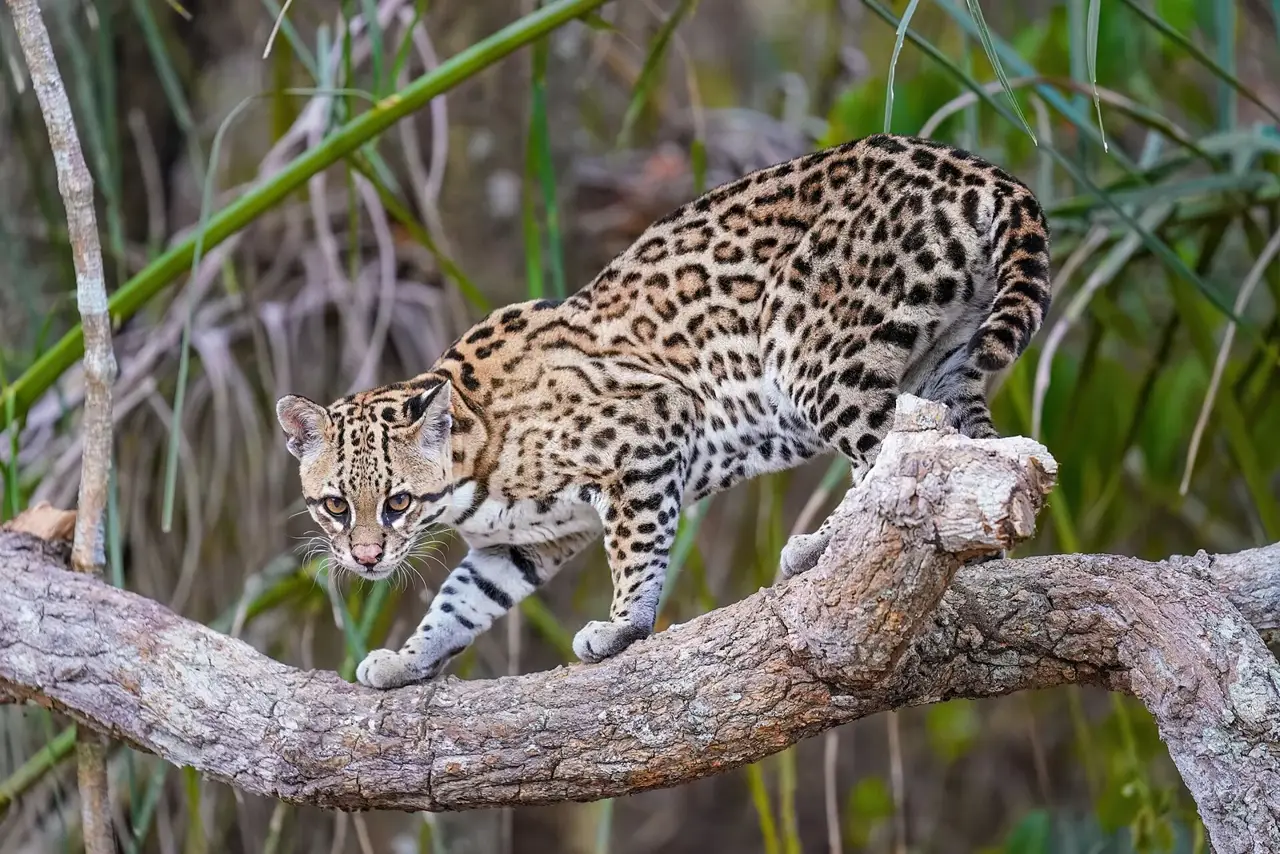
The origin is almost twenty years old. "Reporting a magazine story in the Rio Grande Valley, I stopped by the Santa Ana National Wildlife Refuge near Alamo, Texas," Olsson told Jane Ciabattari in an interview. A lobby photo display introduced her to the ocelot, a wild cat she hadn't known about. One motion-sensitive night camera image, she said, "stopped me in my tracks."
The novel didn't start there, though. Olsson had been wondering about journalist friends who reported on border violence, and the toll of witnessing destruction. Those questions "migrated away from gang violence and took root in a quieter realm" — a woman living alone, far from home, carrying that burden. Her heroine, Lora, only became an ocelot biologist when Olsson remembered the Santa Ana pictures.
The title came from the land itself. The setting is Tamaulipan thornscrub (the characteristic South Texas habitat of low, thorny trees like mesquite, huisache and Texas ebony). "Thornscrub" was the working title. She softened it to Dear Thorns to evoke Lora's fondness for her sometimes hostile environment.
How real is the refuge?
It's based on Laguna Atascosa National Wildlife Refuge, home to a small ocelot population. Olsson visited for a couple of days in early 2020, just before the pandemic, and learned, in her words, "a ton" from the ocelot biologist there. Then she deliberately stayed away, so the fictional refuge wouldn't overlap too closely with the real one. It has fewer staff, and Lora isn't based on the actual biologist — though Olsson worried people might think so. "For the record, I never suspected that any staff-intern romances were afoot at the real-world Laguna Atascosa," she said.
She never saw a wild ocelot. They're nocturnal and elusive, which is partly what drew her — "the idea of chasing after something unseen." A San Antonio zoo attempt failed; the enclosure was under renovation and nobody could say where the animals had gone. She finally saw one at the Mexico City zoo. "It was beautiful," she conceded, before noting that a zoo is a more programmatic experience.
What about the people?
The Lora–Ben relationship posed a craft problem. An early draft used Ben's point of view; in close third person from Lora's perspective, "it was tricky to make Ben a full-fledged character, given that Lora doesn't necessarily see him all that fully."
The refuge director Greg, who prefers hunters to ocelots and wants the floppy-disc archives dumped, embodies a real divide between "wildlife management" professionals (an economic lens on ranching, hunting and conservation) and preservation-minded conservationists. Greg is a comic character, Olsson notes, seen through Lora's unsympathetic eyes — and both groups matter in reality.
Can the ocelot be saved?
The U.S. population — two small groups in South Texas — is especially at risk. Habitat destruction is the cause; restoring it is the cure. Olsson points to reforestation, habitat corridors and Texas highway underpasses built as wildlife crossings to cut road deaths. A new project, Recover Texas Ocelots, aims to breed ocelots and introduce them on a ranch west of the current populations. If it works, U.S. ocelot numbers could actually grow.
Her touchstones while writing: JA Baker's The Peregrine, Michael McCarthy's The Moth Snowstorm, David Quammen's The Song of the Dodo and the novels of Willa Cather. What's next? "It's too early in the process for me to say."
Dear Thorns arrives twenty years after Waterloo, her PEN/Hemingway runner-up debut about state-capital politics, and a decade after All the Houses (2015), set against Iran-Contra. The through-line is damage — political, familial, ecological — observed without fuss. Readers who want the full argument can catch her at the festival on November 15.
Dear Thorns by Karen Olsson is available from Astra House Publishing.
Original: bookshop.org
More from Daniel Okafor
Show full bio
News editor covering companies, deals and strategy in arts in the broadest sense at Arts & Voices.
1,160 articles