Overexposed at MoMI: How X-Rays and Cinema Redrew the Body
Sixteen artists anchor an exhibition at the Museum of the Moving Image that traces how cinema and X-ray technology reshaped the body's visibility and politics.
Programme
- "Overexposed: Art, Technology, and the Body" is on view at the Museum of the Moving Image through January 3, 2027
- Sixteen artists participate, including Barbara Hammer, Ana Mendieta, and Liz Magic Laser
- Curator Sonia Shechet Epstein organized the show; Elisabeth Sherman co-edited the catalog
- The exhibition opens with W.K. Röntgen's 1895 X-ray plate and includes the Lumière brothers' 1897 film "Le Squelette Joyeux"
- Lead support came from the Alfred P. Sloan Foundation and the Andy Warhol Foundation for the Visual Arts
By Marcus Bennett
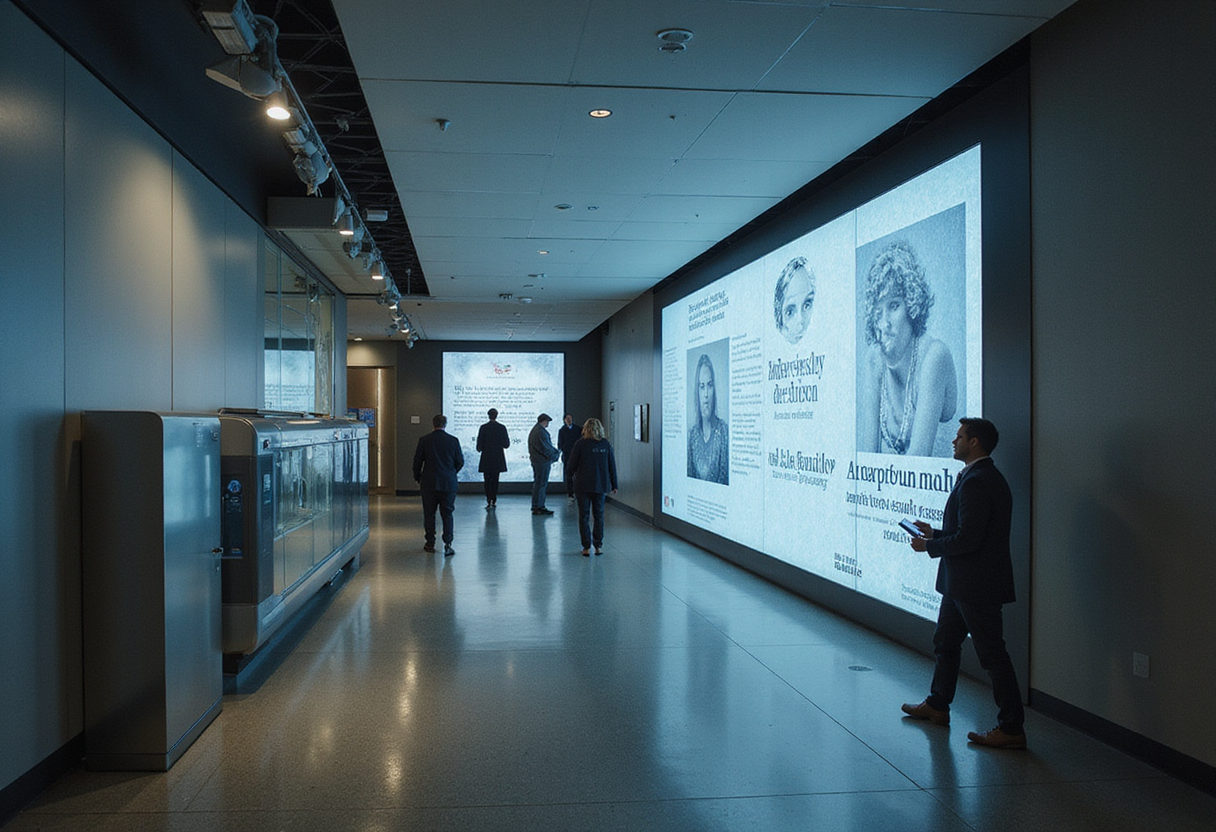
In 1895, W.K. Röntgen exposed a living woman's hand to an unknown ray. Her bones printed clearly. Her wedding ring glowed white. The resulting plate anchors the entry wall of "Overexposed: Art, Technology, and the Body," now on view at the Museum of the Moving Image in Queens, New York, through January 3, 2027.
Sixteen artists fill the museum's galleries and screens. Curators have paired early medical films with contemporary works in film, video, and photography. The argument crosses media, decades, and disciplines.
The show treats cinema and radiology as twin engines of modern vision, two nineteenth-century technologies that pulled the body's interior into public view and have never since released it.
What does the show set out to argue?
"Through artworks and historical films, Overexposed reflects on the human desire to see inside the body, the technological means of doing so, along with possible social and political consequences," said Sonia Shechet Epstein, Curator of Science and Technology at Museum of the Moving Image, who organized the exhibition.
Epstein co-edited the catalog with Elisabeth Sherman. Their thesis cuts two directions. Looking inside can illuminate a patient. It can also discipline a body.
What historical material anchors the show?
The opening bay holds Röntgen's 1895 radiograph. Beside it hangs the Lumière brothers' "Film Lumière no. 831, Le Squelette Joyeux" (1897), a comic dance of skeleton and dress. Both images belong to the same late-1890s surge of discovery. Cinema learned to record time. Radiology learned to record depth.
Contemporary works answer the historical material directly. Véréna Paravel and Lucien Castaing-Taylor's "De Humani Corporis Fabrica" (2022) extends the lineage with surgical-camera footage from inside the operating room. Barbara Hammer's "Sanctus" (1990) continues the interior gaze through experimental film. Zuza Banaśińska's "Grandmamauntsistercat" (2024) closes the contemporary arc.
Who is on view?
Sixteen artists appear across the galleries and screenings:
- Panteha Abareshi
- Peggy Ahwesh
- Zuza Banaśińska
- Lucien Castaing-Taylor
- Véréna Paravel
- Theo Jean
- Ruth Cuthand
- Barbara Hammer
- Anna Kipervaser
- Liz Magic Laser
- Ana Mendieta
- Agnes Questionmark
- Donald Rodney
- Courtney Stephens
- Leslie Thornton
- Ron Vawter
What accompanies the show?
MoMI pairs "Overexposed" with screenings and talks through the exhibition's run, an unusual decision that pulls the gallery argument out of the white cube and into the cinema theater downstairs.
The film program has included Richard Fleischer's "Fantastic Voyage," David Cronenberg's "Dead Ringers" and "The Brood," and Claire Simon's "Our Body." On November 5, ophthalmologist Benjamin Freeman joins Elisabeth Sherman for a panel titled "Visible Humans," built around the Visible Human Project.
Lead funding came from the Alfred P. Sloan Foundation and the Andy Warhol Foundation for the Visual Arts. Additional support was supplied by Romy Cohen, The Gladys Krieble Delmas Foundation, Elaine Goldman, the May & Samuel Rudin Family Foundation, and Doug Pugh.
What does this change for the visitor leaving the gallery?
They leave the gallery with a quieter eye. A routine scan, a dental X-ray, an insurance form — each now reads as a negotiated document rather than a neutral record. The body is, the show argues, a continuously photographed and contested territory belonging to no one and yet to everyone who cares to look.
Original: bit.ly
More from Marcus Bennett
Show full bio
Staff writer covering people, launches and day-to-day practice in arts in the broadest sense at Arts & Voices.
464 articles