'Paper Tiger' Review: James Gray's Reagan-Era Family Tragedy Earns NYT Critic's Pick
James Gray's 'Paper Tiger' earns a New York Times Critic's Pick. Adam Driver, Scarlett Johansson and Miles Teller star in a 1986 New York crime drama about brothers, money and violence.

Programme
- James Gray's 'Paper Tiger' runs 1 hour 55 minutes, is rated R, and is in theaters now.
- The film stars Adam Driver, Scarlett Johansson and Miles Teller as a Queens family in 1986.
- The New York Times named the film a Critic's Pick in a review by chief film critic Manohla Dargis.
- Gray's 1995 debut 'Little Odessa' and his debt to 'The Godfather' (1972) frame the critic's analysis.
- The film opens with a quote from Aeschylus' 'Agamemnon.'
By Elena Vasquez
James Gray's "Paper Tiger," starring Adam Driver, Scarlett Johansson and Miles Teller, has been named a New York Times Critic's Pick. Chief film critic Manohla Dargis reviews the R-rated crime drama, which runs 1 hour 55 minutes and is now in theaters.
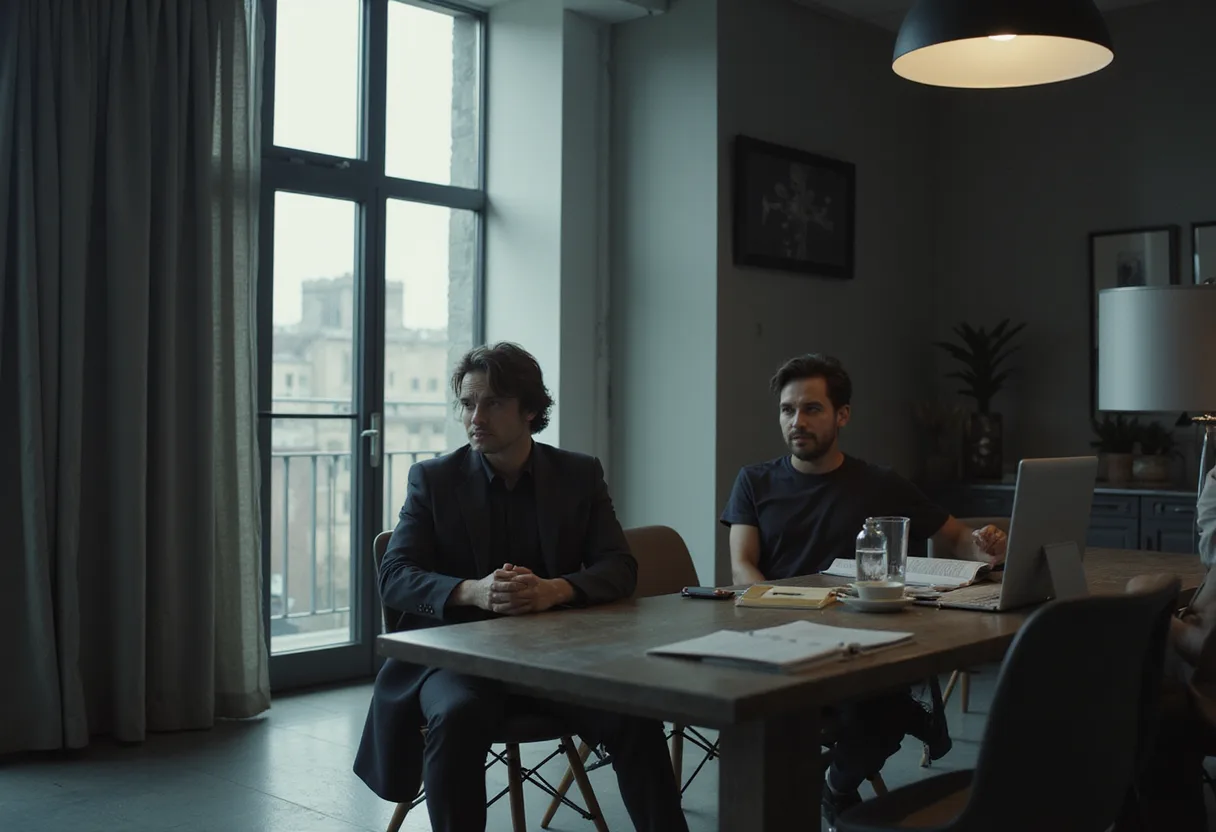
The film opens on New York in 1986 and narrows to two brothers, the Pearls. Gary (Driver), a retired New York police officer turned security consultant, arrives with swagger, a Mercedes and slicked-back hair. His younger brother Irwin (Teller) lives modestly in Queens with his wife Hester (Johansson) and their two sons, teenage Scott (Gavin Goudey) and young Benjamin (Roman Engel).
What drives the plot?
Both brothers face severe financial strain — a condition Dargis reads as symptomatic of the economic pressures of Ronald Reagan's America. Gary proposes that he and Irwin consult for a Russian immigrant outfit doing cleanup work on the Gowanus Canal, a once-busy commercial channel headed toward Superfund status. The company struggles with regulations because, Dargis notes, it is actually a front for a criminal enterprise.
"Driven by Gary's arrogance and aided by Irwin's naïveté, the brothers blunder into violence," Dargis writes. The gun Gary flashes for the children, worn in an ankle holster, proves a portent for the business proposition that follows.
Where does Gray sit in the genre tradition?
Dargis traces Gray's lineage from his 1995 debut "Little Odessa," set in a cloistered immigrant world, through the family-gangster tradition running from William A. Wellman's "The Public Enemy" (1931) to Francis Ford Coppola's "The Godfather" (1972). The critic sees Coppola's imprint in "Paper Tiger's" penumbral lighting, tenderness, harrowing violence and even a brotherly embrace.
Gray, the grandchild of Jewish immigrants from what is now Ukraine, "turns ideas into genre movies," Dargis writes, rather than sermons. Scenes of Gary with his former police colleagues carry the influence of Sidney Lumet, she adds. A shootout that becomes an abstract canvas of poses and sweaty desperation suggests an admiration for Michael Mann.
How do the actors fare?
Driver, comfortable with morally ambiguous men, does not court the audience's sympathy. Teller, often a "gratingly showy screen presence," has been "productively tamped down," Dargis writes, doing much with relatively little as a simple man swept into extreme violence.
The surprise is Johansson. In oversized glasses, fat curls and a nasally accent, she plays Hester as "a font of warmth yet briskly no-nonsense" — a woman who has shouldered many of the family's burdens. Gray's attempt to dowdy her down was "unnecessary," the critic writes: Johansson gives substance to a character another director might have reduced to caricature.
What does the title mean?
Gray opens the film with a quote from Aeschylus' "Agamemnon": "Let there be wealth without tears; enough for the wise man who will ask no further." The line guides the tragedy that follows — ambition bleeding into avarice, desperation into violence, dreams into nightmares. Dargis finds the characters ordinary rather than heroic, yet "their fates are no less tragic and the very stuff of American myth."
The critic's verdict: Gray does not always satisfyingly integrate all the film's parts, but "each is more memorable in and of itself than many movies are in their entirety." In a mainstream climate Dargis calls trivializing, that seriousness is itself the story.
Original: gowanuscanalconservancy.org
More from Elena Vasquez
Show full bio
Senior reporter covering technology and product news in arts in the broadest sense at Arts & Voices.
1,278 articles