Patagonia Links Chile and Spain in Six-Part Eco-Thriller
Movistar Plus will release the six-part Itziar Ituño-led eco-thriller Patagonia in January 2027 after its Cádiz premiere, with Chile’s Wood Producciones and Spain’s Atlantika Films co-producing.
Programme
- Patagonia is a six-episode Movistar Plus eco-thriller scheduled for January 2027.
- Itziar Ituño plays Alicia, who searches Chile for her missing teenage son Noah, played by Unai Arana.
- Chile’s Wood Producciones and Spain’s Atlantika Films co-produced the series; Germany’s ZDF Studios handles international distribution.
- Patagonia is scheduled to world-premiere at the South International Series Festival in Cádiz.
- Atlantika will pitch the six-part When Devils Rule at TV Beats Co-Financing Market on Nov. 16-17.
Movistar Plus will release the six-part eco-thriller (environmental suspense drama) Patagonia in January 2027. The series will make its world premiere at the South International Series Festival in Cádiz, while Germany’s ZDF Studios handles international distribution. The project extends the streamer’s effort to amplify Spanish storytelling abroad and build ties with Latin America.
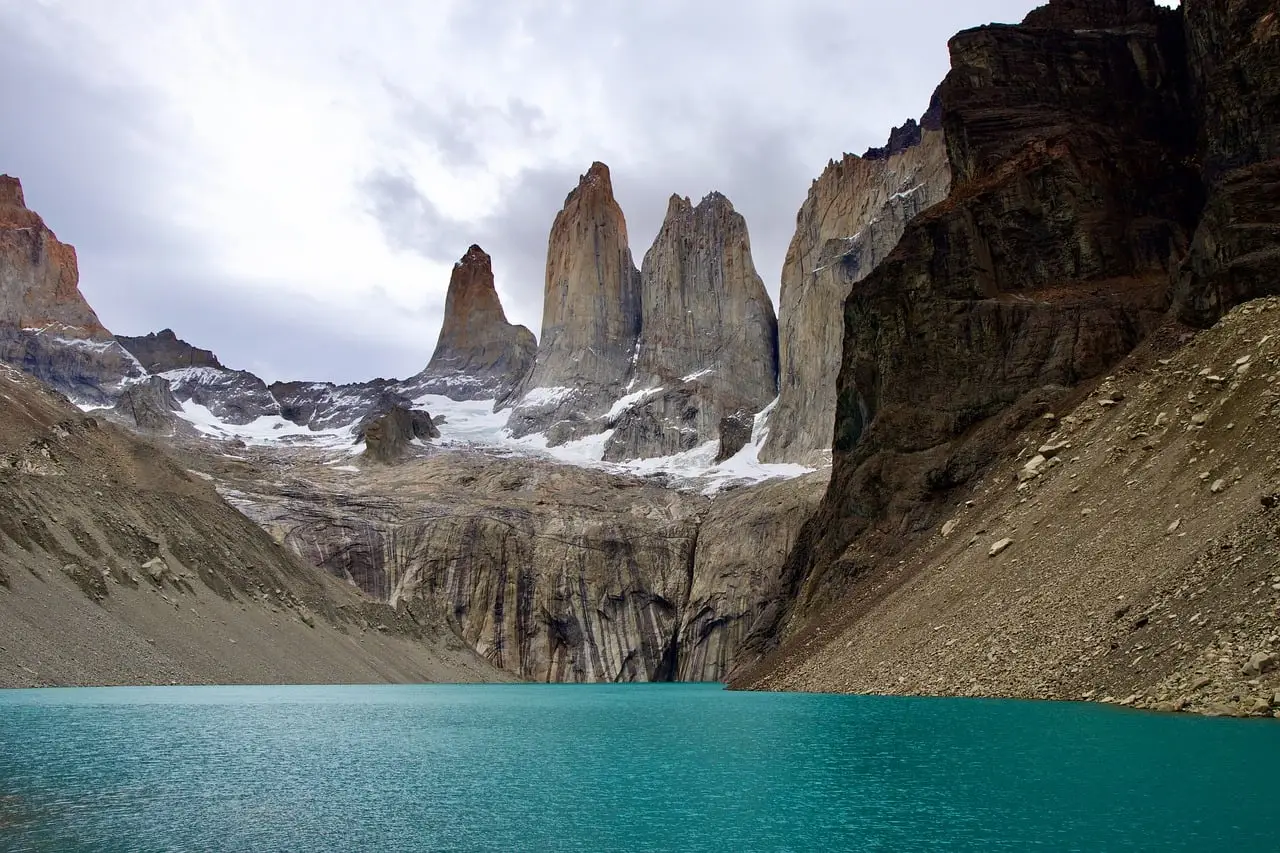
The Spanish-Chilean co-production (a joint project across countries) pairs Chile’s Wood Producciones with Spain’s Atlantika Films. Itziar Ituño stars as Alicia, a desperate mother who travels from the Basque Country to Patagonia in Chile to find her missing teenage son, Noah, played by Unai Arana. Her search crosses family conflict, ancient forest mysteries and a dangerous illegal logging network.
Who made Patagonia, and what does it follow?
Chilean writers María Elena Wood and Patricio Pereira created the series. Wood created the Platino Prize best-series winners News of a Kidnapping and Dignity, while Pereira produced Mary & Mike. Rodrigo Susarte directs, following the high-concept science-fiction series Hidden Island, featured in this year’s Berlinale Series Market Selects.
Susarte says the environmental suspense format concentrates the story’s central concern: what people fail to see. Wood said the territory should function as a protagonist rather than a backdrop, framing it as a contemporary Western (a frontier drama) where extraordinary nature, isolated communities, economic interests and deeply human conflicts meet.
His stated method was to create unease rather than deliver a climate lecture. He said: “I didn’t want the series to explain the climate crisis. I’d rather it leaves the audience with a lingering sense of unease. Maybe the real question isn’t what we’re doing to the forest, but what part of ourselves disappears along with it.”
How did the forest shape the shoot?
Susarte cited Werner Herzog and Jane Campion as influences. Herzog’s experience filming Aguirre, the Wrath of God in the depths of the Peruvian forest gave that connection particular force.
At Hornopirén, he said: “There, the forest isn’t a backdrop; it’s a presence, with its own rules, its own light, and its own sense of time.” The location also showed him that organisms shape one another and that filmmakers cannot control weather or schedules.
He described an ethical contradiction at the center of the shoot. The crew filmed a story about a forest’s destruction while moving through that forest with an entire film unit. Susarte said the location required awareness of the footprint left behind and of entering a space that did not belong to them.
What does the partnership change for Spanish production?
Atlantika producer Nano Arrieta called the Chile-Spain collaboration one of the most rewarding projects of his career and praised Pereira and Wood as collaborators. He said the production had access to leading Chilean crews and top-tier talent in the Basque Country.
He also called the present an exciting moment for Spanish cinema. He cited Oliver Laxe, Los Javis and Alauda Ruiz De Azúa as filmmakers with distinct creative voices.
Susarte argued that an industry’s important moments begin with confidence in its own voice, rather than with market demand alone. He said stories need not apologize for their specificity, and that Movistar Plus had recognized the point. For Spanish production, the practical change is a model combining Chilean locations and crews with Spanish talent, platform backing and international distribution by ZDF Studios.
What comes next for Atlantika and Wood?
Atlantika is developing When Devils Rule, a six-part series based on an original idea by Arrieta. It stars Oscar-nominated Emilia Perez actress Karla Sofia Gascón and reunites Susarte with Ituño. Arrieta will pitch the project at Tallinn’s TV Beats Co-Financing Market (an industry forum for co-financing) on Nov. 16-17.
Arrieta described the series as hyperrealistic (heightened realism), rooted in the political and social chaos of the present, with one supernatural element: demons. He proposed that political madness, moral corruption and social absurdity might make sense only if demons caused them. He called the central idea simple and potentially provocative.
Susarte will next take Invunche through the festival circuit. The film reworks a tale from Chilote mythology in Chile’s Chiloé Archipelago, combining Indigenous beliefs with Spanish legends. He set it in a time when information arrives in fragments, distorted and out of order, and asked what a place reveals about its inhabitants and what loss reveals about us.
Wood is developing two international co-productions. Arca is a psychological thriller directed by Matías Bize (The Punishment) and written by Julio Rojas (Case 63). Its co-producers are Spain’s Potenza, Brazil’s Trema, and Chile’s Céneca and Wood Productions.
Arca confronts its protagonists with an extreme moral dilemma while the world around them spirals out of control. Lucila is an animated feature about Gabriela Mistral’s childhood in the Elqui Valley. It traces the emotional and creative world of the person who would become a major voice in Latin American literature.
Patagonia is produced by María Elena Wood and Pereira, with Atlantika’s Nano Arrieta and Claudia Ruiz. Production oversight is shared by ZDF Studios’ Sebastián Krekeler, Susanne Frank and Peter Nadermann, plus Cristina Merino at Movistar Plus. The series remains exclusive to Movistar Plus.
The practical test for Spanish production arrives with the January 2027 release: whether this arrangement can carry a locally specific story through Chilean production, Spanish platform backing and international distribution. Arrieta and Susarte have presented it as a starting point for a broader Spain-Latin America dialogue.
Source: Variety Film
More from Grace Kim
Show full bio
Correspondent covering technology and product news in arts in the broadest sense at Arts & Voices.
946 articles