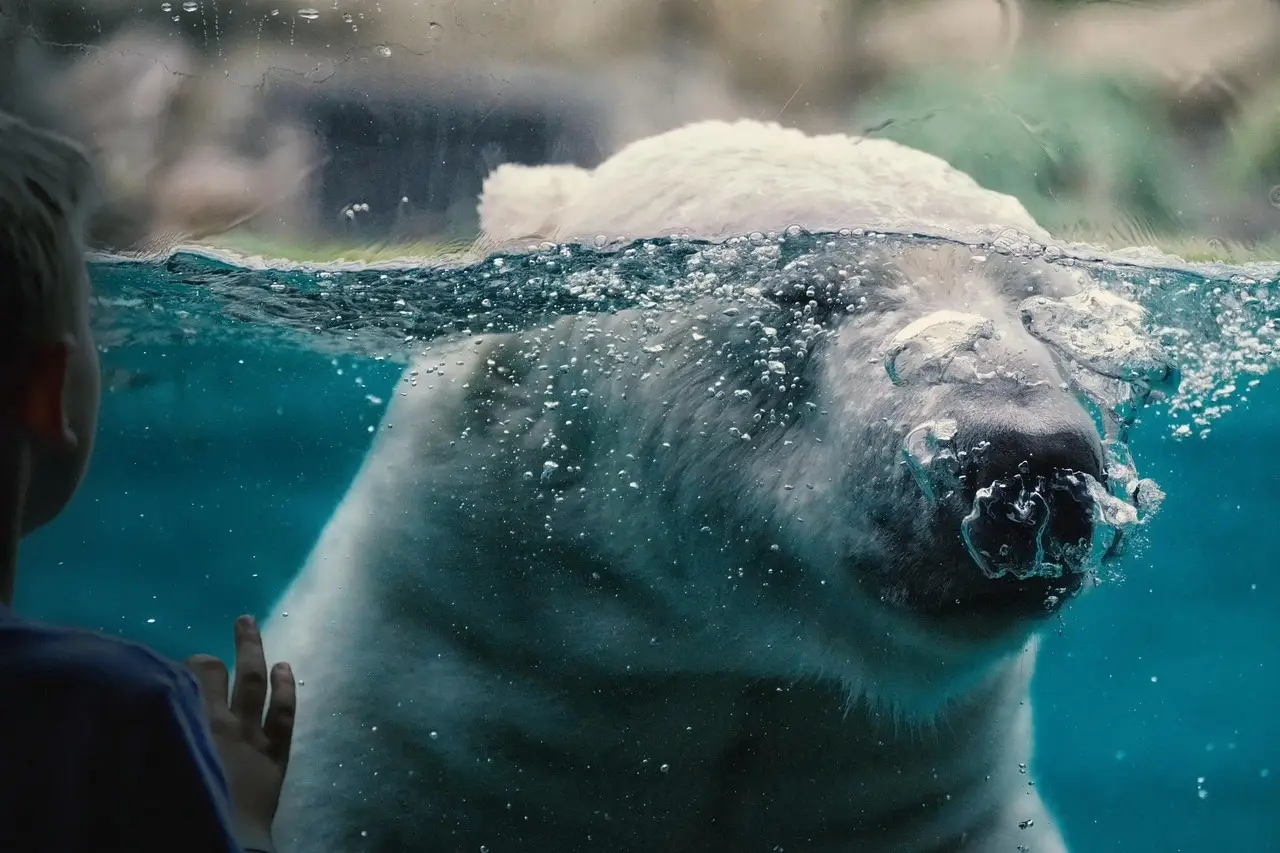
Polar bear 'jail' release leads week in wildlife images
A sedated polar bear left Churchill's 'polar bear jail' by helicopter this week, part of a wildlife photo roundup spanning elephant attacks in Cameroon and turkeys chasing a woman in Massachusetts.
Programme
- A sedated polar bear was relocated 70km north of Churchill, Manitoba, from a facility nicknamed 'polar bear jail'
- Swiss insurance executive Alain Throo was reportedly gored to death by elephants in Cameroon
- Buddhist devotees offered 84,000 flowers at Swayambhunath Stupa in Kathmandu, Nepal
- San Francisco garter snakes from a zoo conservation program were released into the wild for the first time
- Changthangi goats graze near Tso Kar lake, Ladakh, at 4,500m elevation
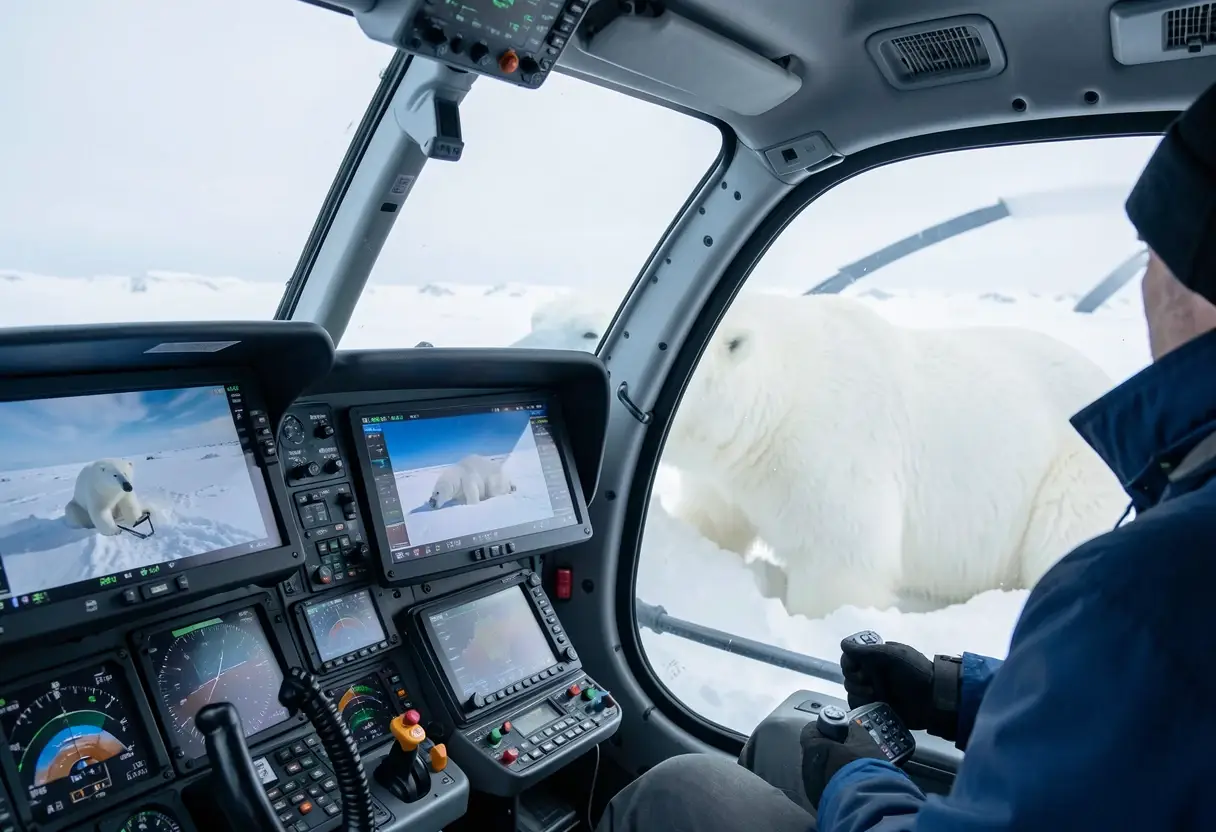
A sedated polar bear received a final reassuring touch from a conservation officer in Churchill, Manitoba, before being airlifted out of town — straight from the local holding facility locals call 'polar bear jail'. The bear had become a potential danger to residents. After its stint in the cell, the helicopter flew it 70km north to safer ground.
The image anchors this week's wildlife photography roundup, which spans five continents and includes one fatal encounter.
What happened in Cameroon?
A Swiss tourist died when hikers met a herd of elephants in Cameroon. Alain Throo, a Swiss insurance executive based in London, was reportedly gored. British and American tourists were injured in the same incident. One guide was tossed into a ditch; the others hid in trees. Cameroonian wildlife authorities believe the elephants may have perceived the hikers as a threat to their calves.
Elsewhere, the danger ran the other direction. A woman in Newton, Massachusetts, was chased by a group of turkeys on Saturday, days before Thanksgiving. Two strangers drove by, let her into their car, and presumably drove off wondering about the irony.
Which species made the week?
The lineup is varied:
- King penguin chicks — still in brown, downy infant feathers — huddled against cold wind in their rookery at Volunteer Point, Falkland Islands. (Dan Kitwood/Getty Images)
- San Francisco garter snakes born and raised in a zoo-based conservation program were released into the wild for the first time, part of an effort to save what is considered one of North America's most beautiful snakes. (Vishal Subramanyan & Midpen Open Space)
- Grizzly bear cubs followed their mother through sagebrush at the edge of a forest in Grand Teton National Park, Wyoming. (Richard Ellis/ZUMA Press Wire/Shutterstock)
- Changthangi goats, the breed producing cashmere wool for pashminas, grazed near Tso Kar lake in Ladakh, India, at 4,500m elevation. The intense cold of the wetlands explains those thick, warm coats. (Mohd Arhaan Archer/AFP/Getty Images)
What does climate look like on the ground?
In Novello, Italy, Elisa Mangione fed a hedgehog at La Ninna wildlife hospital in the Piedmont region. Prolonged drought and unusually high summer temperatures linked to climate change have made the rescue centre busier than ever. (Niccolo Lupone/AP)
In Nepal, a monkey sat outside Swayambhunath Stupa in Kathmandu while hundreds of Buddhist devotees and monks gathered at the historic temple to offer 84,000 flowers, praying for world peace and harmony. (Narendra Shrestha/EPA)
Back in the UK, a scarce silver-lines moth posed on cue. Despite its name, it is quite common across the country and usually found near oak trees, which it feeds on. Marking National Tree Week, Butterfly Conservation urged councils, town planners and homeowners to plant more native trees in urban areas to help insects. The charity named apple, oak, silver birch, hawthorn, willow, poplar and elm as species that boost moth and butterfly numbers. (David Green/PA)
The week closes as it opened: with humans and wildlife negotiating shared space, sometimes by helicopter, sometimes by getaway car.
Source: theguardian.com
More from Daniel Okafor
Show full bio
News editor covering companies, deals and strategy in arts in the broadest sense at Arts & Voices.
1,737 articles