Rachel Whiteread punctures 2027 Brit Award trophy with silver resin cast
Rachel Whiteread's 2027 Brit Award trophy is a pierced, silver-painted resin Britannia that 'exposes the interior of the statue'. It debuts at Co-op Live, Manchester, on 27 February 2027.
Programme
- Rachel Whiteread designed the 2027 Brit Award trophy, unveiled ahead of the 27 February 2027 ceremony.
- The statuette is cast in resin, nickel-plated and handpainted silver, with holes exposing its interior.
- The ceremony takes place at the Populous-designed Co-op Live arena in Manchester, host for the second year.
- The Brit Awards have commissioned a different creative to design the trophy annually since 1992.
- Past designers include Zaha Hadid (2016 unveiling), Anish Kapoor (2018) and Matthew Williamson (2026).
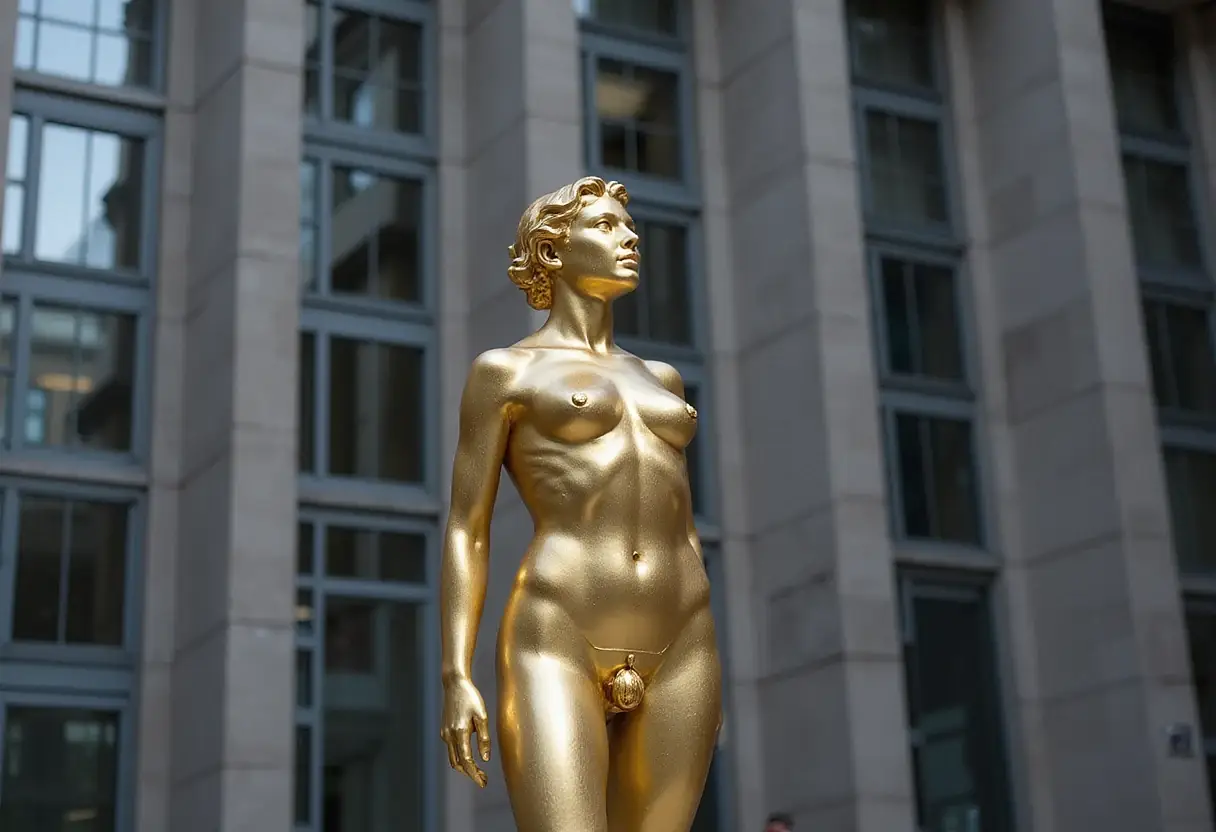
Rachel Whiteread has designed the 2027 Brit Award trophy: a silver statuette of Britannia, pierced with holes that, in her words, serve to "expose the interior of the statue".
The Essex-born artist, known for casting everyday architectural forms such as staircases and sheds in plaster and concrete to reveal their negative space, has applied that thinking to the UK music industry's handheld prize. The result is a minimalist figure cast in resin, nickel-plated, and then handpainted by Whiteread in a silver hue.
The punctured Britannia is her interpretation of the annual trophy depicting the helmeted warrior, a traditional symbol of Britain. The ceremony takes place on 27 February 2027 at the Populous-designed Co-op Live arena in Manchester — the venue's second outing as host, after the awards left London, where they had been held consecutively, in 2026.
What does the design say?
Whiteread framed the holes as a deliberate inversion of the object. "I exposed the interior of the statue, as an artist would do with their music," she said.
She described the commission as a continuation of her practice. "I saw this as a natural extension of my work – to continue to celebrate and recognise British art and creativity," Whiteread said.
She also made a political point, one that goes beyond the trophy itself. "Art and culture are under very real threat," she said. "So I was grateful to be able to take a tangible role in highlighting the importance of safeguarding creativity through the design of this year's trophy and standing together as artists, whether from music or the visual arts."
She did not specify which threats she meant, and the announcement offers no detail on what, if anything, the awards organisers plan to do beyond the symbolism of a holed statuette.
A designer tradition since 1992
The Brit Awards have invited a different creative to redesign the trophy every year since 1992. Whiteread joins a lineage that includes:
- Zaha Hadid, the British architect, who designed a trophy unveiled in 2016
- Anish Kapoor, the British-Indian artist, who produced a sculptural red version for the 2018 awards
- Matthew Williamson, the British fashion designer, whose amber trophy for the 2026 ceremony referenced Manchester's worker bee city logo and marked the awards' departure from London
The Williamson precedent explains the local logic: each designer responds to the moment — a new host city, in his case — and Whiteread's turn responds with material and method rather than civic imagery.
Why the holes matter
Whiteread's career rests on negative space: making the invisible interior of a form visible. A trophy full of holes is, in effect, that thesis scaled down to a handheld object. The claim implicit in her quote — that musicians similarly expose interiors — is a comparison, not an argument, and readers can weigh it themselves.
What it changes for the winners is modest but tangible: the 2027 recipients will lift a pierced silver Britannia rather than a smooth one, and the list of trophy designers gains a figure whose museum-scale casts have long treated absence as subject matter. Whether the broader defence of the arts she invokes gains any footing by February remains, for now, an open question.
Original: brits.co.uk
More from Tom Whitfield
Show full bio
Market editor covering people, launches and day-to-day practice in arts in the broadest sense at Arts & Voices.
1,796 articles