Programme
- Teatro Real staged 'Manon Lescaut' for the first time in 102 years, opening the 2026-27 season.
- The production is a co-production with Opera Köln directed by Carlos Wagner.
- Sondra Radvanovsky sang Manon; Michael Fabiano debuted the role of Des Grieux.
- Nicola Luisotti conducted; the orchestra played at consistently high volume.
- The leads received a standing ovation at the first curtain call.
Teatro Real opened its 2026-27 season with Puccini's "Manon Lescaut" — the first stage performance of the title at the Madrid house since it reopened in 1997, and its first appearance there in 102 years. The new production, co-produced with Opera Köln and directed by Carlos Wagner, delivered what the review calls "a cast to dream for": soprano Sondra Radvanovsky as Manon, tenor Michael Fabiano in a role debut as Des Grieux, and baritone Lucas Meachem as Lescaut, conducted by Nicola Luisotti.
What worked — and what didn't — on stage?
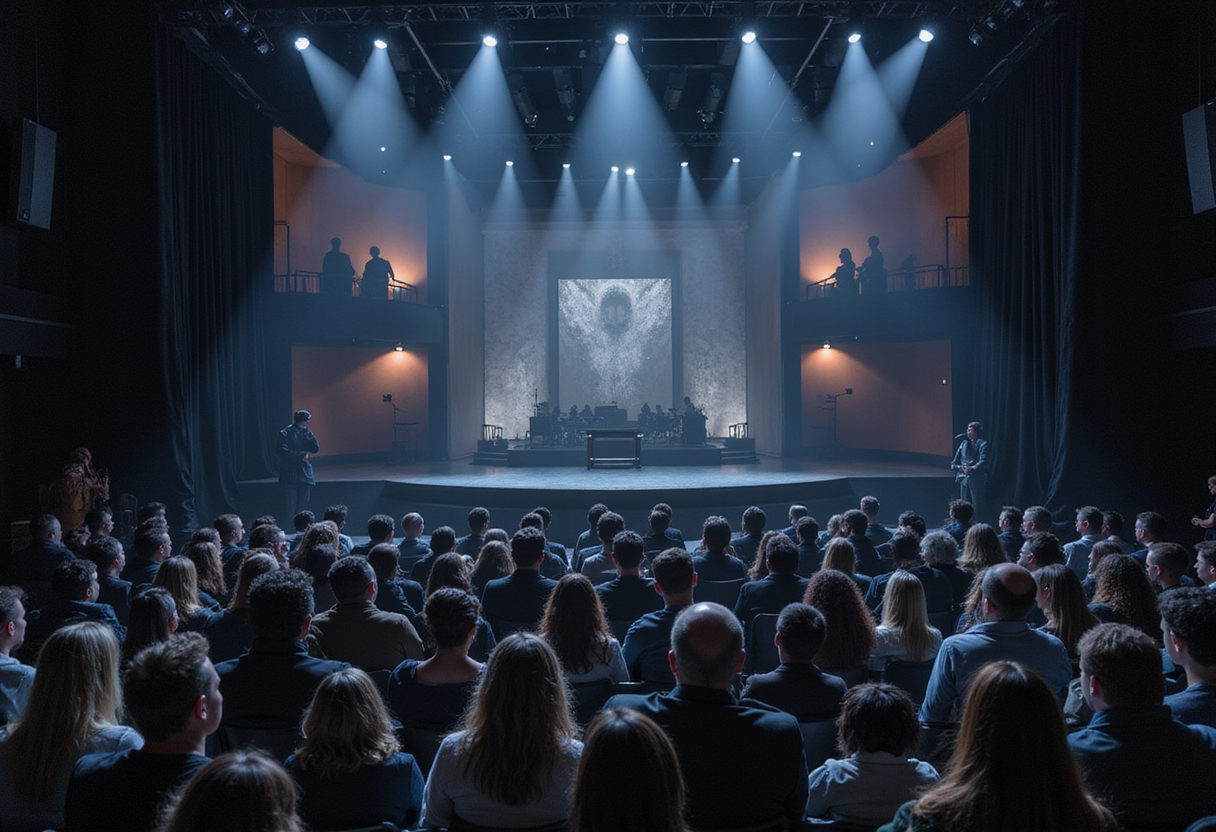
The production mixed realism and abstraction, and the reviewer judged the combination a failure. Realistic costumes, plausibly from the 1950s or 1960s, contrasted with a pure white box of a set, its revolving turntable holding different elements in each act — a merry-go-round in Act 1, a prison cell in Act 3, and an inclined, mirror-puddled floor representing the Louisiana swamps.
The stage direction fractured in the final act. Wagner staged Acts 1-3 with a "detailed, truthful, and hyper-realistic approach," then shifted Act 4 into metaphor: figures died around Manon and Des Grieux, others "left the stage walking like zombies," and Manon died standing. The review states plainly: "The final act felt as if it had been staged by a director from another production: it did not make any sense within the rest of the show." The chorus's choreography, by contrast, drew praise as "lively, rhythmical and original."
How did Radvanovsky sing Manon?
Radvanovsky built the role from shy, naive beginnings in "Il mio fatto si chiama" to a devastating "Sola, perduta, abbandonata" in Act 4, delivering high Cs in Acts 2, 3 and 4 while sustaining mezza voice and pianissimo high in the register. Her Act 2 singing was near-continuous across 45 minutes, and she even pole-danced mid-performance in a black satin bodysuit without vocal compromise.
The review singles out her "dry, metallic timbre," her high E natural, and a rarity of repertoire: she may be the only soprano in history to hold "Aida" and "Tosca" alongside Donizetti's "Tudor Queens" trilogy and "Norma." Her high C "was clear over the chorus and orchestra in forte."
Was Fabiano's Des Grieux debut a success?
Fabiano negotiated a punishing role — an aria and duet in each of the four acts, constant B flats and B naturals over dense orchestration. He earned the evening's first applause after "Donna non vidi mai," with its two splendid B flats. The review credits him with "a fantastic dramatic arc" from cheerful young man to desperate lover, a "hair-raising" mezza voice in "Non mi rispondi amore," a secure high C in "O amore, O Manon," and a voice still fresh at the end. His timbre, the reviewer notes, has darkened in recent years — sometimes sounding baritonal.
Meachem brought "a beautiful, round, and projected sound" that carried over Puccini's orchestration, with a ringing high F sharp in "Una casetta angusta." Tenor Alejandro del Cerro shone in the small but opening role of Edmondo.
What about the pit?
Luisotti stayed faithful, the review says, to his "the louder the better" modus operandi — fine for symphonic concerts, less so when the rest of the cast "sounded distant and muffled." Only the leads' unusually large voices survived. His intermezzo before Act 4, full of timbral color, drew admiration, and the Coro y Orquesta del Teatro Real met his demands with power.
The protagonist pair received a well-deserved standing ovation at the first curtain call — a verdict on the singing, if not the staging, that will shape expectations for this production's run in Cologne.
Original: operabase.com
More from Daniel Okafor
Show full bio
News editor covering companies, deals and strategy in arts in the broadest sense at Arts & Voices.
457 articles