Reina Sofía Stages Felix Gonzalez-Torres Show Built on 'Sweet Revenge'
Reina Sofía's first large-scale Felix Gonzalez-Torres show, 'Sweet Revenge,' fills seven Sabatini galleries with 50+ works — but omits several of the artist's most politically charged pieces.
Programme
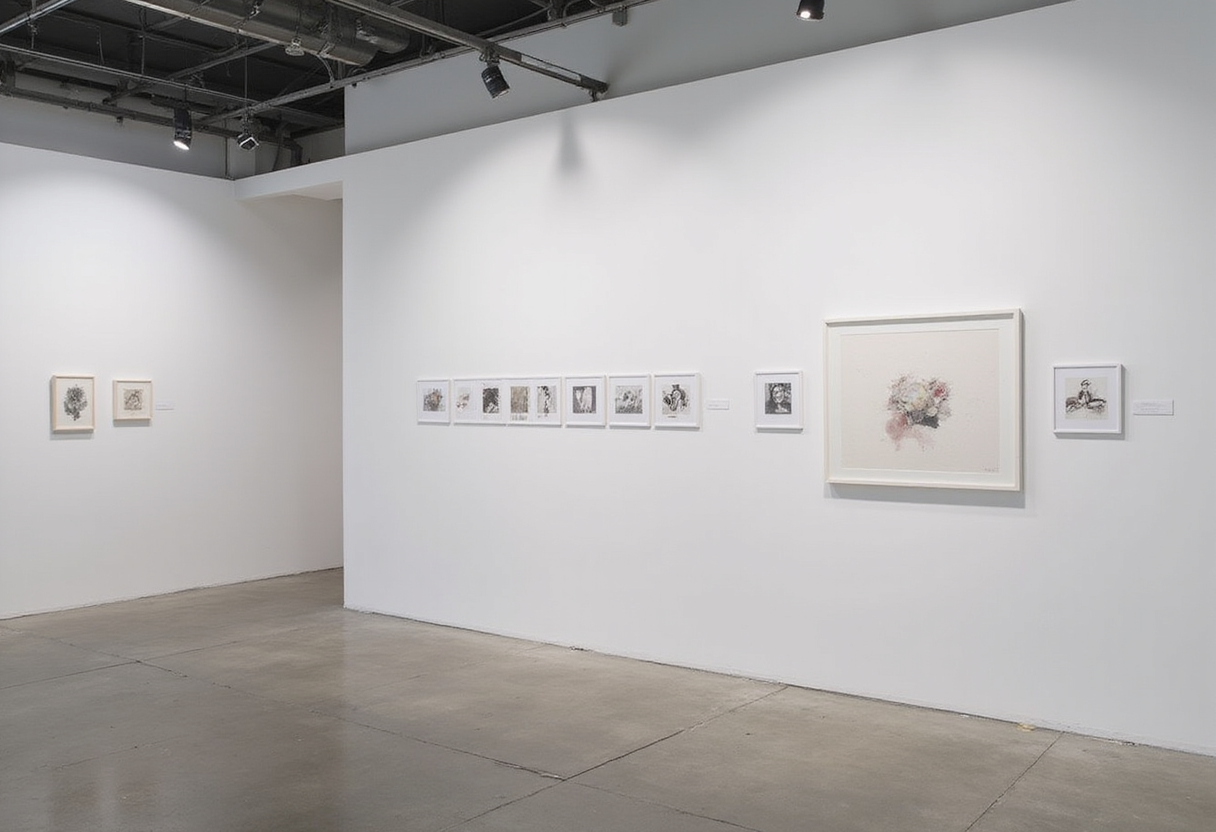
- "Felix Gonzalez-Torres: Sweet Revenge" opened at Museo Reina Sofía with more than 50 works across seven galleries of the Sabatini Building.
- Curated by artist Alejandro Cesarco and former Guggenheim chief curator Nancy Spector, who organised the artist's 1995 New York retrospective.
- The show anchors its premise in Gonzalez-Torres's 1971 arrival in Madrid as a Cuban child refugee and draws its title from his 1991 candy spill "'Untitled' (Revenge)."
- Several of the artist's most politically charged works are absent from the exhibition, per the source critique.
- Gonzalez-Torres died of AIDS-related complications in 1996; previous Spanish exhibitions were held in Santiago de Compostela (1995), Madrid (2000) and Barcelona (2021).
The Museo Reina Sofía in Madrid opened "Felix Gonzalez-Torres: Sweet Revenge" — the Spanish capital's first large-scale solo exhibition of the Cuban-American artist — across seven galleries on the first floor of the Sabatini Building, with more than 50 works.
Curated by artist Alejandro Cesarco and former Guggenheim chief curator Nancy Spector, the show takes its title and central premise from the blue candy spill "'Untitled' (Revenge)" (1991), a work Gonzalez-Torres produced after revisiting Madrid as an adult. He later recalled: "I returned to Madrid nearly twenty years later — sweet revenge."
Why does Madrid lead the show?
The curators anchor the exhibition in Gonzalez-Torres's 1971 arrival in Madrid, when his Cuban family sent him abroad as a child refugee before resettling in Puerto Rico and then New York. A wall text calls the stay "a traumatic experience, one that heavily informed his preoccupations with memory and repetition."
That choice inverts the usual biography. Gonzalez-Torres is canonically framed as a New York artist shaped by the AIDS crisis, who died of AIDS-related complications in 1996. Here, the trauma of displacement comes first. The galleries hold his candy spills, text portraits, puzzles, beaded curtains, paper stacks and photographs — but in no chronological order. A parallel "Methodology" text in the entrance hall explains how the replenishable piles and alterable portraits are to be presented and updated.
The curators say they want to highlight the "ambiguity and complexity" of works that swing between aesthetic beauty and political address. The execution, however, leans harder on logistics than on argument.
What is missing from the framing?
The source critique asks a pointed question: why are many of Gonzalez-Torres's most politically charged works absent? The "Sweet Revenge" framework gives room for ambiguity, but it also gives the curators licence to leave out the harder pieces — those built specifically around the U.S. AIDS crisis, mass mobilisation, and explicit protest.
That is a meaningful gap. Gonzalez-Torres's late-1980s and early-1990s practice treated public policy and private mourning as a single subject. It was not just formal experimentation; it was a sustained argument about what counts as public. A show that emphasises mechanics over message risks turning that argument into an exercise in display technique.
The curators do not pretend otherwise. Their "Methodology" text openly discusses the responsibilities of restaging the works — a question that has dogged Gonzalez-Torres exhibitions since his death, when stewardship passed to the Felix Gonzalez-Torres Foundation.
What does this change for the artist?
Spector organised Gonzalez-Torres's 1995 retrospective at the Guggenheim Museum in New York, the show that, for many viewers, settled the artist's standing. Her involvement here gives the Madrid framing curatorial weight.
This is the Reina Sofía's first dedicated Gonzalez-Torres show. The museum previously hosted him in a 2000 group exhibition ("No es sólo lo que ves: Pervirtiendo el Minimalismo"), and the Museu d'Art Contemporani de Barcelona mounted a pandemic-framed presentation in 2021. Neither reached this scale. A 1995 exhibition at the Centro Galego de Arte Contemporánea in Santiago de Compostela came just before his death.
By leading with his refugee years, the Reina Sofía is making a claim: that the Madrid passage — not the New York activism — is the key to his work. Visitors familiar with his politically charged pieces may leave wanting more of them. Those new to him will find a generous selection of his signature forms, but a softer reading than the historical record demands.
If the museum wants this to stand as the definitive Spanish statement on Gonzalez-Torres, it has to make room for the politics. As installed, "Sweet Revenge" tells a moving personal story. Whether it tells the whole story is another question.
Original: felixgonzalez-torresfoundation.org
More from Tom Whitfield
Show full bio
Market editor covering people, launches and day-to-day practice in arts in the broadest sense at Arts & Voices.
476 articles