Review: Kafka’s Letter to His Father Stuns in U.S. Premiere at CAP UCLA
Jiří Trtík's 70-minute opera on Kafka's letter to his father premiered at UCLA's Nimoy Theater Thursday, with tenor TIMUR singing high Ds — and the audience crying.
Programme
- Kafka's Letter to His Father, by composer Jiří Trtík, received its U.S. premiere Thursday night at the UCLA Nimoy Theater.
- The 70-minute opera, staged by CAP UCLA with Brightwork Ensemble and the Opera of Timur, ran without a conventional plot.
- Tenor Timur Bekbosunov (TIMUR) sang a high D more than once, a step above the standard tenor top note of high C.
- Pianist Aron Kallay and violinist Shalini Vijayan led the work's most intimate moments.
- The reviewer reports the audience cried at the ending.
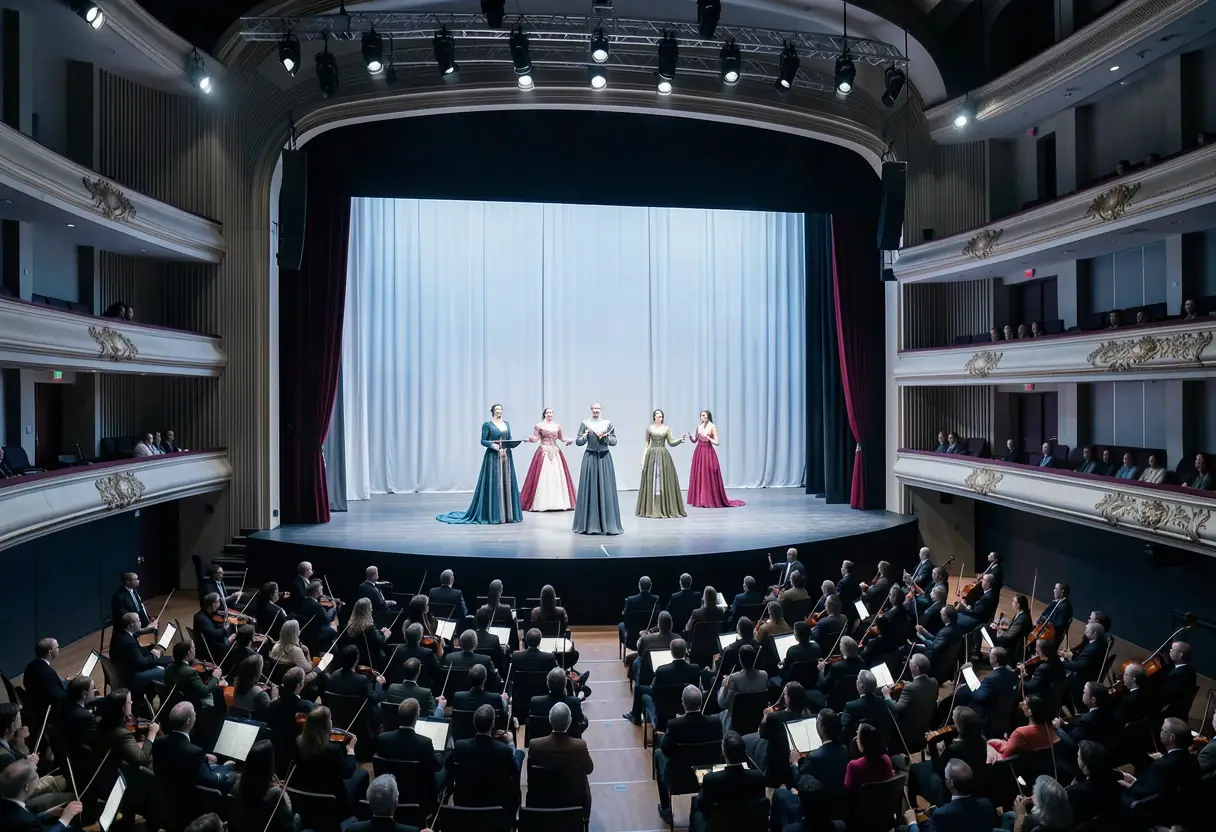
The U.S. premiere of Jiří Trtík's opera Kafka's Letter to His Father brought listeners to unexpected tears on Thursday night at the UCLA Nimoy Theater. The Center for the Art of Performance at UCLA (CAP UCLA) staged the work in collaboration with Brightwork Ensemble and the Opera of Timur. It ran 70 minutes without a conventional plot — and it worked.
What holds an opera together when there's no plot?
Librettist Jan Škrob adapted Kafka's famous letter to his father, and the letter's own architecture becomes the drama. Each section takes on its own personality, moving through simple, easily imaginable scenes: a morning reading the newspaper, an afternoon on the beach, an evening wedding, and the dark solitude of Kafka's mind, where his father's internalized, persecuting voice echoes. The reviewer's verdict is blunt: the opera doesn't just represent Kafka as a character — "The opera is Kafka himself."
Director Shayna Penn's gripping visuals and Derek Jones's striking lighting held the audience throughout. So did the cast's dramatically tense delivery.
The music: acoustic brilliance, electronic overload
The score blends synthesized and acoustic sounds. Brightwork Ensemble carried the acoustic side on a dark, foggy stage, painting the work "with magnificent color and texture." The most exposed moments belonged to pianist Aron Kallay and violinist Shalini Vijayan. The reviewer singles out "the poignant stroke of each key and the gossamer slide of the violin strings upon a blanket of silence" as the sound of Kafka's solitary, stifled shame. In the reviewer's words, "The ensemble expressed the inexpressible through sound."
The electronics fared worse. Rumbling bass, crackling noise, and pulsating synths often overwhelmed the ensemble — most flagrantly in the interlude between Acts 1 and 2. The reviewer concedes the unpleasant sounds "surely aimed to put the audience directly into the uncomfortable subject matter," but argues the same effect "could have been attained with far fewer decibels, much less time." A half-baked use of field-recorded sounds surfaced so rarely that it failed to transport.
Trtík's real material: silence and contrast
Strip away the electronics and Trtík emerges as "a master of silence, musical space, and contrast between consonance and dissonance." The reviewer calls his manipulation of these elements "the dramatic lifeblood of the opera — an addictive emotional honey." Recurring musical themes returned often; "Trtík unfailingly remembers his best music."
The vocal writing splits the work in two. The fathers sing in "the deepest possible regions of the human voice," a picture of dominating masculinity. Kafka is the opposite. Tenor Timur Bekbosunov, who performs as TIMUR, cut through the surrounding noise effortlessly and carried the emotional through-line. He sang a high D more than once — a step above the tenor's storied high C and the top note of the standard operatic tenor repertoire. The reviewer describes it as expressing "such a high level of emotional pain I was sure his voice would break, but — watching his masterful technique throughout the entirety of the night — I also knew it would not."
What does this change for opera audiences?
Plenty of operagoers have grown weary of works in which nothing happens. This one, by the reviewer's account, got it right: the ending touched "something intangible but real in a fractured father-son relationship." The night closed with a signature only great opera leaves. "Everyone cried, and — to my pleasant surprise — so did I."
Source: sfcv.org
More from Grace Kim
Show full bio
Correspondent covering technology and product news in arts in the broadest sense at Arts & Voices.
1,537 articles